.svg&w=384&q=75 "logo")
Zheng Qinwen's Historic Comeback at US Open
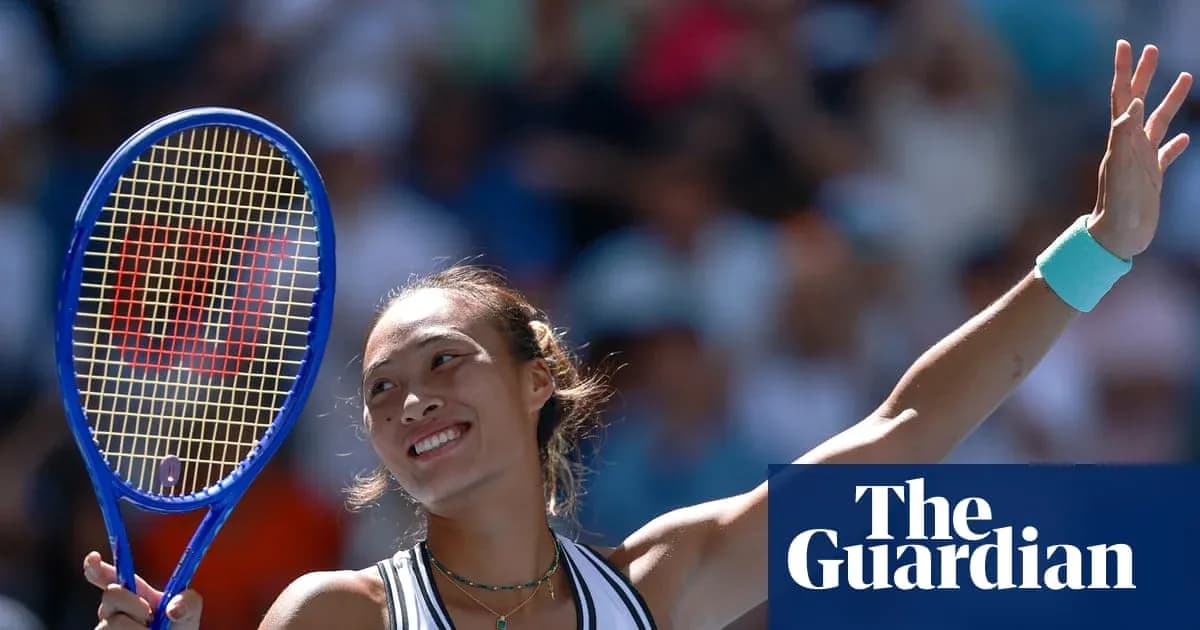
Do not lead Zheng Qinwen 5-0. Not in New York. Not this fortnight.
Madison Keys found that out first. Iga Swiatek discovered it next, and with far heavier consequences.
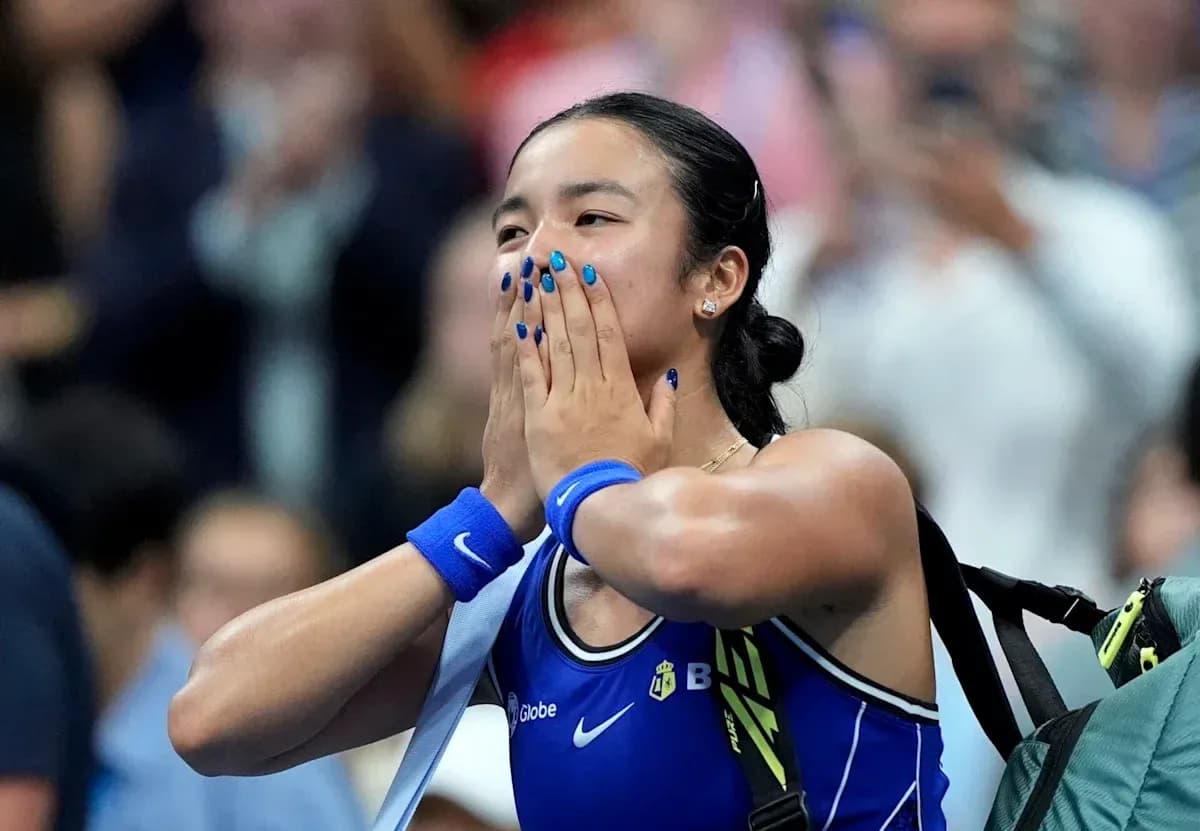
Two days after Zheng ripped seven straight games from 0-5 down in a deciding set to stun Keys, the Olympic champion walked back into the fire and did it again – this time against a six‑time grand slam winner who arrived as one of the US Open favourites. Down 5-0 to Swiatek in the first set of their fourth‑round clash, Zheng simply shut the door on her own nerves, on the scoreline, on the noise. Seven games in a row later, she had the set. Not long after, she had the match: 7-5, 6-3, and a place in the quarter‑finals.
The pattern is almost absurd. At this level, recovering from 0-5 is a once‑in‑a‑career escape. Doing it in back‑to‑back matches? Against two major champions? It borders on the historic. At the top of the sport, it has never happened before.
“In one moment, I even forgot the score in the first set at 4-5,” Zheng said afterwards. “That shows how I am focused. I guess, to come back 0-5 [again] is not lucky, that’s [what] I can say.”
Her tennis backed up every word. Once she settled, Zheng’s ball-striking grew heavier, her serve more precise, her margins cleaner. The same could not be said of Swiatek. The Pole, fresh off her first title of the year at the Canadian Open in Toronto and seemingly rebuilding the aura that has defined her generation, lost her grip on the match the moment she lost her grip on the first set.
The slide was brutal. As Zheng tightened, Swiatek sprayed. Routine balls flew long, simple exchanges collapsed into unforced errors. The world No 1 has spoken openly about anxiety and stress in recent months, but this time she pointed straight at the racket, not the mind.
“I wouldn’t say it had anything to do with mentality. It was more that I started making mistakes from easy balls and Qinwen stopped doing mistakes,” she said.
For Zheng, this was more than an upset. It was a reclamation.
She walked on court with a 1-7 record against Swiatek, but that lone victory cut deep. It came in the semi‑finals of the 2024 Paris Olympics at Roland Garros, where Swiatek had just completed a third straight French Open title. Zheng left with Olympic gold and a new level of fame at home in China, her name suddenly attached to one of the most watched sporting events on earth.
Her rise had already been sharp. She reached the 2024 Australian Open final, climbed to a career‑high No 4 and looked every inch the future of the women’s game. Then came elbow surgery. The ranking fell off a cliff. By June, she was down to No 160, searching for rhythm, for wins, for any kind of foothold. She arrived in New York with an 11-13 record for 2026 and no choice but to swallow her pride and enter the qualifying draw.
Seven matches later, she is back in the thick of the conversation.
Those three qualifying wins and four main‑draw victories have rebuilt more than ranking points. They have restored edge, confidence, menace. Zheng is no longer just the Olympic champion trying to remember how to win; she is once again a player nobody wants on their side of the draw.
Next up is Elena Rybakina, the second seed, who is now one victory from becoming world No 1 for the first time. On Louis Armstrong Stadium, Rybakina dismantled Naomi Osaka 6-1, 6-4 in just 66 minutes, a performance that looked as clean on paper as it felt from the stands: 29 winners, only 17 unforced errors, and a single, unconverted break point faced.
Osaka, a two‑time US Open champion, needed her highest gear to live with that kind of precision. Her body would not let her find it. Nagging achilles pain has stalked her through the tournament, and her serve lacked the pop and accuracy that once made her almost untouchable on this court. Against Rybakina’s relentless first strikes, that was nowhere near enough.
On the other side of the women’s draw, Mirra Andreeva’s steady ascent gathered more weight. The fifth seed and reigning French Open champion reached her first US Open quarter‑final with a 5-7, 6-4, 6-3 win over Austria’s Anastasia Potapova, another marker in a season that has already pushed her deep into the sport’s elite.
The men’s event had its own breakthrough. Alexander Blockx, seeded 28th, booked a maiden grand slam quarter‑final with a composed 6-3, 4-6, 7-5, 7-5 victory over the 24th seed Francisco Cerundolo, handling the tightest moments of the match with the assurance of a far more seasoned campaigner.
But this day belonged to Zheng and to a scoreboard quirk that has turned into a warning sign for the rest of the field.
Lead her 5-0 at your peril. In this New York run, that is not a cushion. It is the start of her story.