.svg&w=384&q=75 "logo")
Zheng Qinwen's Incredible Comeback at US Open
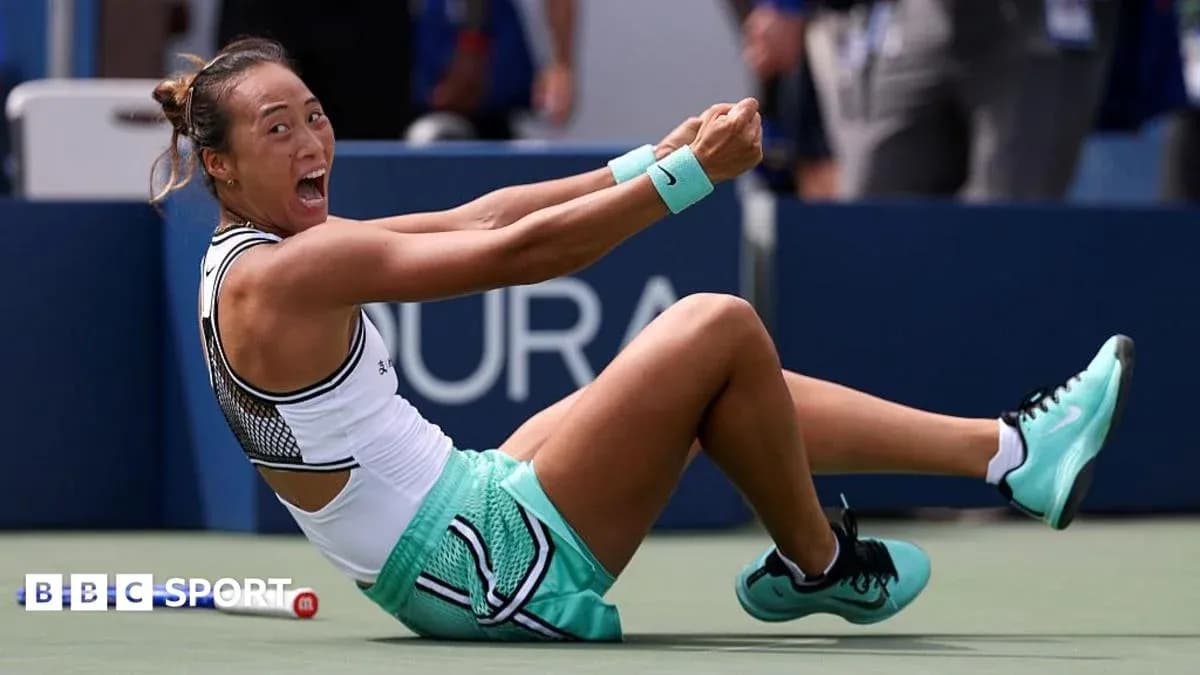
Zheng Qinwen had already called it “a very dramatic match”. That barely scratched the surface.
On a hot, restless afternoon at Flushing Meadows, the Olympic champion stood one point from defeat, 5-0 down in the deciding set to Madison Keys, a former US Open finalist and the 22nd seed. The American crowd was roaring for its favourite. Keys was cruising. The scoreboard felt brutal.
Then Zheng refused to go away.
From match point down, the qualifier from China tore through seven straight games to complete one of the great escapes of this US Open, winning 1-6 7-6 (7-3) 7-5 and silencing a stadium that had been ready to celebrate a home win.
From rout to resurrection
For the first 23 minutes, this was a mismatch. Keys, the 2025 Australian Open champion, flattened Zheng in the opening set, breaking at will and dictating with the kind of clean, early-strike hitting that has always made her a danger on hard courts. Zheng, still feeling her way back after elbow surgery last year, looked rushed, out of rhythm, and a step behind.
Keys tightened her grip. The American’s serve held up, her forehand ripped through the court, and the match seemed to be following a familiar script: established seed dismisses rusty opponent whose ranking has plummeted after injury.
But Zheng did not fold. She steadied on serve, lengthened the rallies, and began to find depth that pushed Keys back. The errors that had flown off Zheng’s racket in the first set slowly disappeared. The second set turned into a tug of war.
When it reached a tie-break, Zheng seized it. She played with clarity, rolling in first serves, picking her moments to attack, and taking the breaker 7-3. Keys walked to her chair shaking her head. The crowd sensed the shift. The match, suddenly, had a pulse.
A third set that defied belief
Then came the twist no one saw coming.
Keys responded like a major champion. She stormed to a 5-0 lead in the third set, reasserting control with a flurry of winners. Zheng’s resistance looked spent. At 5-0, Keys held match point. The American stood a swing away from the last 16.
Zheng stared at the brink and pushed back.
She saved match point, held serve, and finally got on the board. One game. Then another. Keys’ arm tightened. Her first serve, so reliable earlier, began to miss. Zheng, sensing the crack, stepped inside the baseline, attacking second serves and driving the ball into the corners.
The pressure finally told. Keys’ errors mounted. Zheng’s belief grew with every point she snatched back. What had looked like a routine closeout for the seed turned into a collapse, as Zheng ran off seven consecutive games to steal the set 7-5 and the match with it.
When the final ball sailed long, Zheng dropped to the court, flat on her back, overwhelmed. It was not just about one comeback. It was about a year that had tested everything.
A year in the wilderness
Only three months ago, Zheng sat in a French Open news conference in tears after a first-round exit. It was her first Grand Slam appearance since undergoing surgery in July 2025 to remove small bone fragments from her elbow, a chronic issue that had cut through her momentum just as she was breaking into the sport’s elite.
The timing had been cruel. In 2024, Zheng reached the Australian Open final, won Olympic gold, and made the US Open quarter-finals. She backed that up with a strong start to 2025, advancing to the last eight at Roland Garros and climbing to a career-high world ranking of No. 4.
Then the elbow gave way.
Nine months on the sidelines followed. When she returned in Paris this year, she ran into eventual runner-up Maja Chwalinska in the first round and lost. The defeat, after so long out, hit hard. Her ranking plunged as low as 160. For the first time in four years, she had to fight through qualifying just to reach the main draw of a major.
“After coming back from injury I felt I lost the energy and I forgot how to compete,” she admitted.
Those doubts shadowed her all summer. The player who had surged through 2024 looked distant, almost unreachable.
A qualifier with a champion’s heart
This run in New York is changing that story.
By reaching the fourth round, Zheng becomes the first women’s qualifier to go this deep at the US Open since Emma Raducanu in 2021, a name that carries its own echoes at these courts. The path has been long and unforgiving: qualifying rounds, rebuilding confidence, rediscovering the feel of big points.
“Finally, a bit of luck is on my side,” the 23-year-old said, relief written all over her face. “I am just telling myself ever give up. Somehow, little by little, it’s just happened. Tennis sometimes feels like rollercoaster. You see many times people have a match point, but at the end we made a comeback.”
On Arthur Ashe, that rollercoaster was there for everyone to see: the early thrashing, the gritty tie-break, the 5-0 hole, the match point, the surge, the finish.
Keys will wonder how this slipped away. Zheng will look at the scoreboard and see something else entirely: proof that the competitor she feared she had lost is still there, still snarling, still capable of turning a match on its head against a Grand Slam champion on one of the biggest stages in the sport.
Her ranking will rise. Her belief has already done so. After a year of questions, Zheng Qinwen has supplied a resounding answer in New York.
The only question now is how far this comeback can carry her.