.svg&w=384&q=75 "logo")
Will Jacks becomes cornerstone in England's slow-burn victory over Sri Lanka
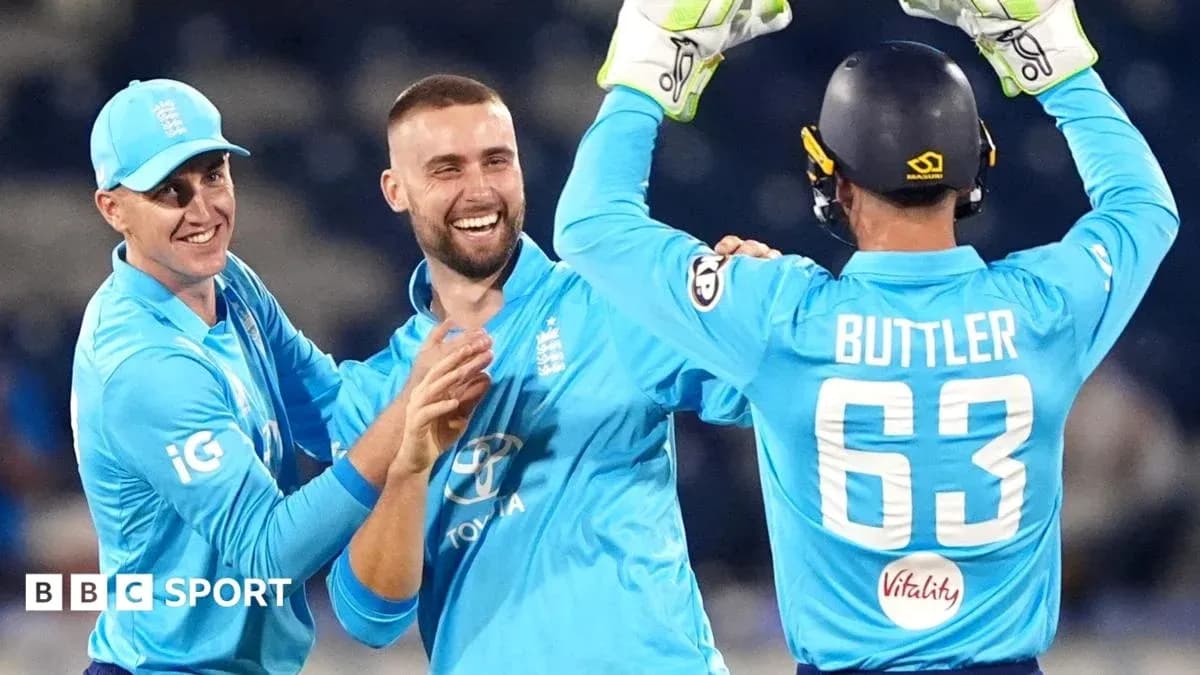
Harry Brook had asked for “high-octane” cricket. What he got in Chester-le-Street was something different: a grind, a wrestle with a weary pitch, and a win built less on fireworks than on nerve and nous.
England’s 89‑run victory in the first ODI over Sri Lanka will not live alongside their great white-ball epics for sheer spectacle. It might, however, be remembered as the day Will Jacks stopped being a luxury and became a cornerstone.
Brook’s graft, not carnage
The chaos of the Twenty20 clean sweep vanished with the late-summer sun. On a tired, end-of-season surface, England’s innings never quite caught fire. They were bowled out for 265 in 48.1 overs, a total that looked light on the scoreboard and felt lighter still when WinViz nudged Sri Lanka into marginal favouritism at the interval.
Brook did what captains are supposed to do. He held the thing together. His 67 under a warm September sky was not a blaze of sixes – in fact, England failed to hit a single one for the first time in more than seven years in an ODI – but it was the spine of the innings. He looked immovable until one misjudged charge at Dushmantha Chameera ended with a skewed slice to deep point.
That dismissal hurt. It ripped the stuffing out of an innings that stood at a promising 182 for three and soon slumped to 211 for seven. Four wickets fell for 29 runs in 46 balls. Ambition shrank with every departure.
Jos Buttler had already gone, lbw for 31, undone on the back foot. Rehan Ahmed followed in calamitous fashion, run out by a direct hit from Charith Asalanka after setting off for a non-existent single, checking, and then effectively surrendering. On a day when England’s new mentor Kevin Pietersen had hammered home the importance of strike rotation, it was a moment that jarred.
Through it all, Jacks watched from the other end.
Colombage’s moment and Root’s streak snapped
Sri Lanka’s bowlers deserved more than a footnote. Sachindu Colombage, plucked from obscurity by head coach Gary Kirsten, turned the match for a while with a debut that crackled with promise.
The 28-year-old wrist-spinner, who was playing for Downham Stow in the East Anglian Premier League last summer and owns an unremarkable domestic record, produced the kind of drift and dip that strips reputations. Joe Root, who had not been dismissed in ODI cricket for 416 balls – a run of 404 runs stretching back to England’s 2-1 win in Sri Lanka last winter – saw his off stump rattled for 44. Buttler followed, pinned on the crease by one that straightened. Jamie Overton was later bowled by a leg-break that climbed above his eyeline and ripped back.
Colombage finished with three for 44, figures that flattered neither his skill nor his nerve. On a day when batting grew trickier after a 61‑for‑one powerplay – Tom Banton bowled by a beauty from Asitha Fernando – his spell, alongside England’s own middle-order wobble, kept Sri Lanka right in it.
At least, that’s how the numbers made it look.
From the stands, from the dressing rooms, there was a different feeling: that England, even without a six to their name, had just about enough.
Jacks the finisher with the bat
They had Jacks to thank for that. Coming in down the order – a role he has had to learn to love after years preferring the top three – he played the innings the game needed.
Unbeaten on 46, he farmed the strike smartly with Gus Atkinson and then, when the moment finally arrived, went after the bowling. Eighteen runs came from the 48th over alone, a late surge that dragged England from vulnerable to vaguely comfortable. Without that punch at the death, Sri Lanka’s chase might have taken on a very different tone.
Since settling into this lower middle-order slot last year, Jacks has averaged 43 and scored at better than a run a ball in ODIs. The numbers tell one story. His presence told another. He looked like a man who understood that this was his game to shape.
Off-spinner, not part-timer
With the bat done, Jacks then took the ball and removed any lingering doubt about his status. Part-timer? Not anymore. Not on this evidence.
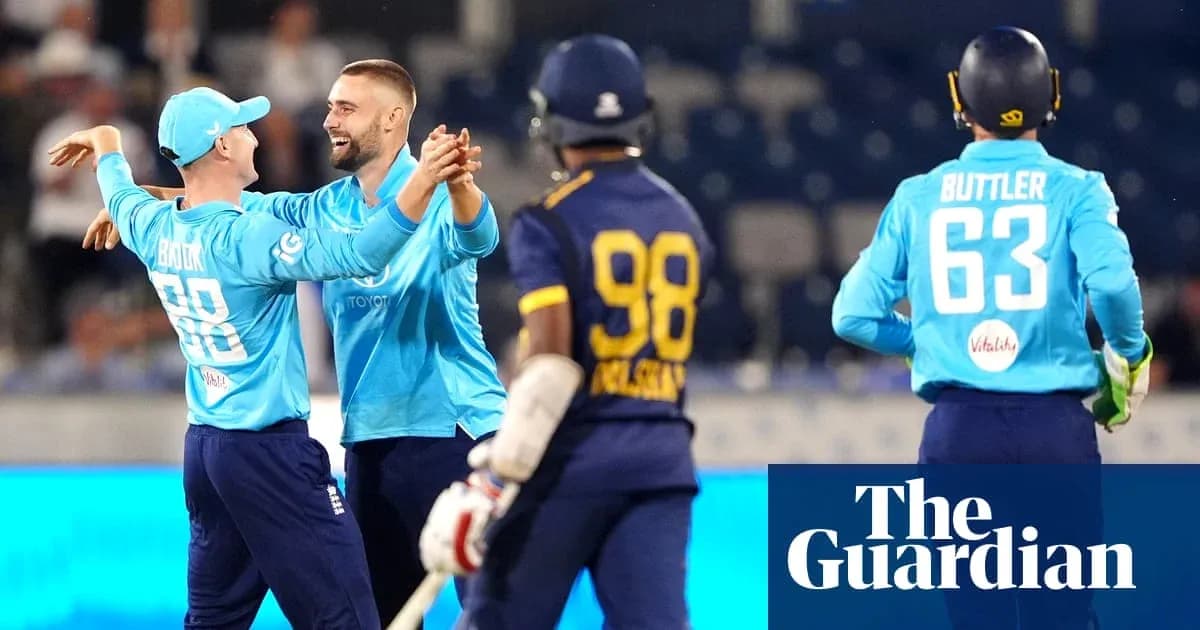
Seven overs. Five wickets for 22 runs. The best ODI figures by an England spinner since Vic Marks’s five for 20 in Wellington back in 1984. Only Marks sits above him in the record books, and you suspect Jacks will not be the one bringing that up.
He mixed his pace cleverly, altered his angles, and used the surface. Sri Lanka, who had never quite looked at home on the pitch, folded under the pressure. Dunith Wellalage, their top-scorer with 45, was among Jacks’s victims. So was any realistic hope of a chase.
Brook’s praise afterwards was pointed and precise. Jacks, he said, is “not a part-timer, he’s a very good off-spinner. He can spin the ball big and contain. He could have moaned and groaned about playing as an all-rounder but he’s accepted that and become a very vital player for us over the past 18 months. He’s a very good leader, with bat, ball and in the field.”
On this evidence, that was less flattery than fact.
England’s attack closes it out
The rest of England’s attack did their job with quiet efficiency. Jofra Archer, at the end of his all-format summer, took some punishment late on but the damage was cosmetic. Jamie Overton, banging the ball in with cross-seamers, picked up two wickets and never allowed Sri Lanka’s middle order to settle. The absence of Adil Rashid, sidelined for the series with a hand injury, barely registered in the pattern of the game.
Sri Lanka never truly felt in the hunt. Put in on a surface that grew slower and grippier, unfamiliar with the quirks of an English September pitch, they were bowled out for 176. The margin – 89 runs – told its own story. So did the rhythm of the chase, which lurched rather than flowed.
Brook, quietly, moves into credit as ODI captain: 11 wins, 10 defeats, and a sense that after last year’s turbulence England’s 50-over cricket is edging back towards something more coherent. This was the first time they had defended a sub-300 total since 2022. It mattered.
A slow burn with a sharp edge
This was not the high-octane, boundary-fest Brook had called for. It was something more subtle, more autumnal. A match where conditions, nous and adaptability mattered as much as raw power.
England will need more volume over the next 12 months as they build towards the next 50-over World Cup. They will need more fluency than this, more ruthlessness with the bat, sharper running between the wickets. They will not want many more innings without a six.
But in Chester-le-Street they found something else: an ODI template that can win on slower pitches, with an all-rounder at its heart who is starting to look indispensable.
Will Jacks walked off with a five‑fer, an unbeaten 46 and the ball that ripped out Dilshan Madushanka’s off stump to seal the game. Brook walked off with another win and a vice-captain whose role now feels impossible to ignore.
High-octane can wait. For now, England have found a way to win ugly – and a player who can make even the grind look good.