.svg&w=384&q=75 "logo")
Trophy Tension Looms as Mohsin Naqvi Attends Women’s Asia Cup Final
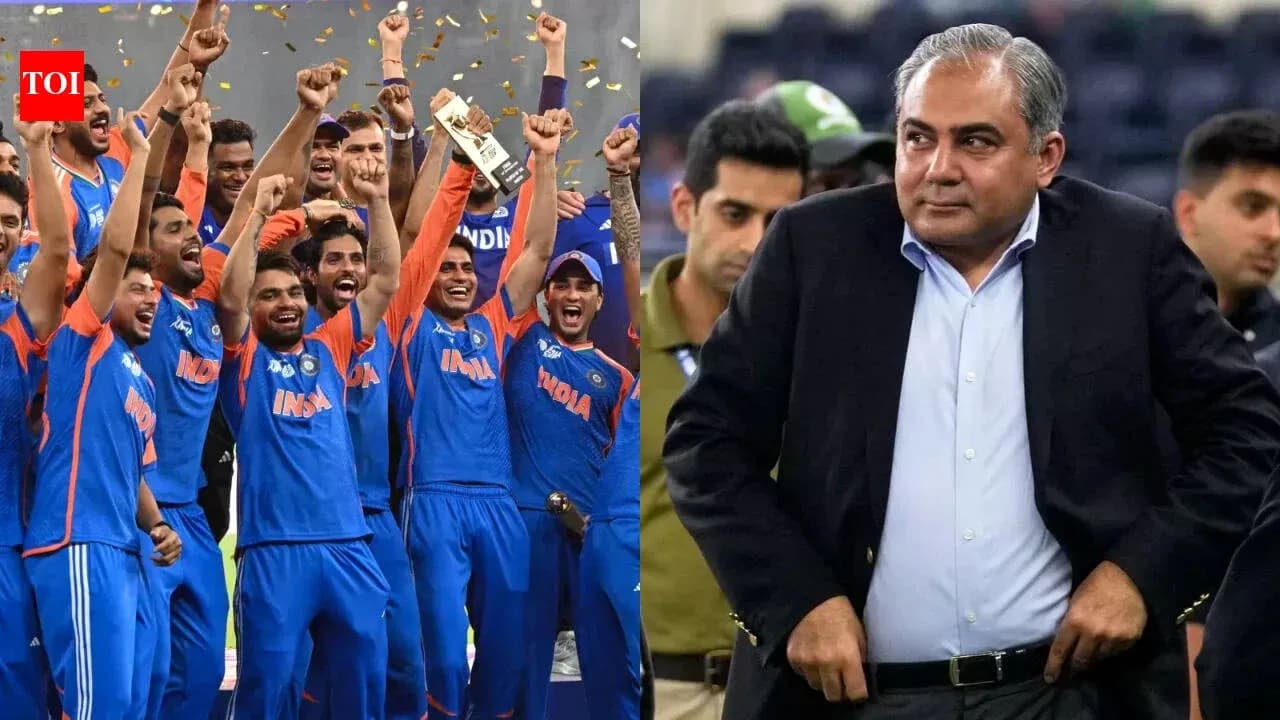
Dubai is bracing for another night when the cricket may not be the only thing under the spotlight.
The ACC Women’s Asia Cup 2026 final on September 13 already promised a big-stage showdown. Now it carries an extra layer of intrigue, with Pakistan Cricket Board chairman and Asian Cricket Council president Mohsin Naqvi expected to be in the stands – and, crucially, on the podium.
According to a Geo Super report, Naqvi is set to be the chief guest at the closing ceremony in Dubai. On paper, that’s routine protocol. In reality, his presence drags last year’s stormy scenes straight back into the frame.
Echoes of a Trophy Left Behind
Naqvi stood at the centre of one of the most contentious moments in recent Asia Cup history.
On September 28, 2025, at the Dubai International Stadium, Suryakumar Yadav’s India beat Pakistan in the Men’s Asia Cup final. The cricket was decisive. The aftermath was anything but.
The post-match presentation stalled for more than an hour as discussions rumbled over who would hand over the trophy. India refused to accept the silverware from Naqvi, who at the time was both ACC president and PCB chairman, and had also served as Pakistan’s Interior Minister.
The backdrop was already raw. The tournament followed the Pahalgam terror attack, and Naqvi had posted anti-India statements on social media during the competition. By the time the final ended, the tension had spilled from politics into the heart of cricket’s most watched rivalry.
India’s players eventually celebrated on the podium without the trophy. Naqvi left the stadium with it. The Asia Cup itself never made it to the Indian dressing room and remains at the ACC office in Dubai. That image – champions without a cup, administrator without a handshake – became one of the defining flashpoints of the tournament.
Now the same characters could be back on the same stage.
Harmanpreet’s India March On
On the women’s side, India have done their part to keep the script alive.
Harmanpreet Kaur’s team have dominated the eight-team Women’s Asia Cup, rolling through the group stage unbeaten. They opened with a win over Thailand, then swept past Hong Kong, and delivered a ruthless statement against Pakistan.
In that game in Dubai, India’s bowlers tore through the Fatima Sana-led side, dismissing them for just 55. The chase was clinical. A seven-wicket win, and a reminder that this Indian team is not just a favourite on paper.
There has been history of a different kind too. Smriti Mandhana crossed a towering landmark during the tournament, overtaking Mithali Raj to become the leading run-scorer in women’s international cricket. It was a moment that would usually dominate the headlines on its own.
Instead, it now shares space with a looming question: what happens if India win it all again, with Naqvi waiting at the presentation area?
India have already secured their place in the semi-finals. The path is clear. Two more wins, and Harmanpreet’s side will walk out for the final on September 13 as contenders for yet another continental crown.
Another Standoff on the Cards?
Naqvi’s authority at the ceremony is not symbolic. It is structural.
As ACC president, he holds the right to present the trophy at an ACC-hosted event. As PCB chairman, he carries the weight of Pakistan’s cricket establishment into a tournament where India and Pakistan remain the sport’s most combustible pairing.
If India reach the final and lift the title, it is Naqvi who is expected to hand over the silverware. Whether India accept it from him this time is a decision that will rest with Harmanpreet and her players, shaped by the Board of Control for Cricket in India’s stance in the background.
So far, the BCCI has stayed quiet. No public indication, no official line on what the women’s team would do if they find themselves on that podium with Naqvi again in the frame.
That silence only adds to the anticipation.
The cricketing equation is simple: India are in form, unbeaten, and among the clear favourites. The political and symbolic equation is anything but. A trophy, a podium, and an ACC president with recent history against Indian teams.
Dubai has seen this story before. The question now is whether Harmanpreet Kaur’s India will write a different ending, or whether the Asia Cup will once again be remembered as much for a presentation ceremony as for the cricket that preceded it.