
The Rivalry of Three Hall of Famers That Shaped Lightweight Boxing's Golden Era
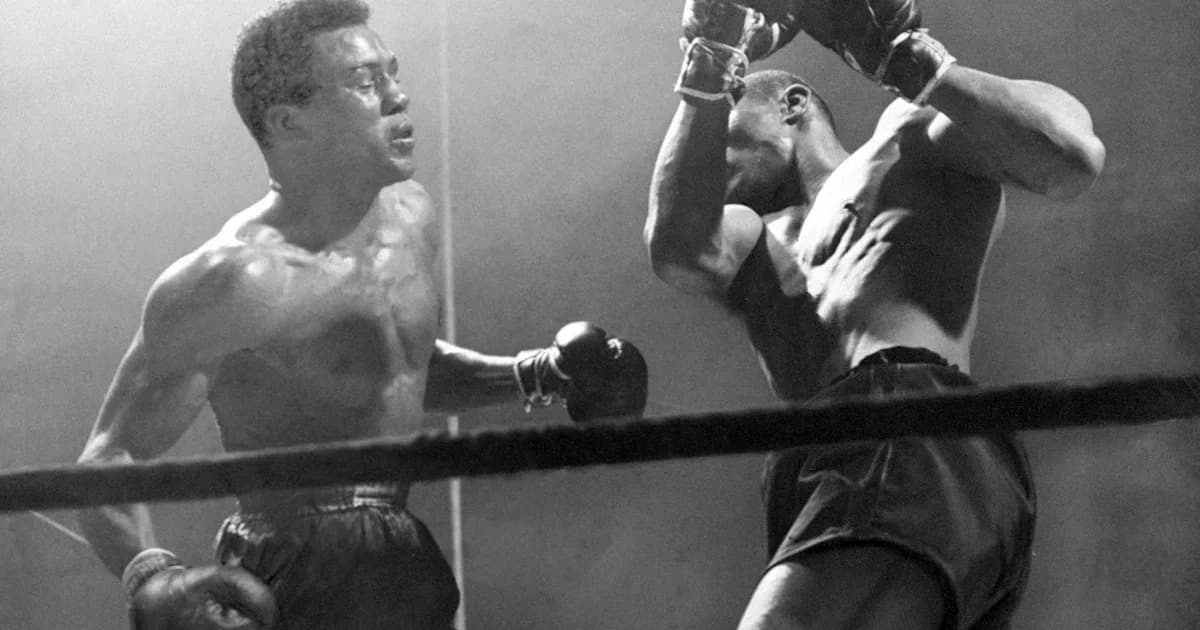
Three Champions, Ten Battles, and Over a Hundred Rounds in the Ring
The lightweight division once thrived with fierce competition between three Hall of Famers who repeatedly faced each other to prove their supremacy. Bob Montgomery, Beau Jack, and Ike Williams defined an era of boxing during the 1940s and 1950s with ten grueling fights spanning 109 rounds.
Early Years and Backgrounds
Bob Montgomery was born in 1919 in South Carolina and moved to Philadelphia as a teenager. He worked in industrial laundries and trained in a tough gym nicknamed "The Slaughterhouse." Managed by Joe Gramby, a notable Black figure in boxing, Montgomery developed a relentless fighting style.
Beau Jack, originally named Sidney Walker, hailed from Georgia and endured hardship after losing his mother early. Raised by his grandmother, he earned his nickname while shining shoes at the Augusta National Golf Club. His early experience in violent Battle Royales and support from golf legend Bobby Jones helped launch his boxing career.
Ike Williams/strong, also from Georgia, moved to New Jersey as a child. Growing up defending his territory as a newsboy, he began amateur boxing under coach Jesse Goss. Williams was not only a boxer but excelled in track and baseball during high school.
Distinct Fighting Styles
Boxing historian Bert Sugar ranked Jack as one of the top 100 fighters, describing his wild and relentless assault that overwhelmed opponents with a variety of punches from unpredictable angles. Williams, taller than most lightweights at 5-foot-9, combined reach and power, delivering devastating combinations backed by 61 knockouts. Montgomery, known as "The Bobcat," was aggressive and persistent, constantly moving forward to wear down foes.
The Rivalry Unfolds: 1943 to 1955
- May 21, 1943: Montgomery defeated Beau Jack by decision at Madison Square Garden for the NYSAC lightweight title, knocking Jack down in the 11th round.
- November 19, 1943: Beau Jack won the rematch, reclaiming the title by outlasting Montgomery over 15 rounds.
- January 25, 1944: Montgomery knocked out Ike Williams in the final round in Philadelphia after a brutal body attack.
- March 1944: After a shocking loss to Al Davis, Montgomery rebounded to beat Beau Jack in a split decision for their third bout.
- August 4, 1944: Jack earned a majority decision in their fourth fight, a non-title 10-round match supporting the war effort.
- August 4, 1947: At Philadelphia’s Municipal Stadium, Williams stopped Montgomery in the sixth round to claim the undisputed lightweight championship.
- July 12, 1948: Williams defended his title by stopping Beau Jack in a fierce championship battle witnessed by 13,000 fans.
- 1951: Williams narrowly defeated Jack by split decision in a non-title fight met with boos from the crowd.
- 1951: Their next meeting ended in a draw.
- August 12, 1955: Williams scored a ninth-round stoppage against Jack in Augusta, Georgia, bringing their rivalry to a close.
Legacy of the Trio
Their records against each other show Williams leading with 4 wins, 1 loss, and 1 draw, Montgomery at an even 3 wins and 3 losses, and Jack with 2 wins, 5 losses, and 1 draw. More important than numbers was their willingness to face brutal challenges repeatedly, knowing the toll it took on their bodies and minds.
The trio’s dedication created legendary careers and thrilling fights that drew huge audiences nationwide. Their example stands in stark contrast to modern lightweight prospects who, despite talent, have yet to build rivalries matching this era’s intensity.