.svg&w=384&q=75 "logo")
Taylor Fritz's Heartbreaking Loss at the US Open
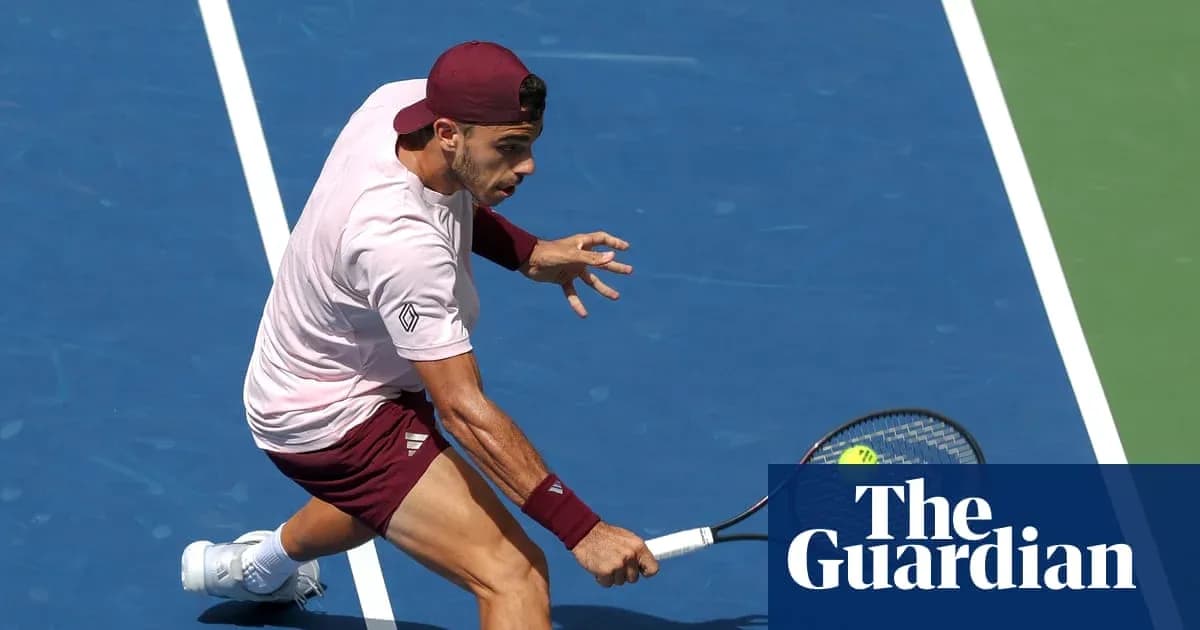
Taylor Fritz stood frozen on Arthur Ashe, his final backhand sailing long, his hands clamped to his face. The sound hit him first – a stunned murmur from a crowd that had spent two and a half sets believing this might finally be his fortnight.
It was not. Not even close in the end.
From two sets up and a break ahead in the third, Fritz let a US Open lifeline slip through his fingers, losing 3-6, 4-6, 6-3, 6-4, 6-4 to a relentless Francisco Cerundolo in the third round. A match that should have underlined his status as the standard-bearer of American men’s tennis instead exposed just how fragile opportunity can be when the draw suddenly opens.
For almost two hours, Fritz looked like a man cruising through a minefield without a scratch. He controlled the baseline, bullied Cerundolo’s forehand, and broke serve at the start of the third set to tighten his grip. Then came a loose service game – a lapse more mental than technical – and with it the turning of the tide.
Once Cerundolo wrestled back the momentum, Fritz never really got it again. He chased it for another two hours, pressing, gesturing, searching for the rhythm that had made the first two sets look routine. It never returned.
The cruelty of the loss lay not only in the scoreline, but in the context.
Fritz is not just another American hopeful. He has already been as high as No 4 in the world. He reached the US Open final in 2024, the first American man to do so since Andy Roddick in 2006, and he backed it up with quarter-final runs in 2023 and 2025, both ended by Novak Djokovic. He has built his career on squeezing every last drop out of his game, compensating for athletic limitations with discipline and relentlessness.
There has always been someone in his way. A Djokovic. A Carlos Alcaraz. A Jannik Sinner. A wall of all-time greats blocking the door to the biggest prizes.
Not this year. Not on paper, at least.
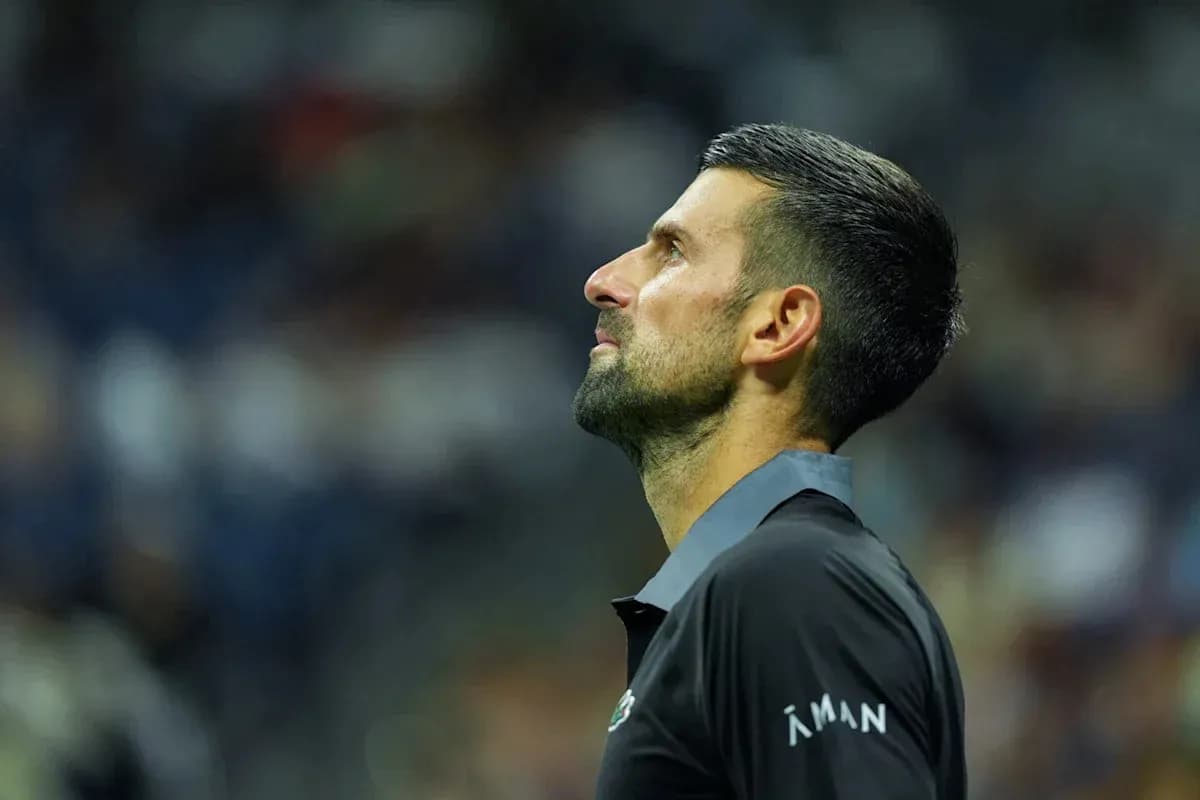
Sinner, world No 1 and already a four-time major champion, is out with injury. Djokovic, now 39, was bundled out in the first round in a shock that still lingers over the tournament. Alcaraz, a seven-time grand slam winner and the defending champion in New York, is only just back from a four-month injury layoff and still feeling his way into form.
For once, there is no obvious, red-hot favourite. No immovable object. Just a field of contenders staring at a bracket that screams: why not you?
Fritz knew it. Everyone around him knew it. That’s what made this hurt.
In the fifth set, with the match finally balanced on a knife edge, Fritz carved out three break points for a 5-3 lead and the chance to serve for it. Three looks at the finish line. Three chances to slam the door. He missed them all.
Minutes later, he was out.
“I don’t even know what to say,” he admitted afterwards, the shock still fresh. “I don’t really want to talk to anybody, see anybody. I kind of just need to get out for a couple days and then just get back to work. I don’t know how I let that happen today.”
On a day that began with American optimism, Fritz’s collapse felt like a warning flare.
Seven home players started the day still alive in the men’s singles: Ben Shelton, Fritz, Frances Tiafoe, Learner Tien, Tommy Paul, Alex Michelsen and Michael Zheng. In the bottom half of the draw, every fourth-round match will feature an American. On paper, it is a golden chance for the host nation to end a drought that stretches back to Roddick’s 2003 US Open title.
But as Fritz discovered, more opportunity brings a different kind of weight. The kind that tightens your arm on break point. The kind that makes a routine hold feel like a test of nerve.
The next week will show who can carry that weight and who will crumble under it.
The American struggles did not end with Fritz.
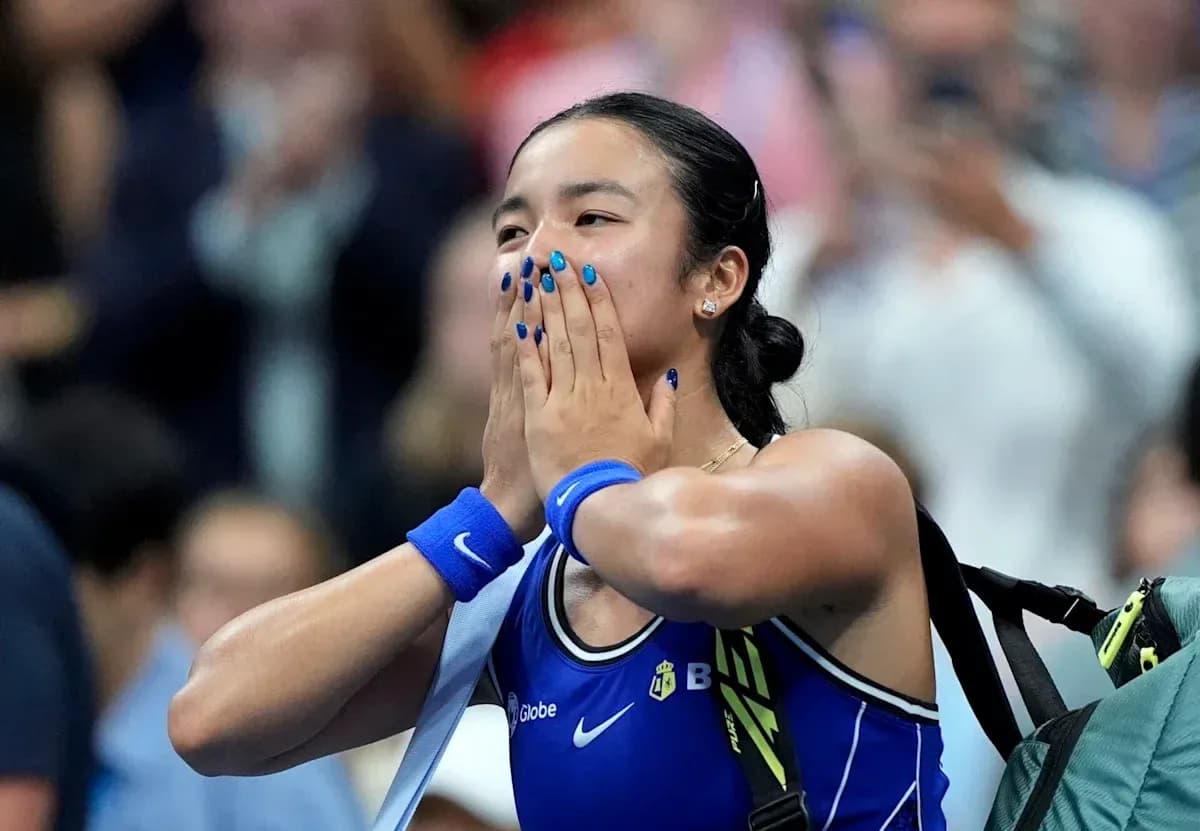
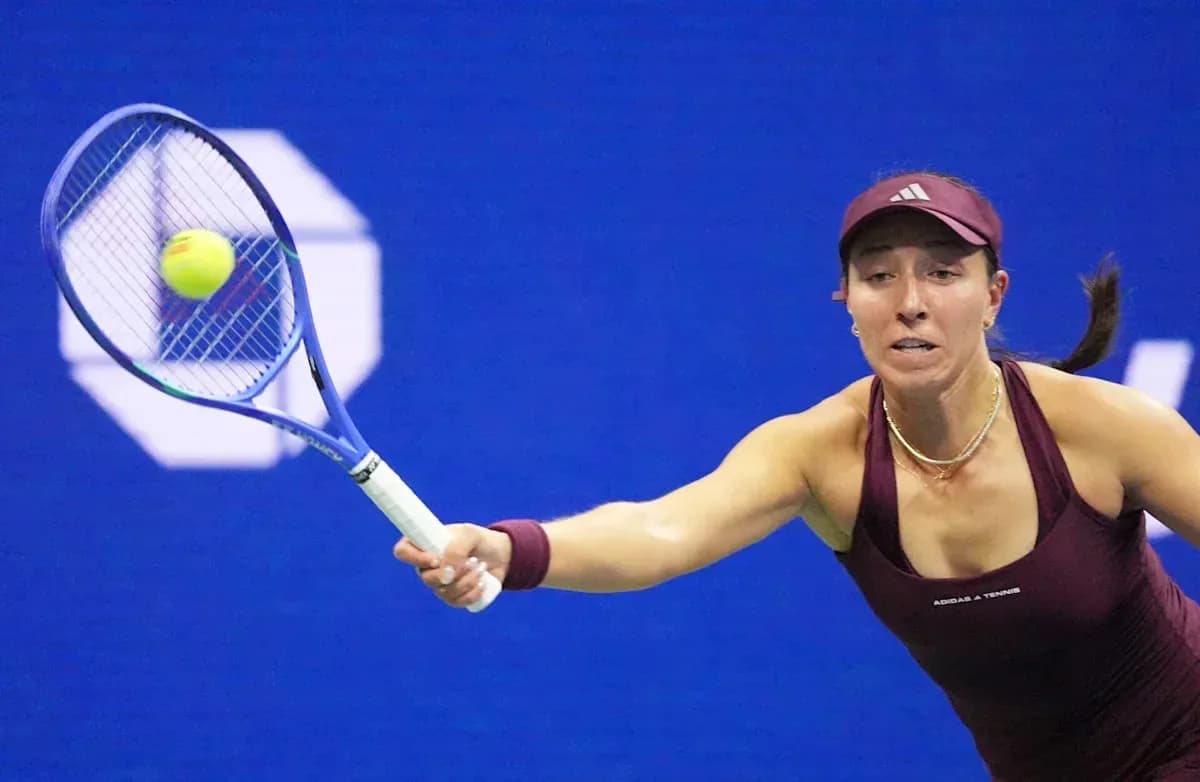
Madison Keys, two days removed from one of the great escapes of her career – saving five match points to edge Anna Bondar in three sets – produced a collapse that will haunt her for a long time. Against Zheng Qinwen, Keys led 5-0 in the deciding set. She lost 1-6, 7-6 (3), 7-5.
From total command to total paralysis.
“I think she started playing better; I started playing poorly,” Keys said, trying to untangle what had just happened. “Then I felt like I couldn’t play tennis any more, and it just was – it just felt like it was a much bigger deal than just playing a tennis match all of a sudden.”
Keys, the 2025 Australian Open champion, did not sugarcoat where she is mentally. She spoke of a struggle that has been building for some time, of issues she has been trying to play through.
“I just feel like I’ve been struggling for a while now and I feel like I was able to kind of play through it for a bit,” she said. “I’m sure everyone could kind of see that I was struggling a little bit, but inside it felt probably even bigger than that. Some weeks are easier than others, and this week is obviously one of the harder ones just because you care so much. Yeah, I’m going to have to make some changes.”
If Keys’ pain was raw, Zheng’s joy was measured and hard-earned.
The 23-year-old Chinese star arrived in New York as an Olympic champion and former top-10 player trying to rebuild. Elbow surgery had stalled her rise, dragged down her ranking, and forced her to grind through qualifying just to make the main draw.
Now she has a win that could redefine her season.
“Tennis sometimes feels like a rollercoaster,” Zheng said. “You see many times that people have a match point, but at the end [their opponent] makes a comeback. Like today was just happening. So this also gives me a lesson that in a tennis match you always have to be there. It doesn’t matter if you are winning or losing, you have a match point or you don’t have a match point – you just need to be concentrated for every single point as long as you can.”
Her reward is a fourth-round showdown with Iga Swiatek, who needed all her resilience to move past Marie Bouzkova. Swiatek saved three set points in the second set and edged through 7-6 (3), 7-6 (3), a scoreline that hints at the tension without quite capturing the strain of every point.
Not every American story ended with heartbreak, but the theme of regression continued.
Amanda Anisimova, whose breakout summer of 2025 brought runner-up finishes at Wimbledon and the US Open and a career-high ranking of No 3, went out with barely a fight, losing 6-2, 7-5 to the 24th seed Anastasia Potapova. The defeat means Anisimova will fall out of the top 10, another marker of how quickly the sport can turn.
In a single day, the US Open reminded its home hopefuls of a brutal truth: draws can open, giants can fall, and paths can clear, but none of it matters if you cannot finish from in front.
For Fritz, Keys, and Anisimova, this will sting deep into the autumn. For the Americans still standing – and for Zheng Qinwen, riding her own surge – the message is clear.
The opportunity is real. So is the cost of letting it pass.