.svg&w=384&q=75 "logo")
Stephen Fleming Takes Charge as England Men's Test Coach
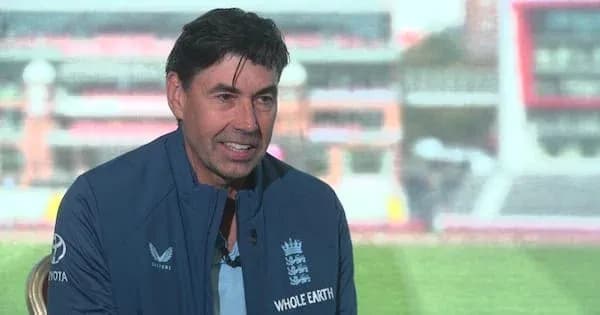
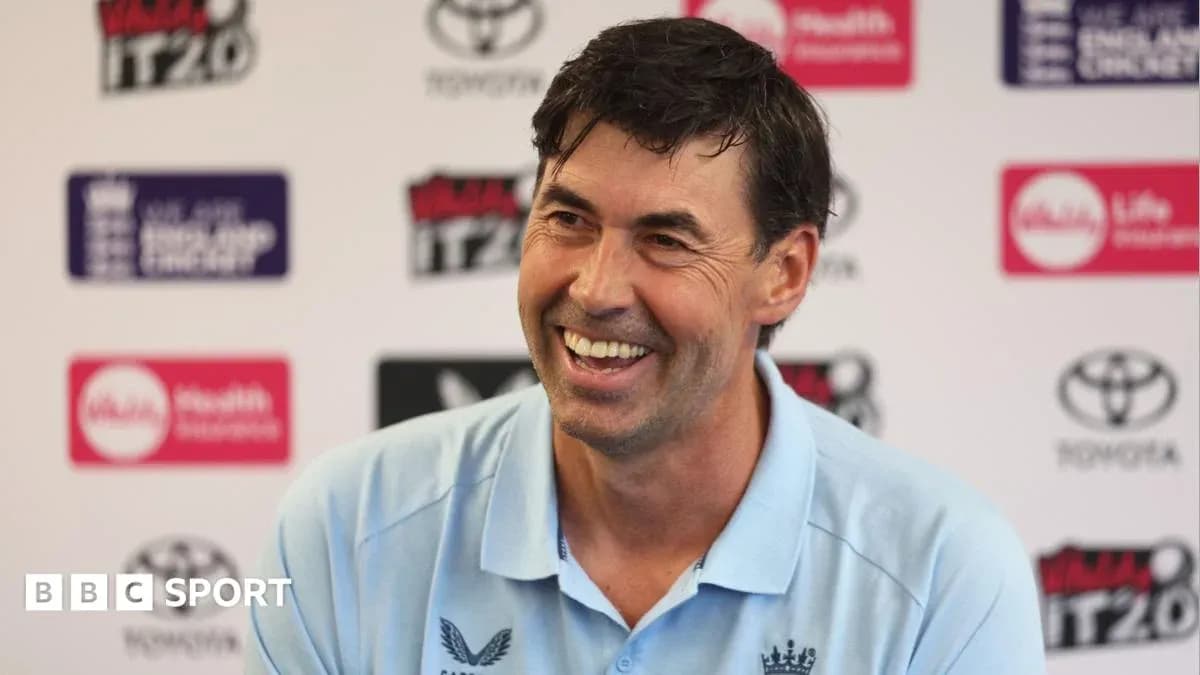
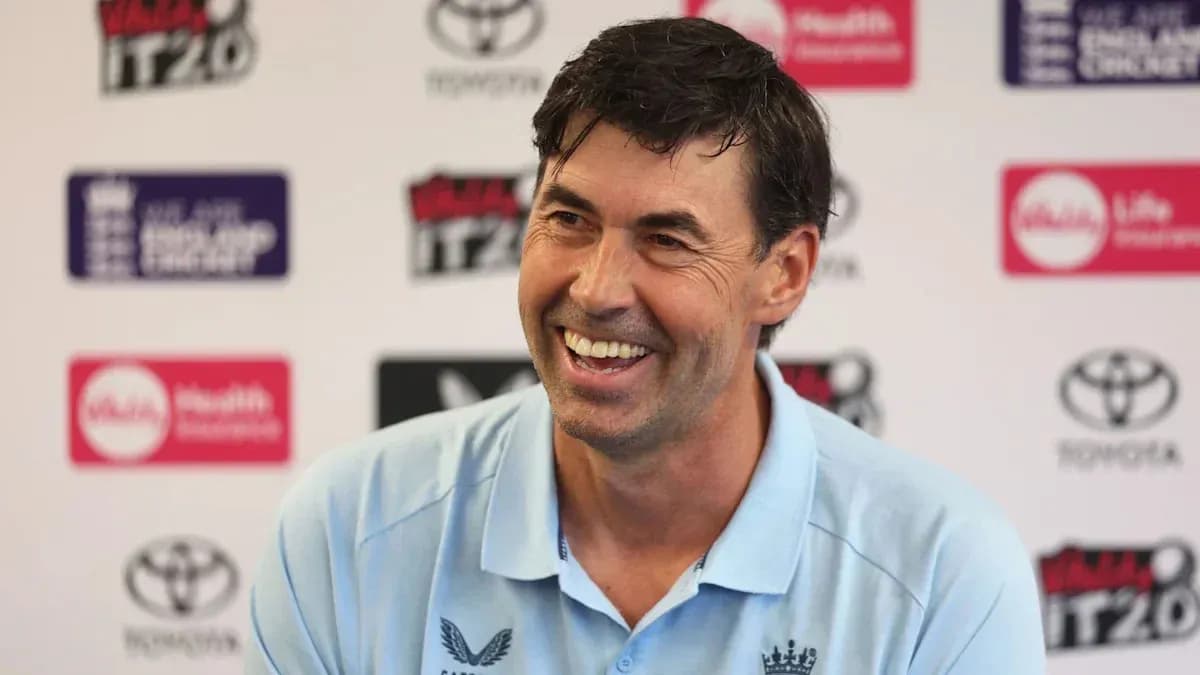
Stephen Fleming leans back, smiles, and admits he has to “suppress” his excitement. For a man who has spent most of his life trying to stay a step ahead of opponents, this is a different kind of challenge: staying a step ahead of himself.
The new England Men’s Test head coach is talking to New Zealand media for the first time since taking the job, and the Ashes – that old, fiery theatre between England and Australia – is already burning in his mind.
“New Zealanders love beating Australia,” he says. That hasn’t changed. Only now, the route to that old rivalry runs through Lord’s, not Wellington.
A Black Caps great, now in English whites
Fleming’s reputation at home is carved in stone. The most successful Black Caps Test captain, 28 wins, a decade in charge between 1997 and 2007, one of New Zealand’s finest batters. He walked away from international cricket in 2008 with his legacy secure.
So why walk straight into the eye of the English storm?
“As a cricketer, it’s probably the most prestigious position in world cricket,” he says. His voice softens when he talks about England. Years of county cricket, some of his “best cricketing days”, left a mark. He has always had, he says, “a deep respect for English cricket”.
Respect is one thing. This England Test job is something else entirely.
The team has been under siege. A 4-1 Ashes defeat to Australia at the start of the year, a 2-1 series loss to New Zealand in June, and a dressing room dragged into headlines for all the wrong reasons. Late-night drinking incidents. A broken curfew. A captain, Ben Stokes, retiring during a Test and then stood down for the second match while under investigation.
Brendon McCullum paid with his job as Test coach in July, though he kept his T20 and ODI roles. The shine of ‘Bazball’ had dulled under the harsh light of results.
Into that environment walks Fleming.
From IPL empire to Test resurrection
When England called, Fleming was not a free agent in any emotional sense. He had just stepped away from an 18-year run in the Indian Premier League, most notably as the architect behind the Chennai Super Kings’ sustained success in the T20 format.
“The job became vacant and it was probably three, four days,” he recalls. “Which wasn’t a lot of time to process leaving one job after 18 years and look at another one.”
He and his family sat down. They went through it, piece by piece. The significance of the role. The weight of the shirt. The scrutiny. The opportunity.
“When you soak it all in and get all the information and take your time with it, there was something that started to burn in the stomach,” he says. “And then that just grew the more information I had about the job, the people, talking to Brendon and understanding the challenges and also how good it has been and how much he’s enjoyed it, how tough it is.”
He asked himself the bluntest question of all: “Can I make an impact?”
The answer, eventually, was yes.
McCullum, friendship and fallout
Fleming and McCullum are bound by history. McCullum debuted for New Zealand under Fleming’s captaincy. The two are business partners. They are close enough to be honest, and the honesty mattered.
“It’s a challenge at times but he’s great,” Fleming says of his friend. McCullum, he explains, did not sugarcoat anything. He spoke about the joy, the strain, the media, the pressure, the thrill.
“He couldn’t have spoken more highly and endorsed it,” Fleming says. McCullum was “heartsore” about losing the Test job, but just as strong in pushing Fleming towards it.
The hope now is that their relationship becomes an asset for England rather than an awkward subplot. With McCullum steering the white-ball sides and Fleming taking charge of Tests, the two New Zealanders will have to juggle resources, players and schedules in a way that keeps all three formats competitive.
“It’s nice to be able to have that friendly face with that professional slant to be able to achieve hopefully some great things,” Fleming says.
He is still finalising his own backroom staff and keeps those names close. There is time for that. What he is clear on is that the age gap with McCullum won’t stop the banter.
“I’m a little bit older than him so I’ll still be able to get the key guys,” he jokes. “Although he’s now saying he got more experience so I’m second fiddle, so we’ve got a little bit of a battle.”
No New Zealand offer, no regrets
Some in New Zealand will wonder if their greatest modern captain should have come home instead. Fleming insists he thought about it.
“It’s always a consideration,” he says of contributing to New Zealand cricket. But the England role was the one on the table. And the Black Caps? “No, they’re too good. They’re set, they’re doing so well.”
He talks about his “utmost respect” for what New Zealand has built, and for the players he knows so well. There is no hint of a man turning his back on home. More a sense that his path, for now, runs elsewhere.
He missed England’s recent Test series against Pakistan because of commitments in New Zealand and still has commentary duties lined up for India’s T20 tour. Once those are done, he says, he will be “in a position to give it everything”.
The real work starts in December, when England head to South Africa for his first Test series in charge.
Back to his roots: red-ball cricket
Some critics have already circled around one easy line: eighteen years in franchise T20, limited recent involvement in Test cricket. Fleming meets that head on.
“My DNA was playing in the whites,” he says. Captaincy. Long days. The grind and the reward. “I was brought up in the red ball and learned the white ball. Franchise cricket’s been a big part of my life but the deep passion is really Test cricket.”
His planning, his style, his way of thinking – he believes all of it is better suited to the longer format, with its “substance and strategy”.
“We are one of the only sports still that is captained from the inside out,” he points out. The on-field brain remains central. Making sure Joe Root and the other leaders are “well equipped” is near the top of his list.
He wants England to be smarter. Not just braver or more aggressive. Smarter in the tough moments, sharper when plans start to fray.
“That’s strategy, that’s creating an identity piece, a belonging piece, some standards,” he says. The idea is simple: whoever wears the shirt, whatever the conditions, they represent it well.
He learned that with the Black Caps. Now he intends to export it.
The Kiwi mindset in an English cauldron
Is the laid-back Kiwi approach really what England need right now? Fleming bats that away as a question for the England and Wales Cricket Board. English sport, he notes, is used to overseas coaches. Football has led the way there.
What he does lean into is the mentality New Zealand coaches bring.
“We don’t have the resource that other bigger countries have,” he says. That’s not just cricket. That’s New Zealand. “So what we do is we look outside the square and we squeeze everything we can out of the stone to make sure that we can compete on the world stage, that’s our DNA, that number 8 wire DNA that we pride ourselves on.”
You can hear the coaching philosophy in that. If you don’t have much, you don’t waste what you’ve got. You don’t burn relationships. You build culture. You live it.
His vision is blunt and ambitious: he wants England to be the best Test side in the world.
“It is a challenge, it’s the pinnacle,” he says. The spotlight will be relentless, the media unforgiving. He knows that. He accepts it as “part and parcel of being in the privileged position”.
He is convinced there is “room to move around” – room to build that cultural piece, that sense of belonging he believes the players are searching for.
Bazball, its legacy and its limits
McCullum’s reign has ended, but its shadow stretches across everything Fleming is walking into. The aggressive, fearless style dubbed ‘Bazball’ dragged a struggling England out of a slump and turned them into one of the most talked-about Test sides in the world.
Fleming is effusive about what his friend and Ben Stokes achieved.
“It culturally changed the cricket landscape,” he says. Performances that stunned the game. It started, he notes, against New Zealand, when England beat the Black Caps at home and forced everyone to “stand up and take notice”. The courage it took, from coach and captain, left a mark.
He also recognises the shift since then. Standards were set. Other teams adapted. Plans that once felt revolutionary began to be “challenged”.
That is the space he now inherits: a side that has tasted both the thrill of reinvention and the sting of being worked out.
Protecting Test cricket in a T20 world
Fleming is not just thinking about England. He feels a broader duty.
With T20 dominating screens and schedules, Test cricket is under pressure. He wants England not just to win, but to help keep the longest format alive.
“We have a responsibility to entertain and play the game well,” he says. That means risk, yes, but also craft. It means giving crowds something worth the time it takes to watch five days of cricket.
He hasn’t yet dwelled on what it will feel like to coach against his old team, the Black Caps. That series is still two years away. By then, he hopes, England will have performances “under the belt” and a clearer identity.
“It will be a good battle,” he says, and leaves it at that.
Standards, not curfews
If the cricketing challenge is complex, the off-field one is more basic. England’s reputation has been damaged by a string of late-night incidents. For a coach who talks so often about culture, that matters.
“Disappointing,” is his word for it.
He talks about an “education process” to lift standards. No grandstanding, no public shaming. Just a clear line of what is expected. He points to Joe Root – the 35-year-old former captain who led England from 2017 to 2022 – as the example.
“Very similar to Kane Williamson,” Fleming says. Players who epitomise “everything great about how you conduct yourself by still being a great player”.
There is, he admits, “work to be done”.
What he won’t be doing is slapping on more midnight curfews. Control for control’s sake is not his style. He is betting instead on something deeper: that if he can build that sense of belonging, that identity, those standards, the players will police themselves.
England have hired him to win Test matches. Fleming sounds like a man determined to do more than that. He wants to rebuild a team, reshape a culture, and drag the oldest format forward.
Now he just has to prove that burning feeling in his stomach was right.