.svg&w=384&q=75 "logo")
Stephen Fleming Embraces Ashes Rivalry as England's New Coach

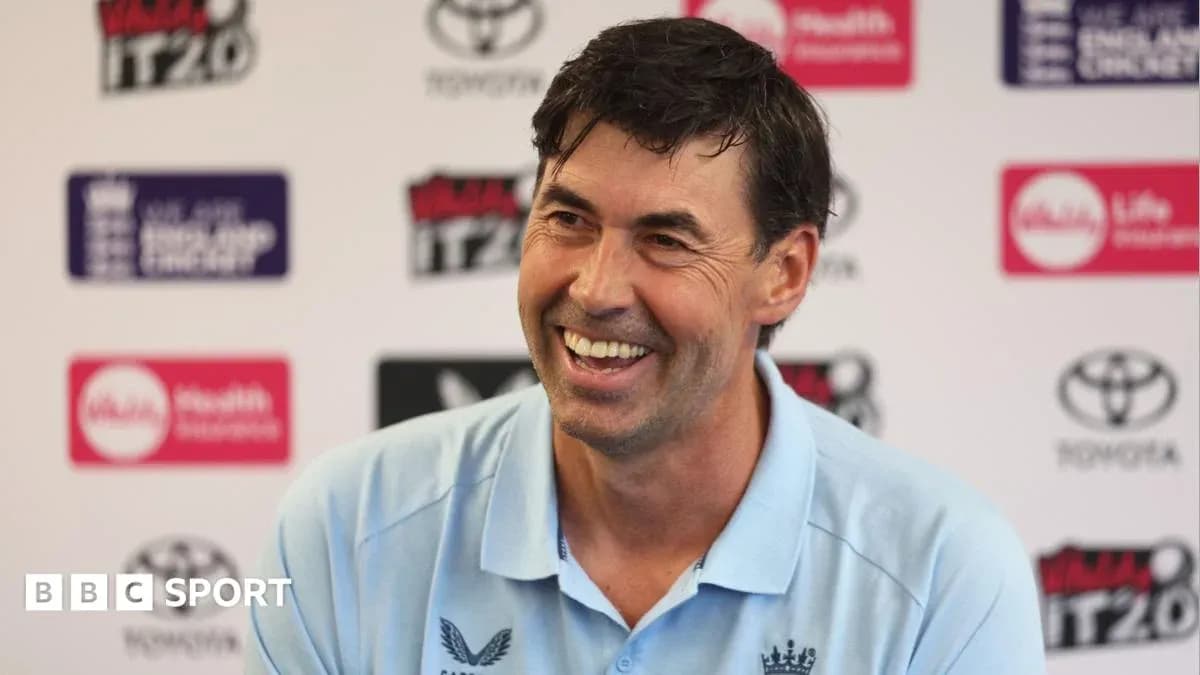
Stephen Fleming walked into his first media briefing as England’s new Test coach and went straight to the heart of it. Not South Africa in December. Not culture, or structure, or “process”.
Australia.
“I have an obsession with it as well,” he said of English cricket’s fixation with the Ashes. “We want to beat the Aussies.”
No hedging. No soft landing. Just a New Zealander, shaped for years as Australia’s “little cousin”, stepping into the job and embracing the same rivalry that has driven English cricket for generations.
A Kiwi who never beat Australia, now charged with helping England do it
Fleming knows what it is to live under the Australian shadow. Across 14 Tests against them for New Zealand, he never tasted victory. That scar tissue has not faded; if anything, it fuels him.
“New Zealand has an obsession with it, we love it,” he said. “We have a deep desire to beat Australia in everything, as the little cousin.”
Now he inherits an England side that has not won an Ashes series since 2015 and is still smarting from last winter’s 4-1 hammering down under. The next chapter comes in the UK next summer. The stakes are obvious. So is his intent.
“We’re heavily linked to England performances,” he added. “To have that opportunity and be part of it, I can’t wait.”
The language is aspirational, but the edge is hard. Fleming talked about wanting to be his “best self” and building a team that “represents itself in the best possible way”, but there was nothing dreamy about the way he framed the task. This is a coach who has spent a career looking at Australia from the wrong end of the result, now handed one of the few jobs in world cricket where beating them defines eras.
From McCullum’s long odds to Fleming’s percentages
Fleming steps into a dressing room still bearing the imprint of Brendon McCullum. The pair are close friends and business partners, but their cricketing instincts diverge.
“I’ll bet on the favourite and he’ll bet on the longest odds possible,” Fleming said, half-joking, wholly accurate.
McCullum’s England were thrilling, reckless, often stubborn. They won only two of his final 10 Tests, the run capped by that Ashes drubbing. The criticism was loud and consistent: a team too wedded to a “brand”, too slow to bend to conditions, too loose on the details.
Fleming wants something different.
On the idea that a Test side needs a defined style, he was blunt: “I don’t think so. The greatest thing for a team to do is to be able to play conditions and situations.”
That is the crux. Less slogan, more substance. He spoke of wanting England to be known as “well-planned”, with “discipline and a really strong basic structure”, but still with “a bit of flair”. Not a rejection of adventure, more a demand that it is earned rather than assumed.
It sounds like a move from casino to chessboard. The long shots that defined McCullum’s tenure are unlikely to disappear entirely, but they will be weighed against the percentages by a coach who has built his reputation in franchise cricket on calm, calculated calls.
Standards, scrutiny and the late-night hangover
If the cricketing philosophy felt measured, Fleming’s stance on discipline was firmer still.
The final stretch of McCullum’s reign – and even the early days after his departure – was dogged by late-night controversies. England’s name has been dragged into more police reports and regulator files than any elite side would tolerate.
Brydon Carse is the latest to feel that heat. Derbyshire Police closed their investigation into an alleged assault last month with no further action, but the Cricket Regulator will now take its turn. Carse remains eligible for selection, though he has not featured in any squad since the incident.
“There are standards,” Fleming said. “We pick on runs and wickets primarily, but I think it’s foolish not to also say there are standards that need to be set.”
He was clear about the responsibility that comes with an England cap.
“You need to behave in accordance with your position. We’re in a very privileged position, and it’s understanding that privilege and what goes along with it. It can’t be convenient.”
That last line matters. Under Fleming, standards will not be something the team remembers when it suits them. “You’ve got to live it every day,” he said. “If we can create something when you want to live it every day and better, then that’s really powerful.”
For players on the fringes, especially those with recent off-field issues, the message is unmistakable: performance opens the door, behaviour keeps it open.
Stokes, Chennai memories and a line he will not cross
Fleming has already begun the familiar tour of counties, faces and powerbrokers. He watched England beat Sri Lanka in the third T20 at Old Trafford, then spent time on the circuit, including a visit to Durham’s draw with Worcestershire, where he met Ben Stokes.
Their history is warm. They shared a dressing room at Chennai Super Kings in the IPL. If any coach might have had the credit to ask Stokes to reconsider his abrupt Test retirement in July, it would be Fleming.
He refused to go there.
“He was in a great space, really happy, enjoying his time with Durham,” Fleming said. “He’s got a good winter planned with the family and is very much at peace with his decision.”
The respect was absolute.
“When a player makes that decision to retire, I respect that decision 100%,” he added. “To try to turn that around and question that is wrong. I know how much goes into that type of decision, and I respect that.”
No gentle nudges. No romantic talk of one last Ashes push. Just a clear boundary: Stokes has earned the right to walk away on his own terms, and the new coach will not trample that.
‘Flemball’ dismissed – and a grown-up in the room
Almost two months after his appointment, this was the first real glimpse of what “Fleming’s England” might look like. It was revealing not only in content, but in tone.
He was calm, unhurried, authoritative. The sort of presence that settles a room rather than inflames it. After a period in which England’s Test side felt permanently on the edge – thrilling, yes, but also chaotic – Fleming projected something else: control.
There was humour too. He joked about having a “stress fracture of the left ear” from the volume of calls with people connected to the England set-up. He laughed about occasionally turning up in fancy dress at Chennai Super Kings to ease the mood. These are not the lines of a man intent on draining joy from the environment.
But he is not interested in a new buzzword era. Asked about “Flemball”, the inevitable label for whatever comes next, he dismissed it as a “medical condition”. No manifesto. No catchphrase.
The contrast with McCullum is stark. Where the previous regime revelled in long-odds punts, Fleming talks like the big brother – the one who checks the bill, locks the door and makes sure everyone gets home in one piece.
That dynamic with McCullum, who remains in charge of the white-ball side, will be crucial. Split coaching has not always served England well. This time, the personal bond between the two New Zealanders, and their differing instincts, might just provide the balance the set-up has lacked.
South Africa first, Australia always
Beyond the Ashes talk, Fleming made one other quiet but important pledge: England’s Test side will give the World Test Championship the respect it has too often been denied. The days of treating it as a vague backdrop rather than a trophy to chase are, in his mind, over.
His first steps, though, come in South Africa in December. A tough tour, a hard dressing room, and a country that has never offered England much charity. It is an immediate examination of everything Fleming outlined – adaptability, discipline, structure, standards.
Win there, and his words about obsession with Australia start to sound less like rhetoric and more like a roadmap.
Lose, and by the time the Ashes arrive next summer, the noise will be deafening again.
Fleming has lived a cricket life in Australia’s shadow. Now he has the job that measures whether England can finally step out of it.