.svg&w=384&q=75 "logo")
South Africa's Fast-Bowling Crisis: Ngidi Joins Injury List
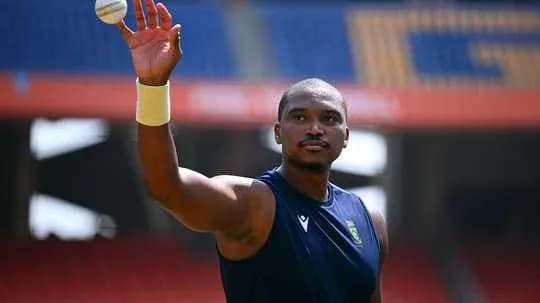
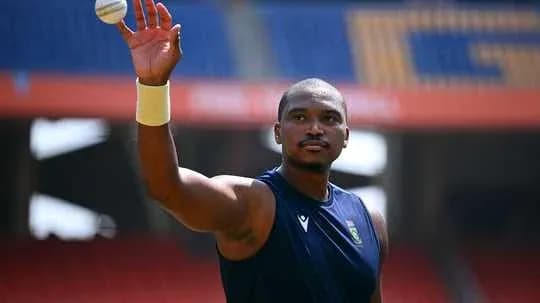
South Africa’s fast-bowling crisis has a new member. Lungi Ngidi has limped into a club no quick wants to join, its membership list short but unsettlingly relevant: Kagiso Rabada, Ottneil Baartman, Lutho Sipamla, Nandré Burger – and now Ngidi.
Four of them are there for the same reason. Hamstrings. Again.
Cricket South Africa confirmed on Friday that Ngidi has been ruled out of the ODI series against Australia, which starts at Kingsmead on Thursday. Like Rabada, Baartman and Sipamla, he has been cut down by a hamstring injury. Burger is the outlier, sidelined by a back problem that refuses to go away.
For those counting the cost, this isn’t just bad luck. It’s timing.
“It’s not surprising, because if you look at any sport there are two peaks in hamstring injuries — the beginning of the season and the end of the season,” Shuaib Manjra, CSA’s former chief medical officer and national men’s team doctor, told Cricbuzz.
At the start of a campaign, players ramp up too quickly. Bodies go from off-season rhythm to full-throttle intensity. Muscles that have enjoyed a lull are suddenly asked to sprint, twist and explode. Late in the season, the same muscles are simply exhausted. Fatigue drags technique and movement out of sync. Something gives.
“So it’s not surprising,” Manjra said, underlining the pattern rather than any mystery.
Ngidi’s latest setback arrived in Centurion last Friday, in the opening round of first-class matches, turning out for the Titans against the Dolphins. CSA declined to predict whether he will recover in time for the Test series against Australia, which begins in Durban on October 9. They did the same with Rabada.
Those Tests matter. Far more than a “relatively random” ODI series.
South Africa are defending the World Test Championship title, the only senior global trophy currently in the cabinet, after beating Australia in the final at Lord’s in June last year. Every selection call, every workload decision, now carries that context.
So when Rabada posted a five-second clip on Wednesday of himself bowling – a gentle effort off a short run-up – it was seized upon by South African fans as something close to a public service announcement. Not a full return. Just a sign that the engine is turning over again.
The problem for the medical staff is not simply whether these bowlers can bowl. It is how much, how soon, and at what intensity.
Rabada hasn’t played any form of cricket since May. Burger last appeared in June. Sipamla only bowled again last month after being out since July. Baartman, before last week, also hadn’t been on a field since July. Those gaps matter. Fast bowlers need overs, rhythm, repetition. Or as the old phrase goes, “getting the overs in the legs”.
And when the hamstring has already failed once, the danger spikes.
“The other risk for a hamstring injury is a previous injury,” Manjra said. “You’re more likely to pick up another injury if you go back too early.
“Doctors have a saying that the highest risk of an injury is a previous unrehabilitated injury. So we have to ensure that the player is fully rehabilitated, otherwise they are vulnerable.”
Ngidi’s situation cuts against the grain. He has not been idle. From August 27 to September 6 he played six ETPL games for Glasgow Cosmic, sending down 120 of a possible 144 deliveries. A solid workload, but not an outrageous one. Enough to suggest he was match-hardened, not undercooked.
Yet he broke down anyway.
That opens another argument entirely. Should he have been playing franchise cricket at that time at all? With a home season looming that includes eight Tests, some would argue his focus should have been on controlled preparation rather than short-term earnings.
But this is professional sport. Those same voices would need to answer a blunt question: would they have covered the money Ngidi would have left on the table by skipping the ETPL?
CSA have moved quickly to patch the ODI squad. Nqobani Mokoena comes in for Ngidi. Gerald Coetzee replaces Rabada. Duan Jansen steps up for Baartman. Sipamla and Burger, not in the original group, would almost certainly have been next in line had they been fit.
Instead, South Africa’s ODI attack against Australia will lean on Marco Jansen’s left-arm hostility, with Corbin Bosch and teenager Kwena Maphaka also in the frame.
It is a resourceful reshuffle. It is not the first-choice pace cartel that helped deliver a WTC crown.
The Tests are closing in. The hamstrings are screaming. How many of South Africa’s frontline quicks will actually be standing when Australia walk out in Durban on October 9?