.svg&w=384&q=75 "logo")
South Africa's Fast-Bowling Crisis: Ngidi Joins Injury List
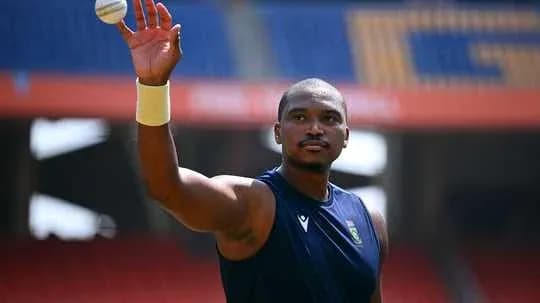
South Africa’s fast-bowling crisis has a new, reluctant member. Lungi Ngidi has joined an exclusive club no one wants to qualify for – a growing list of injured quicks at the very moment the international season sharpens into focus.
On Friday, CSA confirmed that Ngidi has been ruled out of the ODI series against Australia, which starts at Kingsmead on Thursday. The diagnosis felt grimly familiar. Like Kagiso Rabada, Ottneil Baartman and Lutho Sipamla, Ngidi has succumbed to a hamstring injury. Only Nandré Burger breaks the pattern, sidelined instead by a worsening back problem.
Four hamstrings. One back. One anxious cricket nation.
A predictable problem, at the worst possible time
To the casual observer, it looks like a crisis out of nowhere. To Shuaib Manjra, CSA’s former chief medical officer and long-time national team doctor, it fits a familiar pattern.
“It’s not surprising, because if you look at any sport there are two peaks in hamstring injuries — the beginning of the season and the end of the season,” Manjra told Cricbuzz.
The explanation is blunt. At the start of a season, players go from relative rest to high-intensity competition almost overnight. The workload spikes. Bodies protest. Late in the season, the issue flips: fatigue takes over, tired muscles lose their resilience, and something gives.
“So it’s not surprising,” Manjra said again, underlining the point.
Ngidi’s latest setback came in Centurion last Friday, during the opening round of first-class matches. Turning out for the Titans against the Dolphins, he broke down before the international summer had properly begun. CSA has stopped short of predicting whether he will recover in time for the Test series against Australia, which starts in Durban on October 9. They’ve done the same with Rabada.
That silence speaks loudly.
Because this isn’t about a “relatively random” ODI series, as some within the camp have taken to calling it. Not for a side defending the World Test Championship title, the one global crown South Africa can currently point to, won so emphatically against Australia at Lord’s in June last year. The Tests matter. Deeply.
Rabada’s five-second lifeline
In that context, a five-second video shouldn’t mean much. Yet Rabada posting a clip of himself bowling – gently, off a short run-up – on Wednesday was enough to spark cautious optimism among South African fans.
No roaring in, no explosive follow-through, just a hint that the engine might be turning again. For a team staring at an Australia series without its spearhead, that fleeting image felt like a lifeline.
And it’s not just about being able to bowl again. It’s about being able to bowl enough.
Rabada hasn’t played any form of cricket since May. Burger last turned out in June. Sipamla only returned to competitive action last month after being out since July. Before last week, Baartman also hadn’t bowled in a match since July. These are not players coming back from niggles; they are fast bowlers needing a full rebuild.
The old phrase still applies: they have to get overs into the legs. That process cannot be rushed, especially when the hamstring has already sounded an alarm.
“The other risk for a hamstring injury is a previous injury,” Manjra said. “You’re more likely to pick up another injury if you go back too early.
“Doctors have a saying that the highest risk of an injury is a previous unrehabilitated injury. So we have to ensure that the player is fully rehabilitated, otherwise they are vulnerable.”
The temptation, when Australia are on the fixture list and the WTC title is on the line, is to push. Manjra’s warning is a reminder of what that can cost.
Ngidi’s different path, same destination
Ngidi’s case is more nuanced. Unlike some of his fellow quicks, he hasn’t been short of cricket. He played six ETPL games for Glasgow Cosmic between August 27 and September 6, sending down 120 of a possible 144 deliveries. That’s a solid, but not excessive, workload. Enough to keep him match-sharp. Not obviously reckless.
Yet the hamstring still went.
That opens the door to a different argument: that he might have been better served staying home, calibrating his preparation for a South African season that includes eight Test matches. Franchise cricket, in that view, becomes a distraction – or worse, a risk.
It’s an easy theory to float, harder to live by. Ngidi is a professional fast bowler in a global market. Turning down a contract means turning down a paycheque. Those who insist he should have skipped the ETPL must then answer a simple question: would they have covered the money he walked away from?
The modern calendar doesn’t leave much room for neat answers. It just piles pressure on bodies and schedules, then asks the medical staff to pick up the pieces.
Patchwork attack, same expectations
With Ngidi ruled out, South Africa have moved quickly. Nqobani Mokoena has been drafted into the ODI squad. Gerald Coetzee comes in for Rabada, Duan Jansen for Baartman. Sipamla and Burger were not in the original ODI plans, but if they had been fit, the current injury list would almost certainly have dragged them into the conversation.
Instead, the new-ball responsibility in the ODIs falls on Marco Jansen. The tall left-armer suddenly becomes the senior figure in an attack that may also feature Corbin Bosch and teenager Kwena Maphaka. Raw pace, plenty of promise, not much international mileage.
For the short term, that might just be enough. ODI cricket allows a little more room to hide inexperience, to manage spells, to mix and match options.
The real question hangs over October and beyond. Can South Africa get Rabada, Ngidi, Burger, Sipamla and Baartman fully fit, fully loaded and genuinely ready for the grind of eight Tests in a packed season?
Because if the hamstring club keeps adding members, the defence of that WTC crown will be fought not just on the field, but in the physio room.