.svg&w=384&q=75 "logo")
Serena and Venus Williams Return to Arthur Ashe Stadium in US Open Doubles
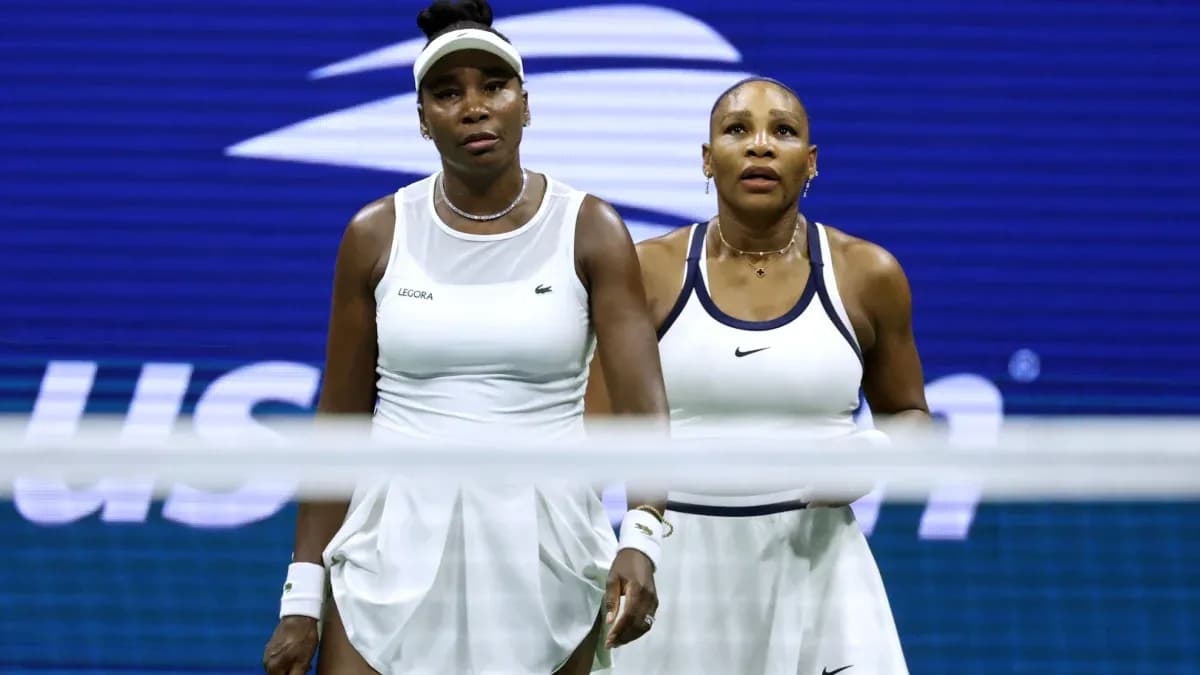
Arthur Ashe Stadium did not ease them back in gently. It swallowed them whole.
On a humid New York night, Serena and Venus Williams walked into the US Open doubles draw again, aged 44 and 46, and the old arena responded like it was 1999 all over again. The tennis almost felt secondary for a moment. Smoke, lights, phones raised to the rafters. Arthur Ashe looked less like a court and more like a prizefight stage as the sisters emerged to a roar they have spent decades earning.
Across the net stood the future: Taiwan’s Hao-Ching Chan, 32, and Australia’s Maya Joint, 20, the 14th seeds. A generational split you could see in every rally. The scoreboard would eventually read 6-3, 6-7(6), 7-6(7) to Chan and Joint, but the numbers barely scratched the surface of what unfolded.
A Show Before a Shot
The theater began before the warm-up balls had even bounced. MrBeast — Jimmy Donaldson to his 515 million YouTube followers — stepped out to handle the coin toss, an unmistakable sign that this was more than just a first-round doubles match. The crowd buzzed, phones flashed, and then the noise shifted from celebrity curiosity to something deeper as the Williams sisters took their places on the baseline.
They were dressed in matching white sneakers, skirts, and tops. The symmetry was familiar; the stakes were not. Serena had been away from the sport for four years before her singles return at Wimbledon this summer, where Joint had handed her a painful first-round defeat. This night offered a chance, if not for full redemption, then at least for a measure of personal payback.
Slow Start, Fast Noise
The opening set went to the seeds, 6-3. Chan and Joint were sharper, cleaner, more settled. They picked on spaces, not reputations, and punished any short ball. Yet every Williams hold, every heavy first serve, every vintage Venus backhand down the line drew a wave of applause that made the scoreline feel almost irrelevant.
Arthur Ashe did not sit in judgment. It stood in appreciation.
Shouts of “Come on, Williams sisters!” cut through the New York air so relentlessly that the stadium announcer eventually had to ask for silence over the loudspeakers. Even then, the quiet never lasted long. One strong return, one flicked volley, and the volume surged back.
The Second-Set Surge
The second set turned into a fight. The rallies lengthened, the Williamses found their timing, and the crowd sensed the shift. Every point that nudged them closer to leveling the match landed like a body blow to the tension in the building.
The set went to a tiebreak, and the place erupted. Each mini-break for the Americans drew a roar; each slip brought a sharp collective intake of breath. At 6-6 in that breaker, the entire stadium seemed to hold its lungs hostage. When Serena and Venus finally edged it 7-6(6), the ovation felt less like celebration and more like gratitude. They were not done yet.
The sisters met at the net with a fist bump and a burst of shared laughter, the kind that has carried them through more than two decades of dominance, disappointment, and everything in between.
The Final Push
By the third hour, the physical strain showed. The final set became a test of endurance and nerve. Chan and Joint refused to shrink in the moment, even as the crowd tilted heavily against them. They began to edge ahead, and each missed chance from the Americans drew a chorus of “oh!” from the stands.
At 5-5, the match balanced on a wire. Arthur Ashe woke up again, as if sensing this might be the last time it would see the sisters together under the lights in a major. Every serve, every second serve in particular, carried a weight that went beyond this tournament.
The set locked at 6-6. One more tiebreak. One more shot at rewriting the script.
The super tiebreak crackled with tension. Chan and Joint stayed disciplined, held their nerve, and finally closed it out 7-6(7). No wild celebration, just the quiet satisfaction of a significant win over icons of the sport.
Standing Ovation for an Era
When the final point landed, something rare happened in a sport that usually moves briskly on to the next match. The entire stadium rose. Not for the winners, but for the departing legends.
Serena and Venus walked off to a standing ovation that washed away the sting of defeat. They had lost the match. They had not lost the room.
For the sisters, this doubles run came after a brief reunion last month in Cincinnati, where Marta Kostyuk and Peyton Stearns had beaten them in their opening match. In New York, both had already tasted singles action: Venus fell to Sofia Kenin on Sunday, while Serena has remained a central figure at the US Open not just with a racket in hand but in the commercial and cultural space around it, fronting campaigns with brands such as Heineken 0.0 and speaking candidly about weight-loss medications and the stigma that surrounds them.
On this night, though, all of that fell away. It was just two sisters, back where their legend took flight, pushing against time and a younger generation for as long as their bodies and belief would allow.
The result goes to Chan and Joint. The memory belongs to Serena and Venus, and to a New York crowd that roared as if it knew it might not get many more nights like this.