.svg&w=384&q=75 "logo")
Rishabh Pant's White-Ball Future in Doubt as Selectors Decide
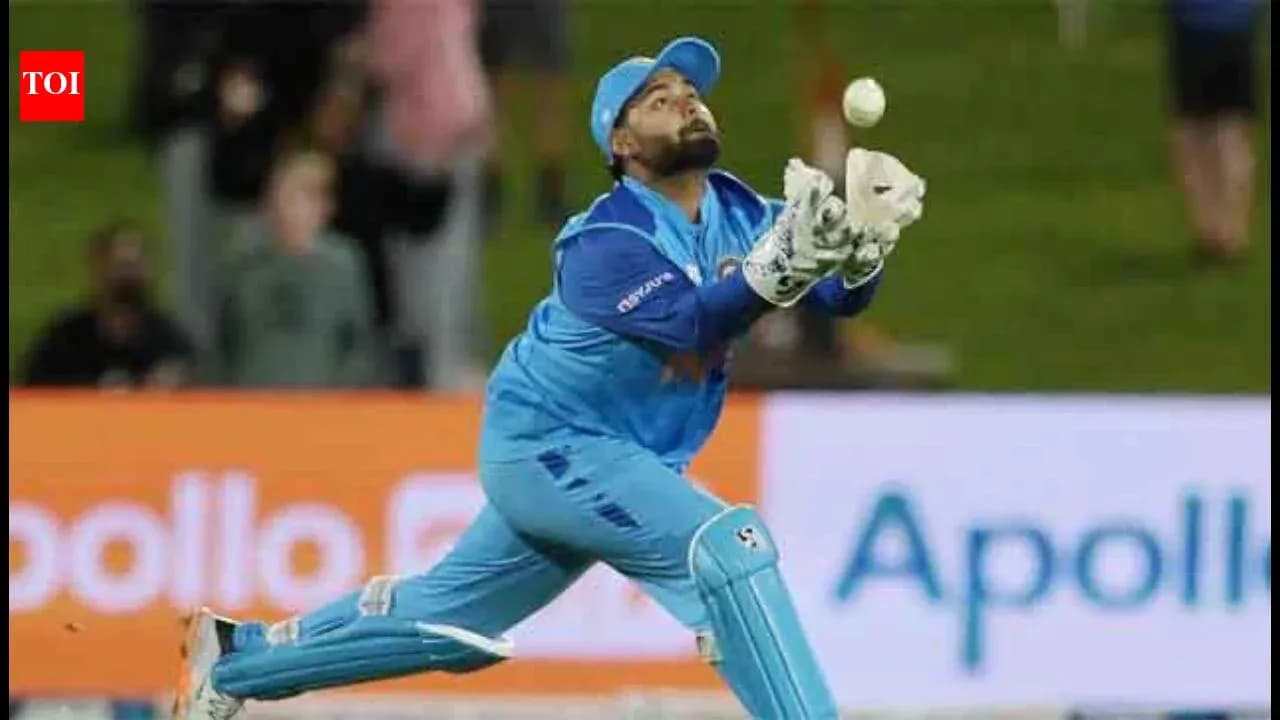
Rishabh Pant’s career has never followed a straight line. Now, it has hit its most curious bend yet.
Left out of India’s ODI squad for the upcoming three-match series against West Indies, Pant has, at the same time, been handed the captaincy of the Rest of India side for the Irani Cup. One door shut, another flung open. Just not in the format many expected.
The ODIs against West Indies, starting September 27 in Thiruvananthapuram before moving to Guwahati and New Chandigarh, are officially part of India’s early build-up to the 2027 ODI World Cup. Pant will not be there. He will instead be leading a red-ball ensemble, a move that underlines exactly how the selectors now see him.
‘A very strange and very unique case’
Aakash Chopra did not bother dressing it up.
“Rishabh Pant is a very strange and very unique case,” the former India opener told Jio Star, capturing the mood around one of India’s most mercurial talents.
Pant remains central to India’s Test plans. He is back in the longer format, a key part of the red-ball core. Yet even there, the hierarchy has shifted: he has been stripped of the Test vice-captaincy. Trusted, but not entrusted.
White-ball cricket tells a harsher story. “In ODI cricket, without playing, he’s been bid goodbye,” Chopra said, summing up a decision that has arrived without a recent run of failures to justify it. The numbers show the distance: Pant has played only one ODI in the last four years. One. For a player once seen as India’s long-term wicketkeeper-batter across formats, that is not a dip. It is a reset.
The Irani Cup captaincy, though, sends a very different message. “He has been made the captain of the Rest of India (ROI), which also tells you that, with respect to red-ball cricket, they are very serious about Rishabh playing a huge role in the longer format,” Chopra pointed out. The contrast is stark. In whites, he leads. In blues, he watches.
“So for white-ball cricket, as of now, I think this selection committee has made up its mind,” he added. That is as close as it gets to a verdict.
ODI door closing as 2027 plans begin
Pant’s omission comes at a significant juncture. India are not just playing West Indies; they are sketching the first outlines of their 2027 World Cup squad.
Shubman Gill has been asked to lead the ODI side, a clear sign of grooming for the future. Rohit Sharma and Virat Kohli are in the 15, anchoring the present while the next generation circles around them. KL Rahul, not Shreyas Iyer, wears the vice-captain’s armband, with Iyer instead set to feature in India’s Asian Games campaign.
Pant, once part of every white-ball conversation, is absent from all of it. He was already dropped from the T20I set-up after India’s 2024 T20 World Cup triumph. Now the 50-over format has moved on as well, at least for the moment.
He has never truly nailed down a permanent place in the ODI XI, and the sporadic appearances tell their own story. When a new cycle starts and you are not in the room, it usually means you are no longer in the blueprint.
Jaiswal, Gaikwad and a race for 2027
While Pant grapples with his white-ball reality, others sense opportunity.
“You have to think about who you can take along as reserves for the World Cup,” Chopra said, shifting the lens to those pushing from behind. The fight for top-order and reserve spots is already simmering.
There is, as he put it, “a toss-up here between Yashasvi Jaiswal and Ruturaj Gaikwad, who are both part of this team, and whenever they’ve played, they’ve scored a lot of runs.” Both left strong early impressions. Both now stand at a crucial crossroads: a productive West Indies series could tilt the long-term equation decisively.
“I’m looking at an opportunity opening up for one of these two,” Chopra added. The message is clear. While one era quietly winds down for some, another is waiting to burst into life.
The fast-bowling department offers a similar subplot. Auqib Nabi has been around the squad, travelling, training, waiting. “Auqib Nabi has been travelling with the team for some time now but isn’t getting a chance to play in the XI. If he gets his opportunity, I’ll be quite excited to see him perform,” Chopra said. For players like Nabi, even a single game in this series could be career-defining.
Two formats, two futures
The schedule against West Indies is packed: ODIs in Thiruvananthapuram (September 27), Guwahati (September 30) and New Chandigarh (October 3), followed by T20Is in Lucknow, Ranchi, Indore, Hyderabad and Bengaluru between October 6 and 17. It is the kind of stretch where squads evolve, combinations harden and pecking orders are set.
Pant will watch the white-ball leg from the outside, but he will walk out as captain in the Irani Cup, carrying the weight of expectation in a format where his value is unquestioned. India see him as a cornerstone in Tests, a match-winner capable of changing the course of a series in a single session. That faith remains intact.
The question now is whether this split identity becomes permanent. Is Rishabh Pant destined to be India’s great red-ball specialist in an era obsessed with white-ball versatility, or does he find a way back into the shorter formats once the dust of this selection cycle settles?
For the moment, the selectors have drawn their lines. The next move is Pant’s.