.svg&w=384&q=75 "logo")
Pedro Sanchez Insists 2030 World Cup Final Must Be in Spain
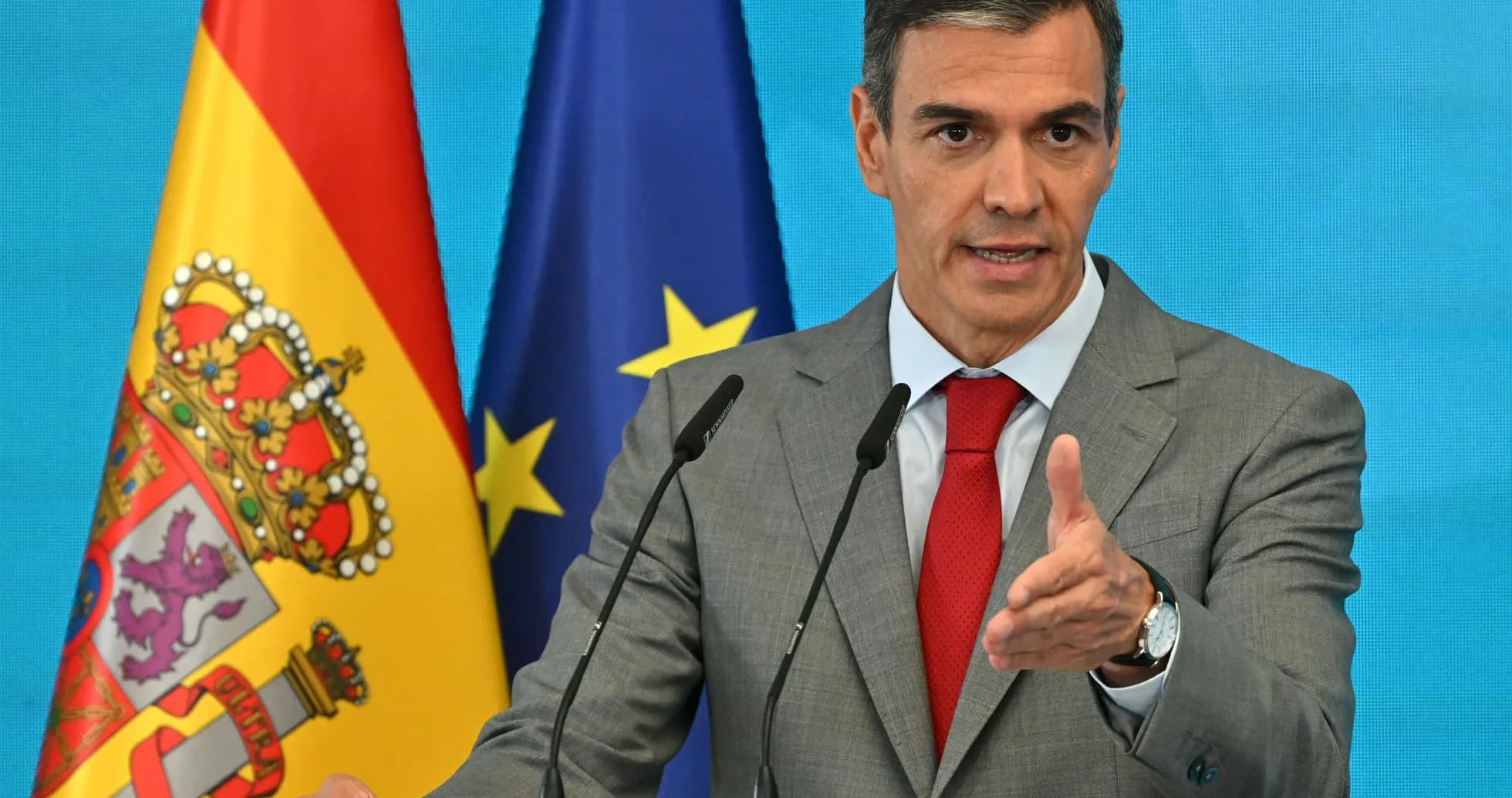
Pedro Sanchez has drawn a clear line in the sand: the 2030 World Cup final, he insists, must be played in Spain.
The Spanish Prime Minister has vowed his government will do “everything in its power” to keep the showpiece on Spanish soil, pushing back against growing noise that Morocco could yet snatch the biggest game of all.
Speaking to Spanish network SER on Monday, Sanchez left little room for ambiguity. His government, he said, “will work to ensure that the final is held here,” before driving home the broader ambition: “the time has come for Spain to win the World Cup on its own soil.”
This is no routine political soundbite. It is a direct response to the suggestion that FIFA president Gianni Infantino could be tempted to shift the final across the Strait of Gibraltar, rewarding Morocco’s rapid rise as a footballing and infrastructural force.
Sanchez’s argument leans heavily on recent history. Spain are no longer just a traditional power; they are the modern benchmark. La Roja claimed their first world title in South Africa in 2010, then climbed back to the summit this year at the tournament jointly hosted by the United States, Mexico and Canada.
Those two stars on the shirt are being used as leverage off the pitch.
On 19 July, Spain underlined their status again, edging Argentina 1-0 after extra time in the final, Ferran Torres delivering the decisive goal. A tight, tense contest, settled by a familiar name, wrapped up a campaign that felt like a continuation of the golden era that began in Johannesburg 14 years earlier.
For Sanchez, that sporting pedigree strengthens Spain’s case to stage the ultimate game in 2030. A champion nation, he believes, deserves the grandest stage on home ground.
The 2030 World Cup, though, is no ordinary tournament. It is a political and symbolic maze.
Spain will co-host with Portugal and Morocco, with the competition stretching across continents to mark 100 years since the first World Cup. Uruguay, Argentina and Paraguay will each stage an opening match, a nod to the 1930 original in Uruguay, when every game was played in Montevideo.
The centenary concept has scattered matches across borders and time zones. The one venue that still truly matters, though, remains undecided: the stadium that will host the final.
That decision has now moved beyond football logistics and into the realm of statecraft. Spain’s government has stepped openly into the contest, intent on keeping the World Cup’s climax within its own frontiers and unwilling to watch the showpiece drift south.
The battle for the 2030 final has started to look less like a scheduling question and more like a test of influence.