.svg&w=384&q=75 "logo")
Pat Cummins Names Cheteshwar Pujara as Toughest Indian Opponent

Pat Cummins has spent a career hunting the world’s best batters. Yet when he was asked to pick the toughest from India, his mind went straight back to a man who rarely played a shot in anger.
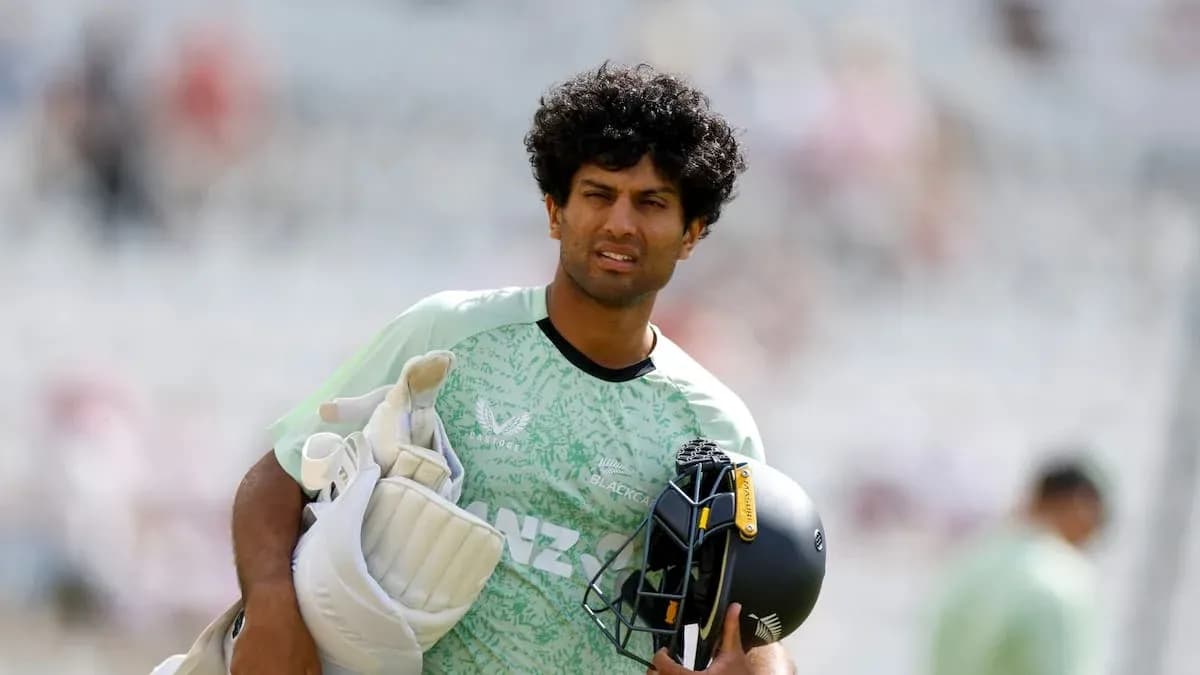
Cheteshwar Pujara.
Not Virat Kohli. Not Rohit Sharma. Pujara – the immovable object who turned Australia’s celebrated pace cartel into weary, frustrated triers over two epic Border-Gavaskar Trophy campaigns.
‘Death by a thousand papercuts’
In a promotional video for Prime Video Sport, Cummins was asked to name the most difficult opponent he’d faced from seven major cricketing nations: India, Pakistan, New Zealand, England, Sri Lanka, South Africa and West Indies.
For India, there was no hesitation.
“India, I'm going to say, Pujara. Really hard to get out. Just like death by a thousand papercuts. Happy to face 100 dot balls if he wanted to. Not going to give you a chance,” Cummins said in the clip shared on social media.
Those words instantly drag you back to 2018-19 and 2020-21. To Adelaide, Melbourne, Sydney, Brisbane. To days when Pujara simply refused to leave.
Across 25 Tests against Australia, Pujara scored 2,074 runs at an average of 49.38. Nearly half of those – 993 runs – came in Australia, where he peeled off three centuries and five fifties. His highest, a grinding 193 in Sydney, felt less like an innings and more like a siege.
For Cummins and company, every leave, every dead bat, every smothered bouncer chipped away at belief. The numbers tell one story; the body language of Australia’s quicks told another.
Pujara walked away from international cricket last year with 7,195 Test runs in 103 matches at 43.6, including 19 hundreds and 35 fifties. He played just five ODIs for India, scoring 51 runs, but his legend was always built in whites, over hours and days, not overs.
A roll call of retired greats
Cummins’ selections came with a quiet caveat: every name he chose has already stepped away from international cricket. This wasn’t a list of current duels. It was a nod to battles already fought.
From New Zealand, he went with Brendon McCullum, now England’s white-ball coach but once the game’s most combustible opener.
“From New Zealand, I played Brendon McCullum a couple of times when he was really going hard at the top of the order,” Cummins recalled. Anyone who bowled to McCullum in those years knows what that means: no sighters, no easing in, just instant chaos.
Pakistan threw up plenty of modern stars for consideration – Babar Azam, Shaheen Shah Afridi, Haris Rauf among them – yet Cummins’ mind flicked back to an off-spinner with a box of tricks.
“Pakistan, Saeed Ajmal. It was like the last ball of the over; I walked in, Saeed Ajmal just goes, and I went, what? Clean bowled. I have never seen anything like that,” he said.
One ball. One blur. Stumps gone. Impression made.
From England, he picked Sir Alastair Cook, the relentless accumulator who wore down attacks with quiet, stubborn precision. South Africa’s slot went to AB de Villiers, the shot-maker who could turn any length into a scoring opportunity and any attack into a puzzle he seemed born to solve.
Sri Lanka’s representative was Tillakaratne Dilshan, the inventive opener whose range – from conventional drives to the audacious “Dilscoop” – forced bowlers into uncomfortable, unfamiliar lines. For West Indies, Cummins chose Chris Gayle, the hulking left-hander whose presence alone could change a field and a game.
Each name evokes a different kind of pressure: mental, technical, physical. Pujara’s slow suffocation. McCullum’s early blitz. Ajmal’s mystery. Cook’s grind. De Villiers’ genius. Dilshan’s innovation. Gayle’s brute force.
Cummins has faced them all. The fact that his toughest Indian opponent is the man who so often refused to play the glamorous shot says plenty about what truly troubles even the very best fast bowlers: not just skill, but stubborn, unshakeable resistance.