.svg&w=384&q=75 "logo")
Pakistan's Cricket Turmoil: Selection Earthquake and Upcoming Test
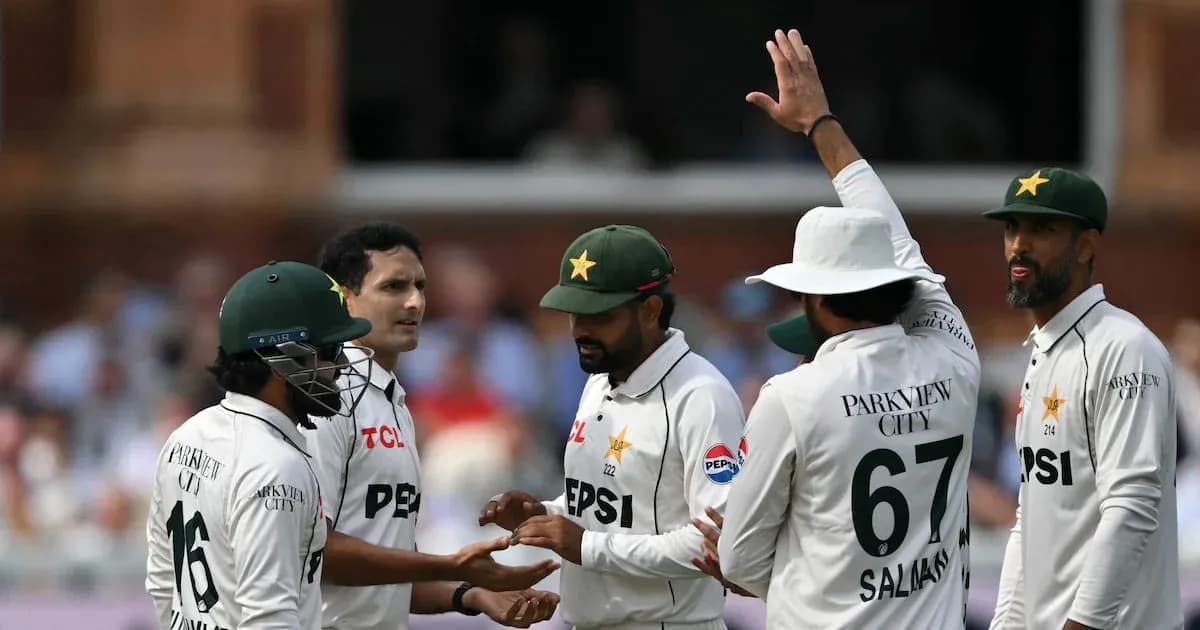
Pakistan arrive in Birmingham this week not so much chasing a comeback as sifting through the rubble of a tour gone badly, publicly wrong.
Two crushing defeats – an innings loss at Headingley, followed by a 194-run beating at Lord’s – have already sealed the three-match series for England. The third Test at Edgbaston, starting Wednesday, is officially a dead rubber. It does not feel like one. Not for Pakistan. Not after what came next.
Selection earthquake
The Pakistan Cricket Board did not simply tweak. It detonated.
Seven players were sent home. Seven replacements were summoned, five of them uncapped at Test level. In the middle of an away series in England.
Sarfaraz Ahmed, the Test coach, was sacked. So was bowling coach Umar Gul. Their seats were handed to Pakistan’s white-ball staff, with Mike Hesson and Ashley Noffke suddenly thrust into the red-ball spotlight.
Among those told to pack their bags were Salman Ali Agha – who had captained the side at Headingley when Babar Azam was injured – and left-arm spinner Ali Usman, fresh from a five-wicket haul in that very match. Mohammad Rizwan, the seasoned wicketkeeper, was also cut. Imam-ul-Haq, who did not bat in either innings at Lord’s because of a calf injury, was sent home as well.
For a team already reeling, it was a brutal cull.
Hesson, the former New Zealand head coach, did not hide his unease at the scale and timing of the upheaval.
“The guys are probably more used to a little bit of chaos than I am,” he said last week. “I don’t think anyone wants this to happen in the middle of a series.”
The task in front of him is clear and unforgiving: assemble something resembling a balanced Test side on the fly, with a group that barely knows each other in this format, in conditions that have exposed Pakistan’s worst technical flaws.
“From my perspective, it is about putting a balanced squad together, not only for this Test, so we actually have some variety in our attack,” Hesson said. “Pakistan is known for the pace, unusual actions, mystery spin – we haven’t really been able to present any of that.”
He’s right. The famous Pakistani unpredictability has not arrived in England. Only the chaos has.
Fingers pointed at the top
Back home, the inquest has already begun, and it is not gentle.
Azhar Ali, part of the Pakistan side that climbed to No 1 in the Test rankings a decade ago, has laid much of the responsibility at the feet of Aaqib Javed, the PCB’s high performance director since 2024.
“Every decision he makes backfires, and he then says: ‘It’s not me’,” Azhar told the Guardian, a stinging assessment from a former captain who knows the system inside out.
Jason Gillespie, who has worked inside that same system as Pakistan coach, went further, saying Javed needed to “look at himself in the mirror”.
Those comments landed hard enough for the PCB to move. On Monday, the board announced an investigation into the squad’s conduct in England. The implication is clear: the problems are not just technical or tactical. Something deeper is being questioned.
But for the new arrivals in Birmingham, the politics can wait. They have a more immediate issue. They have not had a single tour game between the second and third Tests. They must walk straight into Edgbaston and somehow adapt to English conditions that have tormented their predecessors.
England’s “perfect storm”
Joe Root, restored as England captain and second on the all-time Test run-scoring list, described the conditions at Lord’s as a “perfect storm” for batters: seam-friendly pitches, heavy skies, and responsive Dukes balls combining to make every run feel like a minor act of defiance.
Both sides have had to cope with it. Only one has managed.
Pakistan have not reached 200 in any of their four innings so far. Their batting has buckled repeatedly against England’s revamped pace quartet of Ollie Robinson, Jofra Archer, Josh Tongue and Gus Atkinson. Different angles, different speeds, relentless pressure. Pakistan’s top order has looked trapped, their middle order exposed, their tail overwhelmed.
England, by contrast, have ridden those same conditions with discipline and clarity. The wild excesses of the late Bazball era have been shelved. This has been a more clinical, more ruthless version of England: patient with the bat, ruthless with the ball, alert in the field.
They have already secured their first Test series win in over a year. Edgbaston now offers the chance to complete a whitewash and to bookend Root’s first series back in charge with a statement of control rather than chaos.
A win… and then what?
For Pakistan, the stakes are more twisted.
On the surface, an upset victory in Birmingham would be a lifeline, something to cling to at the end of a grim tour. But among their supporters, a different fear runs through the conversation: that even a win might be dangerous.
The worry is that a single good result, snatched from the wreckage, would mask the structural problems laid bare over the past year. This is not a blip. Pakistan have lost 15 of their last 20 Tests. That is not mercurial. That is a pattern.
One of cricket’s laziest clichés is that Pakistan are “mercurial”. Capable of anything, on any day. Unpredictable. Mysterious.
Right now, they are nothing of the sort.
They are, as Azhar Ali put it, “totally consistent – in the most negative way.”
Edgbaston will show whether this week’s shock therapy can jolt them out of that grim new identity, or whether this tour becomes just another chapter in a decline that can no longer be dressed up as volatility.