.svg&w=384&q=75 "logo")
Pakistan Cricket Board's Brutal Reset After Lord’s Defeat
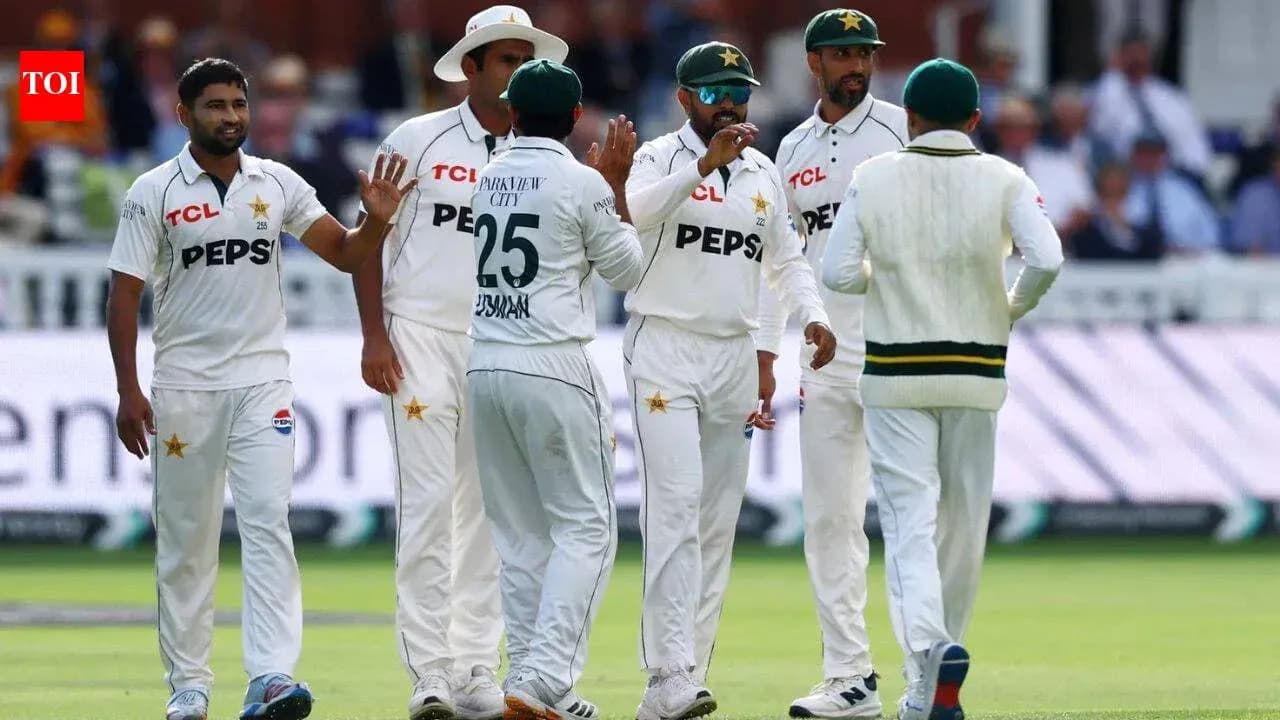
At Lord’s, where Pakistan’s past and present so often collide, the shadows have crept back in.
Babar Azam’s celebration after pouching Ben Duckett in the second Test felt, for a moment, like a rare bright frame in a grim series. By the end of the match, a 194-run defeat to England was the least of Pakistan’s worries.
What followed was an earthquake.
Seven players out, coaches removed
In the wake of the Lord’s loss, the Pakistan Cricket Board (PCB) tore into the touring party. Mohammad Rizwan, Salman Ali Agha, Imam-ul-Haq, Ali Usman, Khurram Shahzad, Aamir Jamal and Muhammad Awais Zafar were all dropped mid-series.
The shake-up did not stop with the playing XI. Head coach Sarfaraz Ahmed and bowling coach Umar Gul were also released from their roles, a brutal mid-tour reset that underlined the level of unease within the camp.
Seven replacements have been drafted in. Two of them, Saim Ayub and Abdullah Fazal, already have international caps. The other five are walking into the most scrutinised Pakistan Test tour in years without a single ball or run at this level to their names: pace-bowling all-rounders Razaullah Khan and Mohammad Imran, left-arm spinner Arafat Minhas, wicketkeeper Saad Baig and left-arm quick Mohammad Imran Junior.
On paper, it looks like selection based on form and future planning. Behind the scenes, the story is far heavier.
“More than cricket”
Sources within Pakistan cricket have indicated the upheaval stems from reasons “more than cricket”, hinting at concerns that go beyond simple performance analysis.
Questions were put to both the PCB and the England and Wales Cricket Board (ECB). More than 72 hours later, neither had responded to those specific queries.
Instead, the first formal word came from PCB Director Media and Digital Communications, Amir Mir, who confirmed an internal process was under way.
“The Pakistan Cricket Board has initiated an internal disciplinary inquiry following media reports concerning discipline and conduct, which are currently being reviewed internally. The PCB handles such matters in accordance with its standard procedures. The process is being conducted under PCB regulations, ensuring that all concerned individuals are given due consideration,” his statement read.
No names. No explicit allegations. But the direction of travel was clear: this was not just about a bad tour.
Phones seized, questions multiply
Pakistani outlet 365 News reported that players’ devices have been taken into PCB custody and will remain with the board until the end of the final Test. The report did not identify which players were affected, and the PCB has not publicly explained why the phones were seized.
In a country where the word “fixing” carries a unique, painful weight, such details land with force. Especially at Lord’s, the scene of Pakistan’s most infamous scandal in 2010, when Salman Butt, Mohammad Asif and Mohammad Amir were jailed and banned for spot-fixing after deliberately bowling no-balls at pre-arranged moments in a Test.
The timing, the venue, the secrecy around the devices – all of it has stirred old memories, even as the board insists the matter is being handled internally and procedurally.
Aaqib Javed tears into Imam-ul-Haq
As the disciplinary inquiry simmered in the background, another fire broke out in public.
PCB Director of High Performance Aaqib Javed aimed a fierce, personal broadside at opener Imam-ul-Haq, who had suffered a low-grade calf tear at Lord’s and did not bat in either innings.
“The Imam injury is a big question mark, and a deep disappointment. Players in the past used to get injuries, but they used to put on casts and still tried to play. We'll take action against this. How is it possible that a pulled muscle ruled you out of batting in both innings? He should have tried and fought. He'll have to face an inquiry; I can't say he faked it, but a muscle pull like that cannot stop you from batting altogether,” Aaqib told Geo.
It was an extraordinary public rebuke of a current player from a senior PCB figure, delivered mid-series, while an internal inquiry was already in motion.
Aaqib also backed the sweeping selection changes, framing them as a blunt message to the squad.
“The message we're sending to the recalled players is that you have to raise your game on important tours and compete, and we should be able to see some effort,” he said.
Naqvi doubles down on ruthless reset
PCB chairman Mohsin Naqvi stepped in to support the overhaul, presenting it as a necessary corrective rather than a purge.
“Every match of a series is important for us and we are not left with any option if a player is not performing but to look for his replacement. The purpose behind these changes is not to axe players from contention, but just to replace them,” Naqvi told Geo Network.
On the surface, that is the language of performance management. In context – with an internal disciplinary inquiry running, players’ phones seized, and high-profile figures openly threatening “action” and “inquiries” – it sounds more like a warning shot across the entire dressing room.
Old ghosts, new fault lines
Lord’s has always been a romantic stage for Pakistan cricket: the green shirts under the pavilion, the travelling fans, the history. Yet for many, the name of the ground is now inseparable from the 2010 spot-fixing scandal.
That stain never fully fades. It lingers in every whispered allegation, every abrupt suspension, every unexplained investigation.
Now, in another England series, with a team already reeling on the field, Pakistan find themselves again answering questions that go far beyond runs and wickets.
The PCB insists the matter is being handled within its regulations, with “due consideration” for everyone involved. The board has not, so far, offered clarity on the scope of the inquiry or the reasons behind the confiscation of devices.
The new faces drafted into the squad arrive into a dressing room stripped of senior figures and shrouded in suspicion. Their debut might not just be about surviving the new ball in English conditions. It may be about surviving one of the most volatile environments Pakistan cricket has seen in years.
The final Test will play out under that cloud. The real verdict, though, may come later, when the inquiry ends and the board finally reveals what, exactly, it believes has been happening behind closed doors.