Old Trafford at a Crossroads: Carrick's Decision on Captaincy
By Sunday afternoon, as Bournemouth walk out into the chill of Old Trafford, the real drama may already have taken place in the dressing room.
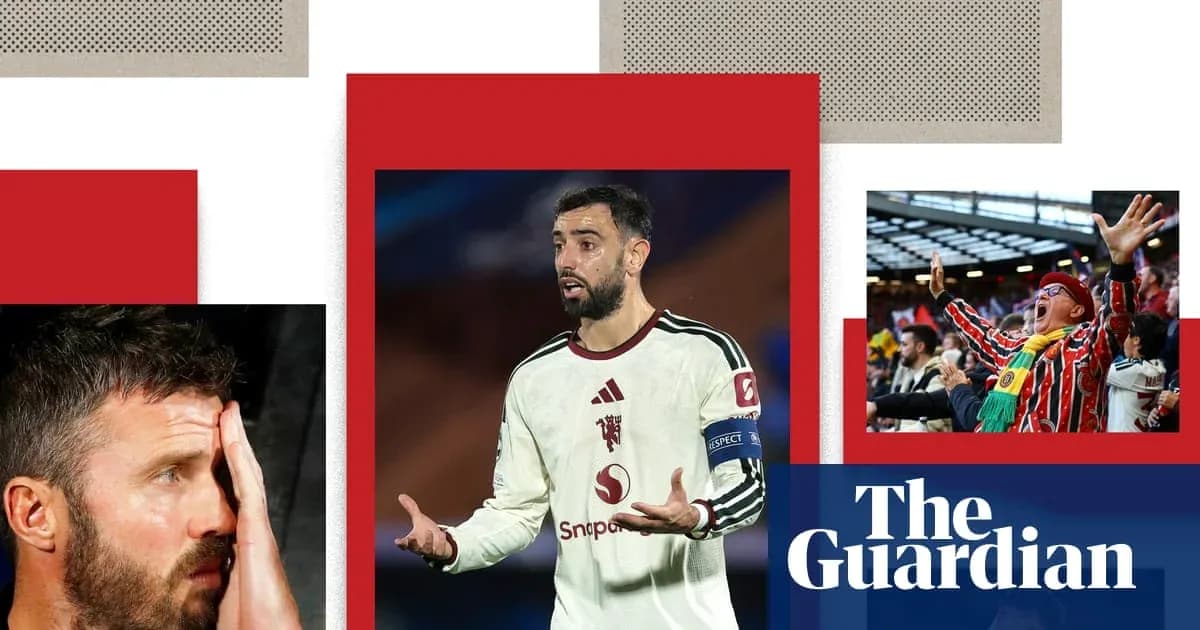
Michael Carrick has a decision to make that could define not just his own tenure, but the direction of Manchester United for years. Does he strip Bruno Fernandes of the captaincy? Does he drop his five-time player of the year? On Friday, he pointedly refused to rule it out. That silence said plenty.
This is no longer just about team selection. It is about control.
The Captaincy Question – and a January Cash-Out
Fernandes and Lisandro Martínez are not just senior figures; they are lightning rods. Both are out of contract at the end of the season, with the club holding a one-year option in each case. Both, judging by their recent behaviour, look like men already eyeing the exit.
United have to ask themselves a brutal question: is now the time to cash in and rip off the bandage?
In a winter window where value is usually hard to find, raising around £40m for Fernandes and £25m for Martínez would give Carrick – or his successor – real ammunition to start a rebuild. It would also send a clear signal that the days of players outlasting managers are over.
The backdrop is damning. In Como, after a 4-1 humiliation in incessant rain, Fernandes did not just express frustration. He challenged the very blueprint.
“It’s a decision from the staff to not press man-to-man and sometimes leave space behind and try to get the ball, wait for them, but sometimes when you give space to these teams they get confidence,” he said.
Those words still echo. Publicly questioning the tactical approach is not a minor gripe; it is a direct shot at the head coach’s authority. If Carrick lets that slide, he becomes a passenger. If he acts, even if he does not survive the season, he leaves behind a dressing room that understands the manager’s word still matters.
Sunday may tell us which way he leans.
Reconnecting a Broken Bond
Seven hundred United supporters travelled to Lombardy and watched their team collapse under grey skies and relentless rain. They stayed. They sang. They went home soaked and empty.
They will be there again against Bournemouth. They always are.
Carrick often speaks of the fans as the club’s lifeblood. The question is whether the players truly feel it. Performances like the one at Como suggest a group that has drifted away from the basic creed that built this club: you do not hide, you do not sulk, and you certainly do not stroll through a game in front of people who have given up their weekend and their wages to follow you.
United do not need a slogan on a dressing-room wall. They need a manager who sits the squad down and spells it out: this club is nothing without that crowd. You either connect with them, or you do not belong here.
Where Has the Joy Gone?
For decades, Old Trafford lived on a simple idea: attack. Sir Alex Ferguson’s flying wingers. Sir Matt Busby’s holy trinity of Best, Law and Charlton. The roar that greeted every surge forward. The demand was always the same – “attack, attack, attack” – and United usually obliged.
Right now, that spirit has drained away. Carrick admitted on Friday that something had been “lost”. He is right.
Look back to 17 January 2026. His first game of his second spell, Manchester City in town, and United went for them from the first whistle. They suffocated Pep Guardiola’s side, denied them air, and ran out 2-0 winners. Old Trafford crackled that night. This was a team that finished third last season by playing with bounce, aggression and belief.
This season, the smile has gone. A heavy, familiar gloom has rolled back in – the same suffocating mood that hung over the final days of Ruben Amorim. Carrick was supposed to be the antidote to that. Now he must become it again.
His attempt to shift United towards a more possession-based side has played its part in the malaise. The idea made sense; the execution has faltered. Youri Tielemans, signed to help orchestrate that style, does not have the legs for a central role, so he has been nudged into the No 10 position. Kobbie Mainoo, the one midfielder who can truly run a game and cover the ground, is injured. Fernandes, for all his effort, roams out of structure, leaving holes where a passing option should be.
The result is a team caught between identities: not ruthless on the break, not secure on the ball, and joyless in both.
Time for the Kids
There is another lever Carrick can pull, one that has defined United at their best: trust the youth.
Right now, a core of long-serving seniors – Fernandes, Luke Shaw, Harry Maguire, Diogo Dalot, Marcus Rashford, Amad Diallo and Martínez – are underperforming. The mood around them feels stale, the energy flat.
So why not shake the tree?
The old “play the kids” line can sound like a cliché, but it endures because it so often works. Young players run. They smile. They play without the weight of the last five bad results on their shoulders. They can jolt a tired dressing room back to life.
- Shea Lacey, a sharp, direct wide player.
- Harry Amass, a left-back with promise.
- The Fletcher twins, Jack – a clever No 10 – and Tyler, a defensive midfielder with bite.
They are 19, and between them they have only 22 senior appearances. That is nothing in the grand scheme of this club.
None of them, on current evidence, could do worse than some of the names ahead of them. Give them minutes. Give them responsibility. Let them force the issue.
If the established figures respond to the threat, standards rise. If they do not, United at least discover who is ready to carry them into the next era.
An Attack Starved of Ideas
The numbers are as stark as the performances. In seven of their 11 matches this season, United have scored either once or not at all. For a club built on goals, that is a staggering collapse.
Ten goals in seven league games. Five in three Champions League ties, four of those against Sabah, the weakest side they have faced. Strip away that outlier, and the picture is even bleaker.
Como provided another grim snapshot: no clear pattern of play, no control, barely a handful of chances. This is not a blip; it is a trend. Continue like this and United will not be glancing up the table. They will be checking over their shoulders.
The solution does not lie in another layer of caution. This squad is not built for it. A looser, more instinctive attacking style, underpinned by a bold mindset, would suit the likes of Matheus Cunha and Bryan Mbeumo. These are players who thrive in chaos, who want space, tempo and risk.
Last season, United beat City, Arsenal, Chelsea and Liverpool by leaning into that edge, by being the team that ran harder, pressed braver and attacked with conviction. That version of United has vanished.
On Sunday, with Bournemouth in town and the air around Old Trafford heavy with doubt, Carrick has a chance to drag it back. Change the captaincy. Back the kids. Unchain the attack.
He can cling to what is failing, or he can start building the side that will outlast him.
Which Manchester United walks out at 2pm will tell us everything about the one he wants to leave behind.