NWSL Rewrites Controversial High Impact Player Rule
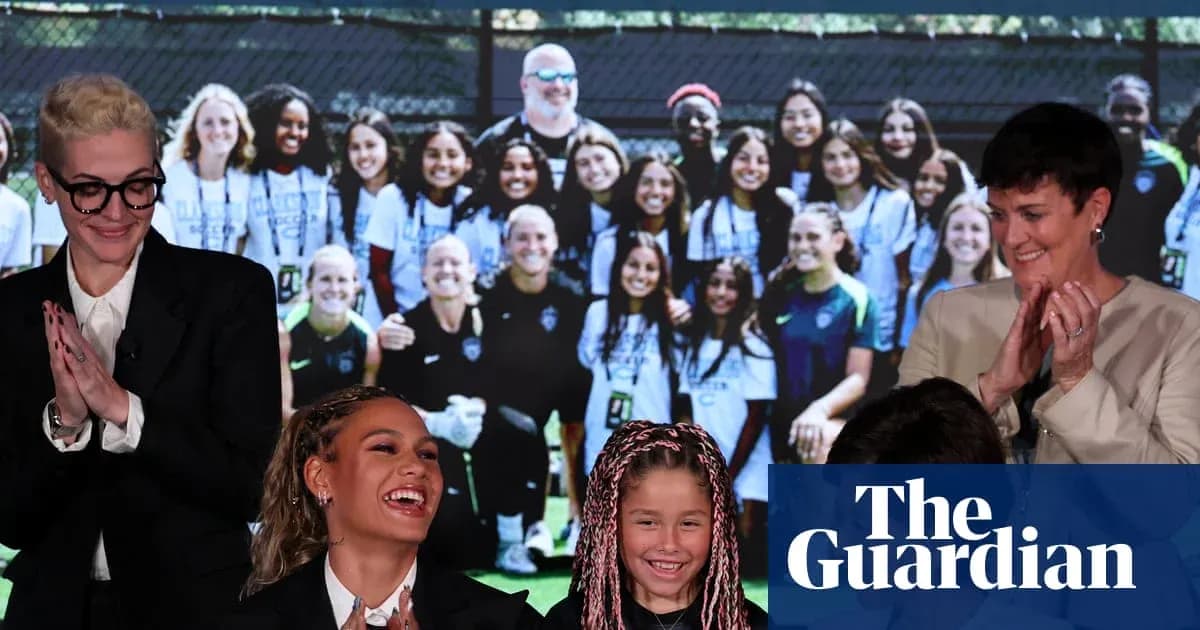
The NWSL’s most controversial roster rule has been rewritten – and this time, the players won.
In a landmark settlement announced Friday, the NWSL and the NWSL Players Association agreed to strip away the restrictive criteria around the High Impact Player (HIP) mechanism, opening the door for any player in the league to command its top salaries, not just those who fit a narrow, league-defined profile.
From “Rodman Rule” to open market weapon
The HIP rule arrived late last year as the league’s answer to a growing problem: its best players were being lured to Europe, where salary caps don’t exist and top clubs can spend freely. The NWSL’s solution was to let teams spend an extra $1m above the cap to keep or recruit stars.
But there was a catch. Only a specific kind of “star” qualified.
Players had to meet at least one of eight criteria, ranging from US national team minutes and Ballon d’Or recognition to NWSL Best XI selections or inclusion on media and marketing lists such as the Guardian’s Top 100 or a ranking of athletes by marketability. Around 100 players cleared that bar, including Trinity Rodman and Sophia Wilson. Others, astonishingly, did not. Two-time NWSL MVP Sam Kerr would have been ineligible. So would US standout Catarina Macario.
The NWSLPA pushed back hard. It filed a grievance accusing the league of violating federal labor law and the existing collective bargaining agreement by allowing an external, subjective classification system to dictate who could earn the biggest money.
The rule quickly picked up a nickname: the “Rodman Rule.” Its rollout overlapped with Rodman’s drawn-out contract saga at the Washington Spirit, and the union saw her situation as the clearest example of what was at stake.
Before the HIP mechanism even existed, the Spirit had tried to re-sign Rodman on a deal averaging more than $1m a year. NWSL commissioner Jessica Berman rejected it, arguing the backloaded structure breached league rules. The NWSLPA called that decision a “flagrant violation” of free agency rights and filed a grievance on Rodman’s behalf.
Weeks later, the league unveiled the HIP rule. By January, Rodman had re-signed in Washington on a record contract worth more than $2m annually. The money flowed, but the dispute over how the league had handled her original offer never went away.
Criteria scrapped, power rebalanced
That fight has now reshaped the rulebook.
Under the new settlement, all of the old eligibility criteria are gone. Starting 1 January 2027, clubs can designate any player as a High Impact Player as long as that player’s salary is at least 12% of the base salary cap. For the 2026 season, that cap is set at $3.7m, with the HIP mechanism allowing an extra $1m in spending on top of that.
The league still retains one crucial lever: it can limit how many HIP players each club carries. But it no longer controls who counts as a “star” via awards lists, media rankings or national team status.
In practical terms, that’s a massive shift. It means a club can decide that its most indispensable player isn’t a US international or a Ballon d’Or nominee, but a relentless box-to-box midfielder, a local hero, or a center back who never makes a headline. If the club is willing to pay 12% of the cap or more, that player now qualifies.
NWSLPA executive director Meghann Burke called the agreement “evidence of the NWSLPA’s strength and commitment to enforcing the terms of the Collective Bargaining Agreement” in comments to ESPN, which first reported the deal. On the league side, executive vice-president Bill Ordower framed the outcome as a sign of a maturing competition, stressing that the agreement provides “greater clarity and certainty” while protecting “integrity and competitive balance.”
The settlement doesn’t erase the past. It rewrites the future.
Six grievances, one reset
The HIP criteria weren’t the only battleground. In total, six grievances were settled.
One centered on the league’s initial rejection of Rodman’s Washington Spirit contract proposal. Others touched on how the league policed spending and enforced rules around player appearance – down to the boots on their feet.
Throughout this season, players received warnings and fines for wearing cleats from brands that weren’t official league sponsors. That policy is now softened. The NWSL has agreed to honor most pre-existing endorsement deals and withdraw previous fines, a small but telling victory in a league where commercial control has often clashed with individual earning power.
On the roster side, the settlement adds new transparency requirements. The league will still be able to reject contracts it believes are designed to circumvent the salary cap, but it can no longer do so quietly. It must notify the union and explain its reasoning within 72 hours. The NWSL will also provide regular salary cap and revenue updates to clubs throughout the year, giving teams and players a clearer picture of the financial landscape they operate in.
Those changes matter. They turn what used to be opaque, top-down decisions into processes that can be scrutinized and challenged.
A rule born in crisis, reshaped in negotiation
The original HIP mechanism was born out of urgency. With the 2026 cap locked at $3.7m and European offers rising, the NWSL needed a way to keep its marquee names. The board of governors ratified the rule, and it took effect on 1 July, creating a new tier of spending power that clubs quickly began to explore.
While teams are not required to reveal which players are signed under the HIP mechanism, several obvious candidates have already landed big deals: Denver’s Lindsey Heaps, Orlando’s Barbra Banda and Gotham’s Rose Lavelle among them. These are precisely the kind of talents the rule was designed to retain.
The problem was never the extra $1m. It was who controlled access to it.
By tying eligibility to external accolades and media lists, the league effectively told a broad swath of players that their value depended on recognition from institutions they didn’t control. The union saw that as both a legal overreach and a philosophical misstep in a league that sells itself on parity and opportunity.
The settlement drags that power back toward the locker room and the front office. Now, if a club believes a player is worth HIP money, the only hard test is the percentage of the cap.
What changes now?
The immediate competitive impact may be subtle. The rule’s financial structure remains: an extra $1m above the cap, with the league still guarding against creative accounting. Many of the league’s biggest names already sit on lucrative contracts.
The deeper shift is cultural and structural. Players have forced the league to acknowledge that star power cannot be defined by a checklist. Clubs have gained more freedom to reward the players they believe drive results, not just the ones who fit neatly into awards categories.
For a league that has long walked a tightrope between parity and ambition, this is a defining step. The NWSL still wants competitive balance. It still operates under a cap. But it has accepted that in a global market, it must give its teams the tools to compete for talent – and its players the freedom to fully test their worth.
The next contracts for the likes of Rodman, Banda, Lavelle and the next wave of emerging stars will unfold under that new reality. The question now is simple: with the rule rewritten and the criteria gone, who will clubs decide is truly “high impact” when the real money is on the table?