.svg&w=384&q=75 "logo")
Naomi Osaka Edges Elise Mertens in Thrilling US Open Battle

Under the evening glare of Louis Armstrong Stadium, with the noise of Flushing Meadows humming around her, Naomi Osaka found a way. Again.
The two-time US Open champion, seeded 13th this year, survived a fierce third-round test from Belgium’s Elise Mertens, the No. 23 seed, edging through 6–3, 3–6, 7–5 to reach the last 16 in New York.
This was not a smooth return to second-week business. It was a scrap.
Osaka starts like a champion
From the start, Osaka’s intent was clear. She went after her serve, hit through the court, and seized control of the baseline. After the opening exchanges, she reeled off three straight games, surging to a 4–1 lead in the first set.
Her serve did the heavy lifting. Osaka’s power on first delivery pinned Mertens back, and even when rallies developed, the Japanese star dictated with heavy, flat groundstrokes. She closed out the opener 6–3, holding serve with a flurry of big deliveries that left Mertens little room to breathe.
It looked ominous for the Belgian. Osaka was in front, the crowd was with her, and the rhythm of the match seemed fixed.
Mertens bites back
Mertens refused to accept that script.
Osaka struck first in the second set, breaking in the third game as she continued to attack from the baseline. At that point, the match threatened to tilt decisively her way. Instead, it cracked open.
The Belgian tightened her game and began to feed off Osaka’s aggression. The errors crept in. Osaka’s early break vanished as Mertens strung together two games in a row, flipping the pressure back on the former champion.
The rallies grew longer, more physical. Mertens absorbed Osaka’s pace and redirected it, forcing her opponent to hit extra balls, to go closer to the lines, to take bigger risks. The cost for Osaka was a rising tally of unforced errors, and with it, the second set slipped away 6–3.
One set all. Momentum gone. Match on.
A bruising decider
The final set turned into a test of nerve as much as shot-making.
Mertens, sensing vulnerability, pressed harder. She pounced on more loose swings from Osaka and moved ahead, capitalizing on several unforced errors that had begun to stain the Japanese player’s performance. The Louis Armstrong crowd, restless and loud, felt the tension shift.
Then came a pause. Osaka took a medical timeout, a brief halt that broke the rhythm and gave her a moment to reset. When she returned, the tone of the contest changed again.
Her footwork sharpened. The errors didn’t vanish, but the intent looked clearer. Osaka began to step into returns, to reclaim the baseline that had started to belong to Mertens. The Belgian still held her ground, but the balance had tilted back.
Late in the set, Osaka made her move. She broke back at a crucial moment, wresting control of the scoreboard and igniting the stadium. Serving at 5–5, she produced one of the defining shots of the night: an ace to secure a 6–5 lead, a statement delivered down the middle.
One game later, the match was hers.
Emotion, edge, and what comes next
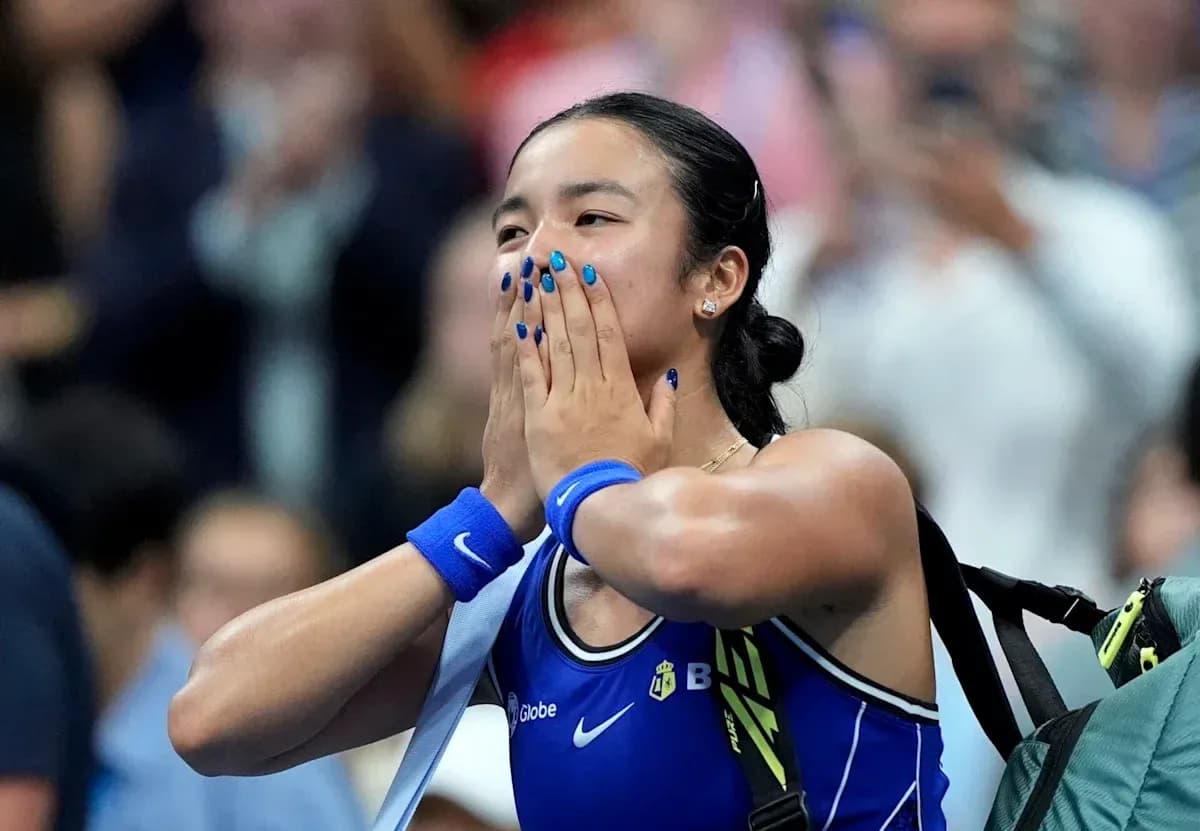
“Honestly, I can’t believe I won this match,” Osaka said on court afterward, the adrenaline still visible. She thanked the spectators for their backing under the New York lights and addressed the more volatile moments of her performance, apologizing for her behaviour, including an incident where she threw her racket.
It was a reminder that this was not a serene stroll into the second week. It was raw, edgy, emotional tennis, with Osaka riding the full range of it in front of a crowd that has seen her at both her most dominant and her most vulnerable.
The reward is a place in the round of 16, where she will face either Elena Rybakina or Yulia Starodubtseva. The names change, the challenge does not.
On nights like this, though, with the match on the line and the stadium holding its breath, Osaka’s ability to dig in and still find the line with her serve suggests something important: she is not just back at the US Open. She is dangerous again.