Marta's Final World Cup: Brazil's Legend Aims for Historic Farewell in 2027
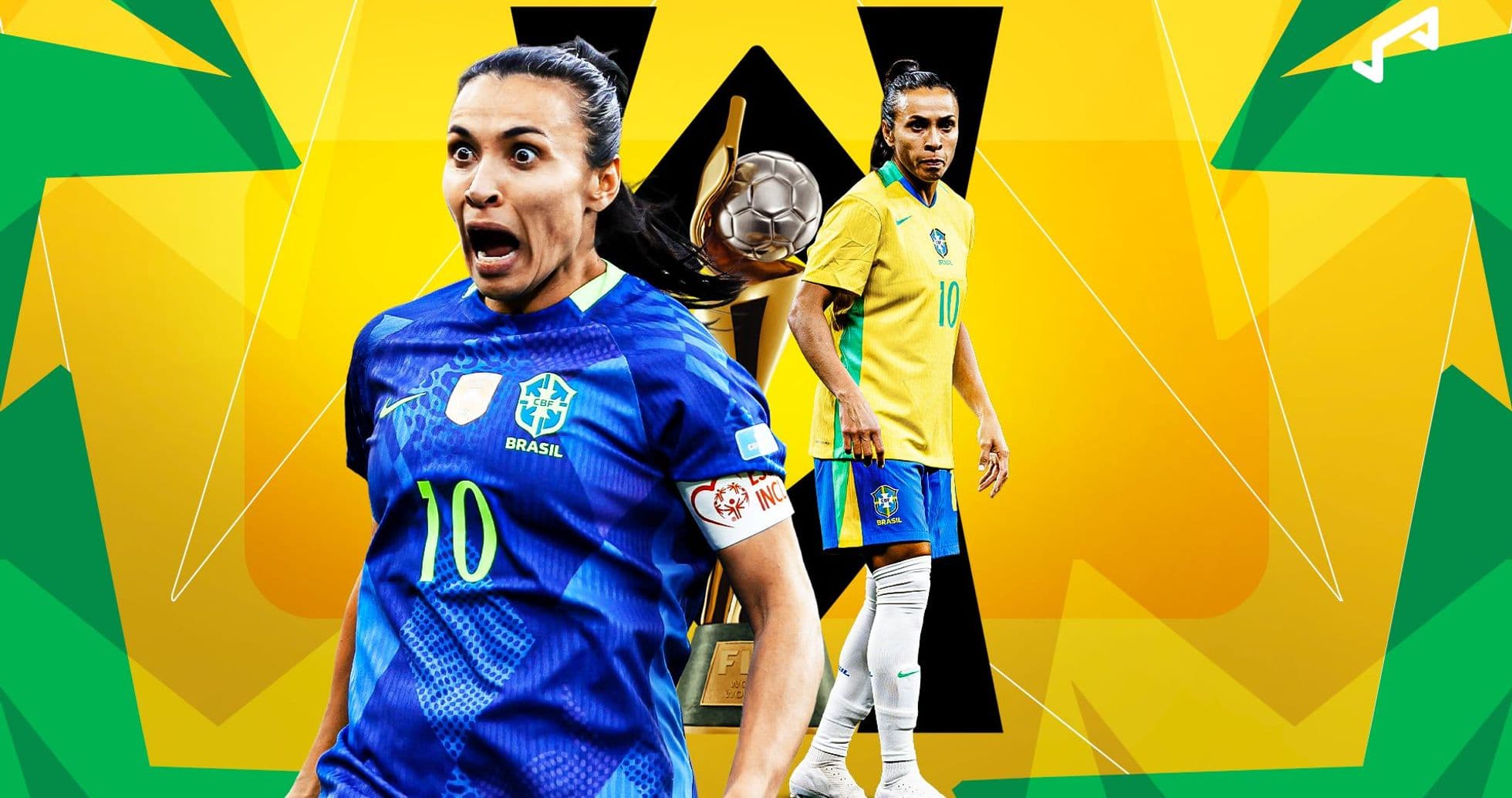
Marta Prepares for Last World Cup on Home Ground
Widely recognized as the greatest in women's football history, Marta is gearing up to captain Brazil one last time during the 2027 Women’s World Cup held in her home country. At 41, the iconic forward hopes to inspire Brazil and achieve what has eluded her throughout a remarkable career: a World Cup title.
The Ultimate Legacy
In men's football, the GOAT debate often involves names like Lionel Messi, Cristiano Ronaldo, Diego Maradona, and Pelé. For women’s football, Marta stands unmatched. Referred to as 'Pelé in a skirt' by the Brazilian legend himself, Marta’s brilliance has illuminated the sport for over two decades, long before women’s football gained global popularity.
She boasts an impressive trophy cabinet, including Champions League and Copa América titles, but her most notable record remains being the all-time top scorer in Women’s World Cup history. Despite this, a World Cup winner’s medal remains absent from her achievements.
After initially retiring from international play post-2024 Olympics—where Brazil narrowly lost to the United States in the final—Marta reversed course, playing a pivotal role in Brazil’s Copa América triumph in 2023. With Brazil hosting the 2027 World Cup, Marta looks set for a poignant final campaign.
A Golden Generation That Fell Short
Back in 2007, Marta was the standout star when Brazil reached the Women’s World Cup final, only to fall to Germany 2-0. She claimed her second of five consecutive FIFA World Player of the Year awards that year. The team featured other stars such as Cristiane, Formiga, Pretinha, and Rosana—players with impressive international records and club success.
This squad was considered a golden generation destined for a World Cup victory, yet they never captured the major prize.
Funding Challenges Hampered Progress
Despite their talent, support from the Brazilian Football Confederation was delayed. Rosana expressed frustration, saying investment should have arrived much earlier. In Brazil, unlike some countries, women’s football had to prove itself before receiving funding.
Brazil dominated South America, winning nine out of ten Copa América Femenina tournaments since 1991, but success on the world stage remained elusive. Olympic silver medals in 2004 and 2008 were highlights, yet the team never secured a major international title during that era.
"It's sad because our generation was perhaps the strongest Brazil has ever had," Rosana said in 2021. "We won five medals in four years but lacked early investment to reach our goals."
Marta’s Club Career and Individual Honors
Marta’s influence extended beyond national duty. She moved to Sweden’s Umea in 2004, where she won four straight Damallsvenskan titles and the UEFA Women’s Cup, impressing coach Andree Jeglertz with her unique style.
Her career included stints in the United States, where she won two national titles, and a return to Sweden, where she even gained citizenship. Throughout, she collected numerous Golden Boots and Player of the Year awards.
International Setbacks in the 2010s
Despite her greatness, Brazil’s international performances declined. They exited the 2011 World Cup in the quarterfinals after a penalty shootout loss to the U.S., and at the 2012 Olympics, Japan ended their run at the same stage.
In 2015, Brazil fell in the World Cup round of 16, followed by a bronze medal match defeat at the 2016 Rio Olympics.
Emotional Farewell Signals End of an Era
The 2019 Women’s World Cup seemed like Marta’s swan song. After Brazil lost to France in the last 16, Marta gave an emotional speech urging future generations to support women’s football:
"There won’t be a Formiga forever, or a Marta forever, or a Cristiane. Women’s football depends on you. Value it more. We’re asking for support. You have to cry at the beginning and smile at the end."
That heartfelt message reflected her awareness of her nearing retirement and her desire to inspire lasting change.
One Last Opportunity
Although many thought 2019 marked her final chapter, Marta continued. In 2023, despite Brazil’s shock group-stage exit at the World Cup, she helped lead the team to the Olympic gold medal match, their best result in years.
Looking ahead to 2027, no players remain from that 2007 squad except Marta. While she may not hold the same dominance, her leadership and legacy have paved the way for a new generation capable of challenging for the World Cup title on home soil.
Wearing the captain’s armband once again, Marta aims to finish her international career with the ultimate triumph.