.svg&w=384&q=75 "logo")
Marnus Labuschagne's Future in Australia's Squad for South Africa
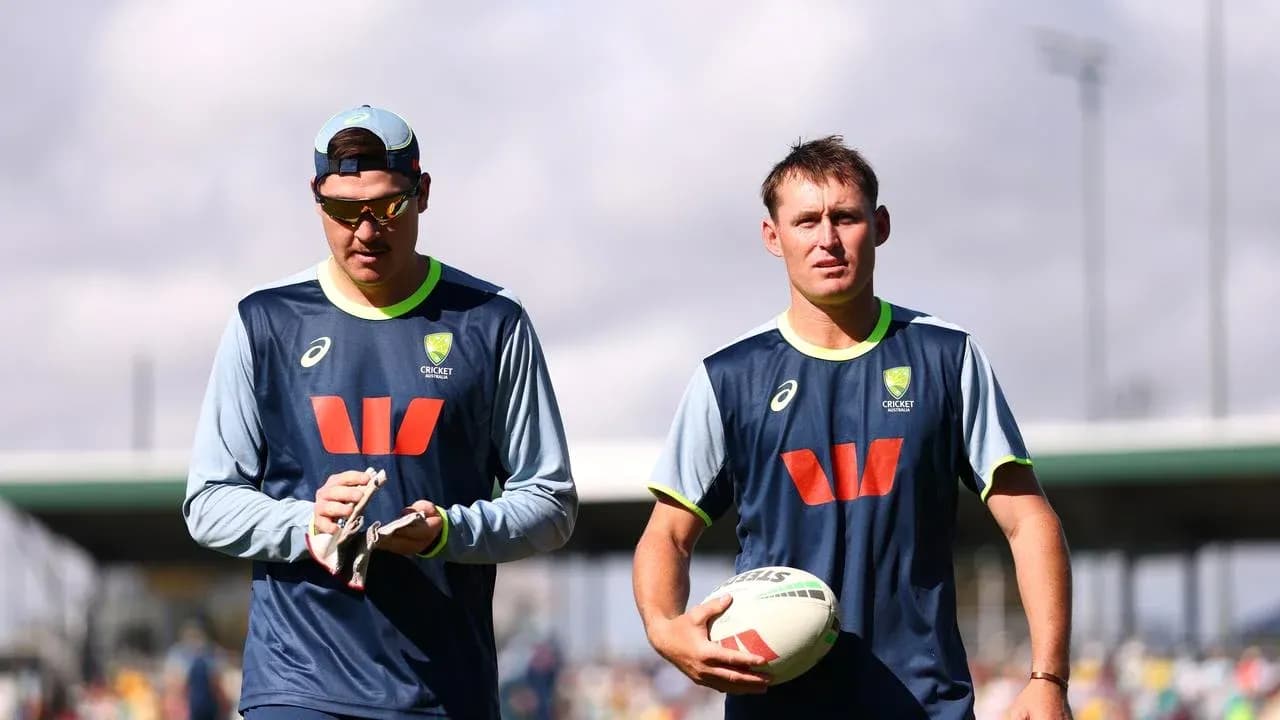
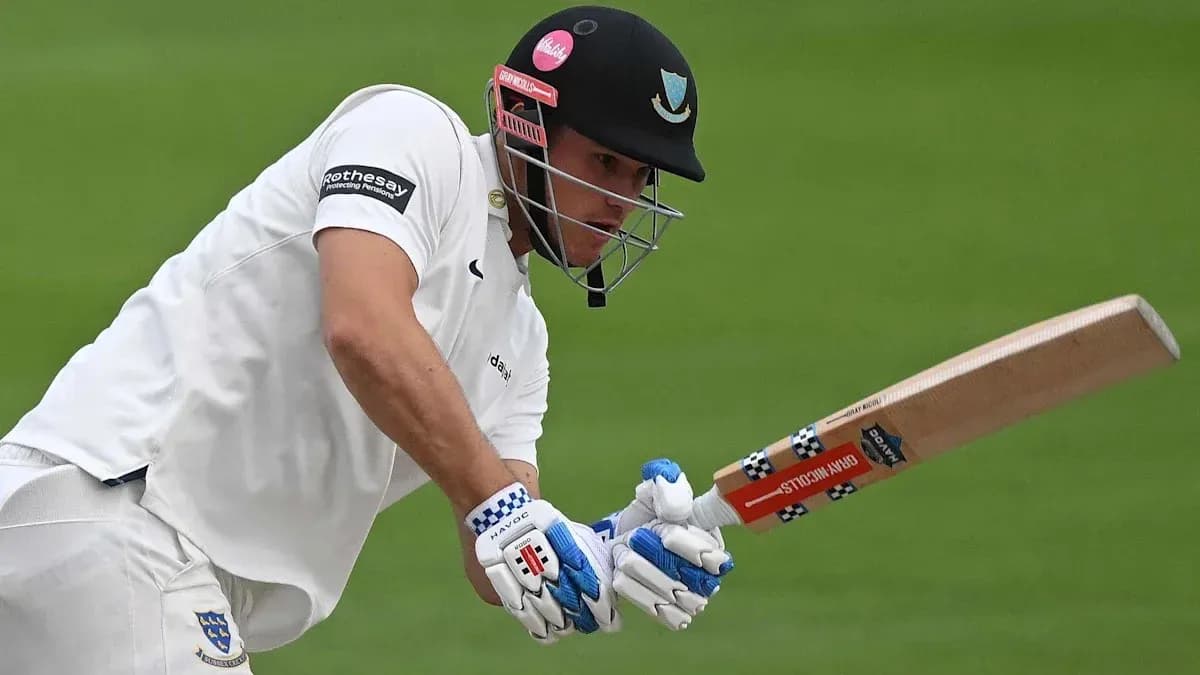
Marnus Labuschagne has been spared the axe. For now.
Australia’s selectors have handed the under-pressure No.3 a significant reprieve, naming him in a 16-man squad for next month’s three-Test tour of South Africa and backing class over recent returns. It is a show of faith that feels as much about stability as sentiment.
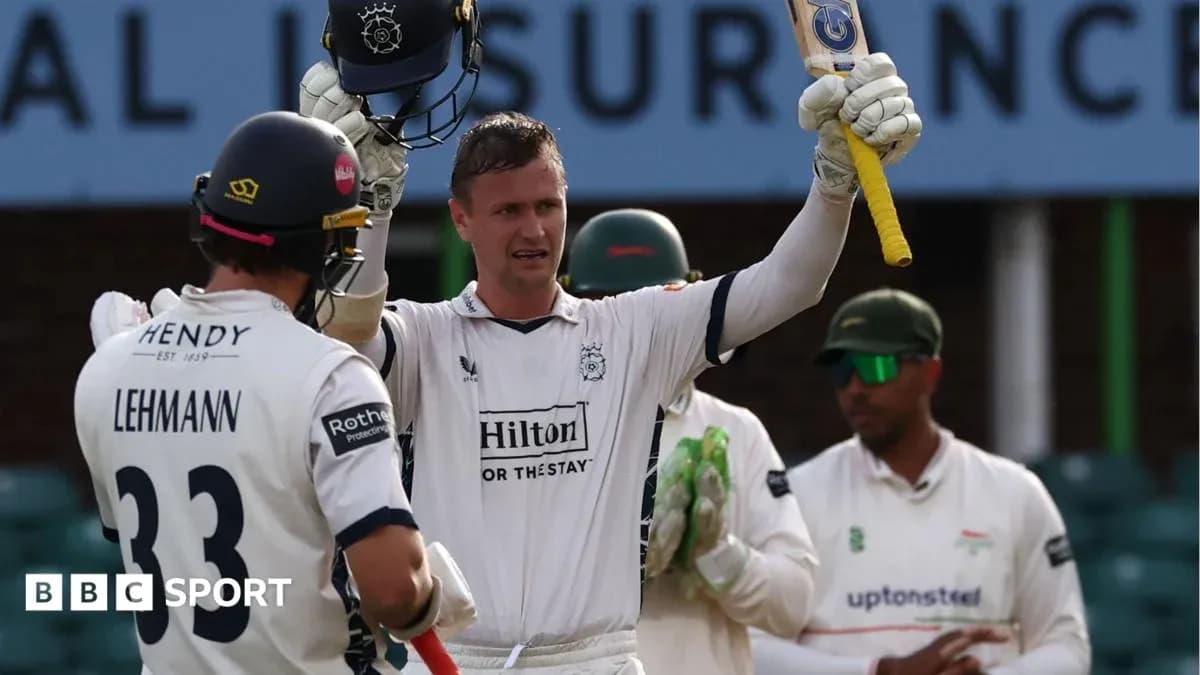
Labuschagne’s spot, once the safest in the order after Steve Smith, is suddenly a live contest. He will scrap with rising left-hander Cooper Connolly and versatile gloveman-batter Josh Inglis for a place in the top order, with the selectors leaving the door wide open on the make-up of the XI for the opener in Durban on October 9.
Labuschagne on notice
The numbers tell the story. Labuschagne has not reached three figures in Test cricket since the 2023 Ashes in England and has laboured for rhythm across formats for nearly two years. A flat Ashes campaign was followed by a lean Top End series against Bangladesh, where his struggles only amplified the noise around his position.
His place in the squad, let alone the starting side, was under genuine threat. Dropping him, though, would have forced a major reshuffle. Connolly and Inglis have largely built their reputations as middle-order players; asking either to anchor at No.3 would be a bold call on a high-stakes tour.
George Bailey knows all of that. He also knows he cannot keep ignoring the lack of runs.
“We’re not shying away from the fact that we’d like some more runs from Marn. That’s clear,” the chair of selectors said on Monday. “But we’re also confident that he can still make a positive contribution to that squad.”
The reprieve comes with a subtle twist. Labuschagne has been left out of the one-day series leading into the Tests, freeing him up to focus solely on red-ball preparation.
“I think Marn will continue to prepare and refine how he will prepare for this series,” Bailey said. “There’s potentially a simplification or an ability to focus purely on red-ball cricket for him in the fact that he won’t be in the one-day series leading up to it.”
It is a reset, not a guarantee. Asked directly if Labuschagne would walk in at No.3 in Durban, Bailey refused to lock it in.
“We’ll get a much clearer picture of what that XI looks like once we get over there,” he said.
For a player who once seemed immovable, that is a very different kind of conversation.
Connolly’s fast rise
If Labuschagne is the story of survival, Connolly is the story of momentum.
The 23-year-old West Australian, who made his Test debut in Sri Lanka in February 2025 batting at No.8, has forced his way back into the squad on the weight of promise and versatility. He owns the best first-class average (42.10) of Australia’s emerging batters despite not yet scoring a first-class hundred, a quirky statistic that underlines both his consistency and his unfinished ceiling.
His real surge, though, has come in white-ball cricket in 2026. A breakout IPL campaign with Punjab Kings and a maiden ODI century in Bangladesh in June have pushed him firmly into the national conversation. His left-arm spin only adds to his appeal.
“He’s a good player, and one I think that’s going to continue to develop across formats,” Bailey said. “Every time that we’ve had him on tour, he’s a good learner. He’s keen to expand his game.”
This time, he has been picked as a batter first. The selectors believe he can grow into a top-order role, if not immediately then soon.
“I think he will be able to,” Bailey said. “Whether that’s now, whether that’s in the future. He’s still so young in his career, but I think his ability to bat in a range of positions will continue to grow as he gets more and more experience.”
For a tour that doubles as Australia’s first Test visit to South Africa since Sandpapergate, the symbolism is hard to miss: an established name under pressure, and a fearless young left-hander waiting in the wings.
Bowling depth and rotation plans
While the batting debates will dominate, the attack has a familiar, formidable look.
Pat Cummins again leads a pace unit stacked with experience: Mitchell Starc, Josh Hazlewood and Scott Boland are all there. Michael Neser, the Ashes cult hero and perennial squad man, returns to bolster the fast-bowling stocks and looks a strong chance to play.
Bailey has already signalled that rotation is likely. The three Tests come in a tight window, with only four days between each match and six ODIs preceding the red-ball leg.
“This is a reasonably condensed three-game series, on the back of six one-day internationals, with only short breaks between each game,” Bailey said in a statement. “The squad provides balance and options for each Test and the variety of conditions we may face.”
Conditions in Durban, Gqeberha and Cape Town can shift quickly, from seaming mornings to abrasive afternoons, and Australia want every angle covered.
Nathan Lyon remains the frontline spinner, with left-armer Matthew Kuhnemann named as his understudy. Kuhnemann, who has previously been used in subcontinental conditions, could play his first Test outside Asia if surfaces tire late in matches or if the selectors lean into variation.
Top-order puzzles: Smith, Head and the moving parts
The batting order is anything but settled.
Matthew Renshaw has held his place at the top after replacing Jake Weatherald in Mackay, while all-rounder Beau Webster survives despite a poor series with the bat against Bangladesh. The selectors clearly value his seam bowling and flexibility, even as they wait for the runs to catch up.
Behind them sit the known heavyweights. Travis Head has been a match-winner at No.5 and a game-breaker as a Test opener. Smith has spent much of his career at No.3 but has thrived in the middle order in recent years. Every potential tweak has a cost.
Bailey did not rule out moving either.
“Any time you do make a move, it’s what are you taking away from where they are performing, and that’s always going to be a question, particularly around Travis, I think, the success that he had at five, but also the success he has had at the top, and what he and what he provides to the structure of the team there,” he said.
“So I think there are always going to be considerations. Steve has batted at three for a large part of his career. Hasn’t done it for a little while, and has had success there. So absolutely, that’ll be a conversation at some point.”
Those conversations will define Labuschagne’s immediate future. If Smith shifts back to No.3, if Head returns to the middle, if Connolly is fast-tracked, the squeeze will be brutal. For now, Labuschagne travels as part of the 16, but his grip on that pivotal slot has never felt looser.
The road ahead
Australia open in Durban on October 9, head to Gqeberha for the second Test, and finish in Cape Town in late October. Three matches, three very different venues, one lingering question.
Can Marnus Labuschagne turn a lifeline into a rebirth, or will South Africa mark the moment Australia’s top order finally moves on?