Manchester United’s Longest Winless Run Remains a Distant Memory for the 2026 Squad
Manchester United’s Current Winless Stretch Compared to Their Historical Record
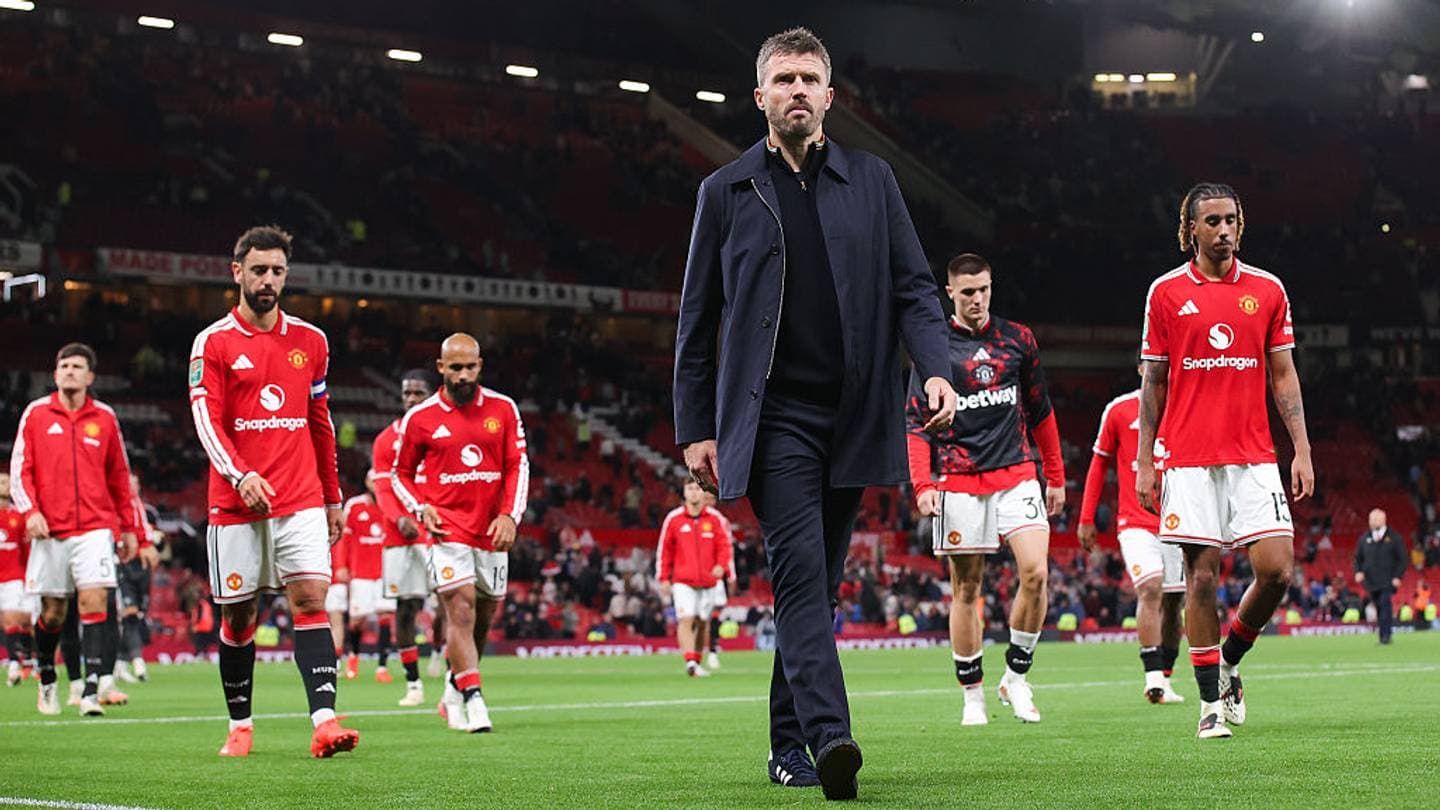
Manchester United have not won in six straight matches so far this season, but that streak is far from their longest ever. The club’s record winless run dates back nearly a century, to a very different era.
A Glimpse Back to 1930
In 1930, the world was still recovering from World War I and grappling with the Great Depression. John Steinbeck's Of Mice and Men was still years from publication. Meanwhile, Manchester United was far from the football giant it is today.
After early successes under manager Ernest Mangnall, winning league titles in 1907–08 and 1910–11, the club quickly fell from prominence. Mangnall left for Manchester City in 1912, and by the outbreak of World War I, United was barely avoiding relegation.
The Record-Setting Downturn
Following the war, football resumed with United finishing mid-table for a few seasons before being relegated in 1921–22. After three years in the second division, they returned to the First Division but struggled against strong teams like Huddersfield Town, Sunderland, Everton, and Arsenal.
Manager John Chapman was suspended by the Football Association in 1926 for unspecified misconduct, leading to Lal Hilditch stepping in as player-manager briefly—a rare move only repeated once since by Ryan Giggs in 2014. Herbert Bamlett, a former referee regarded as one of the club’s worst managers, took over permanently, and the situation worsened.
Owner John Henry Davies, who saved the club financially in 1902, died in 1927, leaving the club in financial trouble again. United finished 17th in 1929–30, narrowly escaping relegation, but had already lost six matches consecutively that September and October.
That losing streak carried into the new season, with the team dropping the first 12 games of 1930–31. Their winless run finally ended at 16 matches on November 1 with a 2-0 win over Birmingham City at Old Trafford.
Details of the 16-Match Winless Streak (1929–31)
- Apr 19, 1929–30: Man Utd 3–3 Everton
- Apr 22, 1929–30: Huddersfield 2–2 Man Utd
- Apr 26, 1929–30: Leeds 3–1 Man Utd
- May 3, 1929–30: Man Utd 1–5 Sheffield Utd
- Aug 30, 1930–31: Man Utd 3–4 Aston Villa
- Sept 3, 1930–31: Middlesbrough 3–1 Man Utd
- Sept 6, 1930–31: Chelsea 6–2 Man Utd
- Sept 10, 1930–31: Man Utd 0–6 Huddersfield
- Sept 13, 1930–31: Man Utd 4–7 Newcastle
- Sept 15, 1930–31: Huddersfield 3–0 Man Utd
- Sept 20, 1930–31: Sheffield Wed. 3–0 Man Utd
- Sept 27, 1930–31: Man Utd 0–2 Grimsby
- Oct 4, 1930–31: Man City 4–1 Man Utd
- Oct 11, 1930–31: West Ham 5–1 Man Utd
- Oct 18, 1930–31: Man Utd 1–2 Arsenal
- Oct 25, 1930–31: Portsmouth 4–1 Man Utd
Fans’ Response and Club Recovery
The Manchester United Supporters' Club demanded changes amid the crisis: replacing manager Bamlett, revamping scouting, signing new players, adding shareholders, and raising funds via new shares. The board ignored these requests, sparking boycott threats ahead of an October 1930 match versus Arsenal.
Despite the protests, attendance peaked at 23,406 for that game but soon dropped sharply. By May 1931, fewer than 4,000 fans attended the final match before five years outside the top division.
Financial salvation came when James W. Gibson took control after relegation in 1931. Although the team nearly dropped to the third tier in 1933–34, promotions and relegations followed until 1938 when United returned to the top flight. They then focused on youth development with the creation of the Manchester United Junior Athletic Club, a precursor to their modern academy. Stability arrived with Matt Busby's appointment after World War II.
Since that terrible streak, the club has never endured 16 consecutive winless matches again.