.svg&w=384&q=75 "logo")
Leah Poulton Appointed Managing Director of England Women’s Cricket
The England and Wales Cricket Board has turned to Australia again. This time, not for runs or wickets, but for direction at the very top of the women’s game.
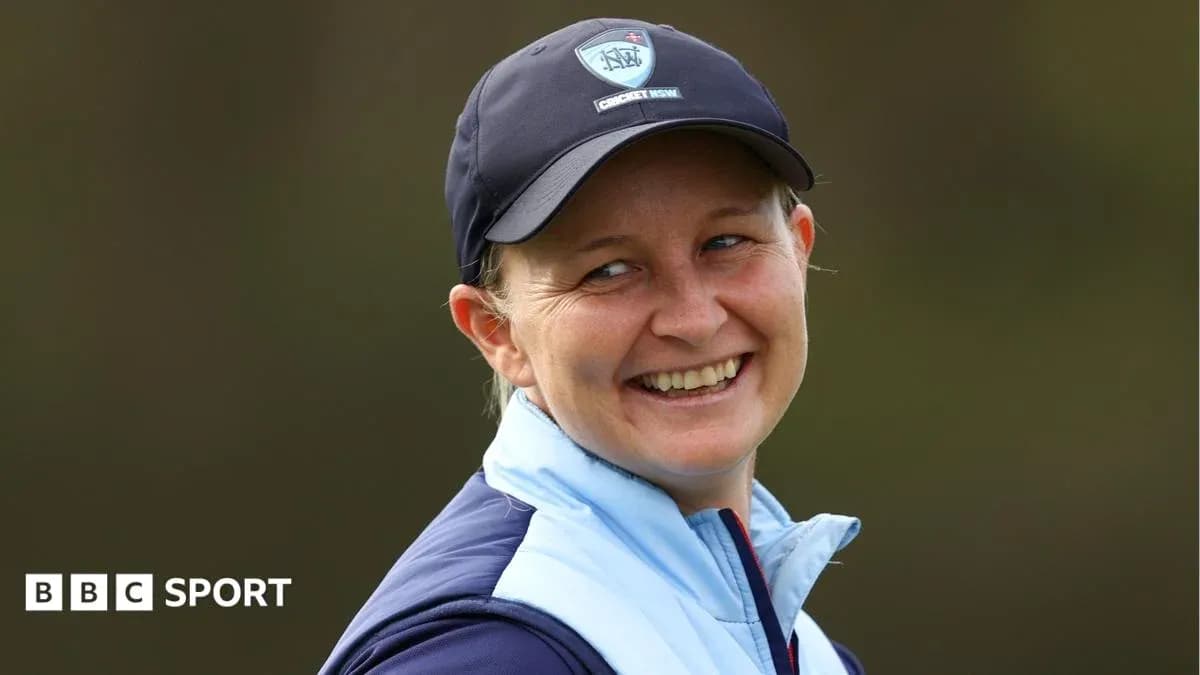
Leah Poulton, the former Australia batter with 90 international appearances, has been appointed managing director of England women. She will take up the role in November, replacing Clare Connor and effectively absorbing the responsibilities of departing women’s performance manager Jonathan Finch as well.
It is a significant hire. And a very deliberate one.
An Australian at the Helm
Poulton arrives with a résumé built in the engine rooms of elite women’s cricket. In the Women’s Big Bash League she served as assistant coach at both Sydney Thunder and Sydney Sixers, before moving into a dual role at Cricket New South Wales as pathway manager and assistant coach for the NSW Breakers.
From there she stepped into high performance, first at Cricket Australia, then as head of elite female cricket at Cricket NSW, a post she has held for the past six years. Her work in Sydney has been central to the production line that keeps Australia’s women at the top of the world game.
Now she crosses the world to oversee England’s response.
The ECB has made the brief crystal clear. Poulton will be accountable for the performances of England women, England women A and England women U19s, as well as the overall effectiveness and reputation of the women’s high-performance system. This is not a ceremonial title. It is a results job.
She will work closely with head coach Charlotte Edwards and captain Nat Sciver-Brunt, tasked with setting a “clear, unified vision” for sustained success on the global stage. The structure is changing: where Connor’s remit spread across multiple roles in and beyond the ECB, Poulton’s focus narrows sharply onto the senior side and the pathways feeding it.
More hands-on. More targeted. Less bureaucracy, more cricket.
A Different Kind of Leader
Connor’s tenure at the ECB spanned an extraordinary range. She served as deputy chief executive and held influential positions at the International Cricket Council and Marylebone Cricket Club. She was a stateswoman for the game as much as a leader of the women’s programme.
Poulton steps into a very different brief. Her job is to live in the detail: selection, development, performance, pathways. Everything that touches the England women’s team, from the U19s upwards, sits under her watch.
Those who have worked with her describe a calm, clear communicator, unafraid of hard conversations. She has already shared dressing rooms and planning rooms with key England figures: Edwards and selector Lydia Greenway both crossed paths with her in the Big Bash. That familiarity should shorten the bedding-in period.
She is also understood to have beaten several heavyweight candidates from within the English game to secure the role. The ECB has not gone for a safe internal appointment. It has chosen an outsider with a track record in building systems that win.
Poulton herself called the move “incredibly exciting” and “a huge privilege”, stressing her desire to shape programmes, invest in people and strengthen pathways and the domestic game to give the next generation “every opportunity to thrive”. The language is telling: structure, opportunity, progression. This is a builder, not just a manager.
Calm Before a Home Ashes Storm
Poulton walks into a rare lull for the senior England women’s side. The team does not play again until after Christmas, leaving the early part of the winter to the layers beneath the elite level. For someone obsessed with pathways, it is an ideal entry point.
But the quiet will not last.
Next summer, England host Australia in a women’s Ashes series. Few assignments in the sport carry more weight. Few will be more politically charged than an Australian architect trying to wrest the urn from her own country’s grasp.
The irony is obvious. English cricket is once again being shaped by voices from the other side of the world. The men’s setup already leans heavily on New Zealand, with Stephen Fleming and Brendon McCullum as head coaches and Australian Marcus North involved in selection. Now Poulton joins that antipodean influence at the summit of the women’s game.
This time, though, the stakes are different. The Ashes are coming. The domestic structure is evolving. The women’s game is accelerating in profile and expectation.
England want to catch Australia. They have hired someone who helped build the machine they are chasing.
When the urn goes up for grabs on English soil next summer, it will be an Australian in charge of plotting how to take it back.