.svg&w=384&q=75 "logo")
Jelena Ostapenko's Fiery Performance at the US Open
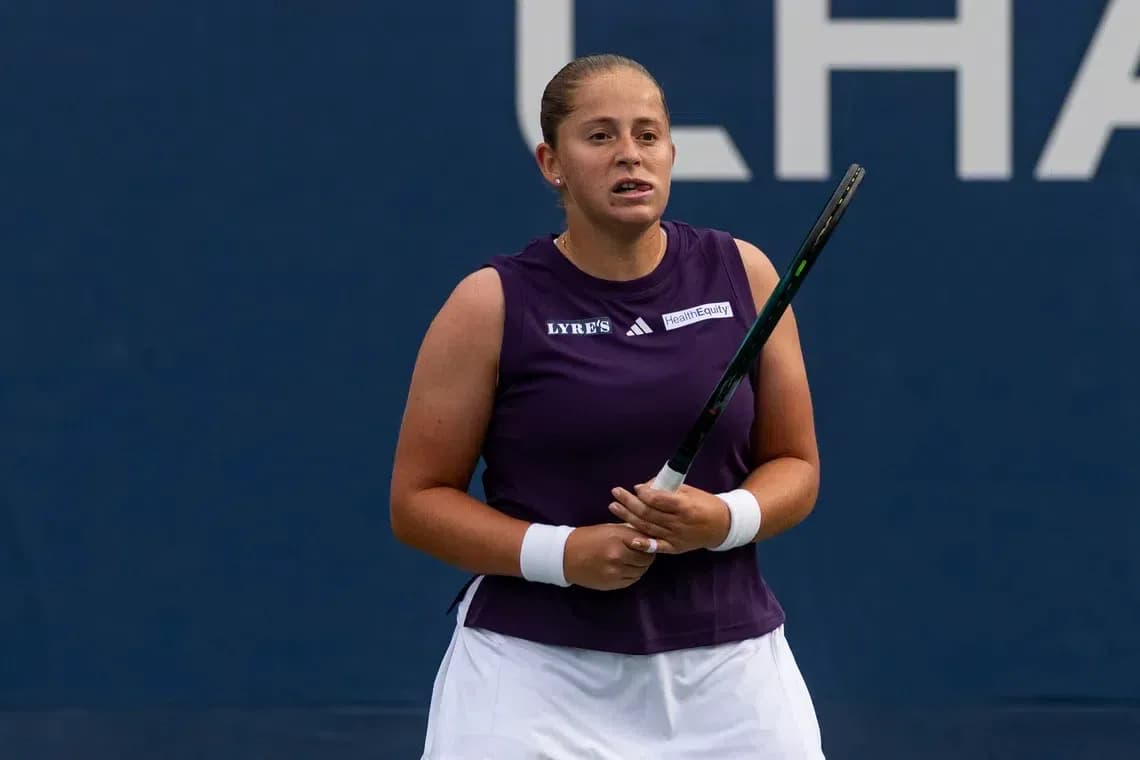
NEW YORK – Jelena Ostapenko has never been one to tiptoe through a tennis tournament. On Sept 7 at the US Open, she walked off Louis Armstrong Stadium with a place in the women’s doubles quarter-finals – and another flashpoint to her name.
Alongside the ever-unflappable Hsieh Su-wei of Chinese Taipei, the fourth seeds handled the tennis with authority, beating the Australian–Chinese Taipei duo of Maya Joint and Chan Hao-ching 6-4, 6-4. The real heat arrived between the points.
Tension on the changeover
Midway through the contest, the match tightened and the mood darkened. During a changeover, Hsieh left her chair and went straight to the umpire, while Ostapenko stood, arm outstretched, pointing toward the opposing team’s box.
The Latvian star insisted the opposing coach had crossed a line. According to Ostapenko, he had been clapping and shouting after their errors and offering sarcastic praise of their shots in Chinese – comments Hsieh translated for her on court.
“They do this because they know they cannot beat us,” Ostapenko told the chair, branding the behaviour “very disrespectful” and asking for a Chinese translator to be brought in. The umpire acknowledged the complaint and indicated the situation would be addressed.
The exchange crackled with tension. Hsieh, usually a picture of calm, looked visibly irritated. Ostapenko, never shy about confrontation, leaned into the moment.
Turning anger into fuel
Once the argument subsided, the tennis took over again – and Ostapenko and Hsieh used the incident as fuel. They tightened their service games, pressed harder on the return and shut the door on any hint of a comeback.
The pressure told. They closed out the match in straight sets, 6-4, 6-4, and Ostapenko’s reaction at the finish left no doubt about where the emotions were directed. She turned toward the opposing box and let out a full-throated roar, a celebration that felt as much like a statement as a release.
The handshake line mirrored the mood. Hsieh and Chan did not shake hands after the fiery encounter, a small gesture that underlined just how sour the afternoon had turned.
A familiar flashpoint
For Ostapenko, controversy is no stranger. The 2017 French Open singles champion has built a reputation as one of the tour’s most combustible competitors, her shotmaking matched by a combustible edge when tempers rise.
Her latest clash in New York comes not long after another storm at the US Open. At the 2025 edition of the tournament, she sparked headlines by accusing American Taylor Townsend of having “no class” and “no education” during a heated on-court confrontation.
Ostapenko later apologised for those remarks, saying her words had been misunderstood because English is not her first language. The incident, though, cemented the sense that wherever she goes, the emotional temperature of a match can spike without warning.
Here, again, the pattern held. High stakes, a perceived slight, and Ostapenko in the eye of the storm – then using that fire to drive her tennis.
She and Hsieh march on to the quarter-finals, still in the hunt for a major doubles title. The question now is not whether the quality is there. It is whether, as the pressure rises in the closing days of the US Open, Ostapenko can keep that combustible energy burning in the right direction.