.svg&w=384&q=75 "logo")
Imran Khan's Family Takes Aim at PCB Amid Lord's Test Controversy
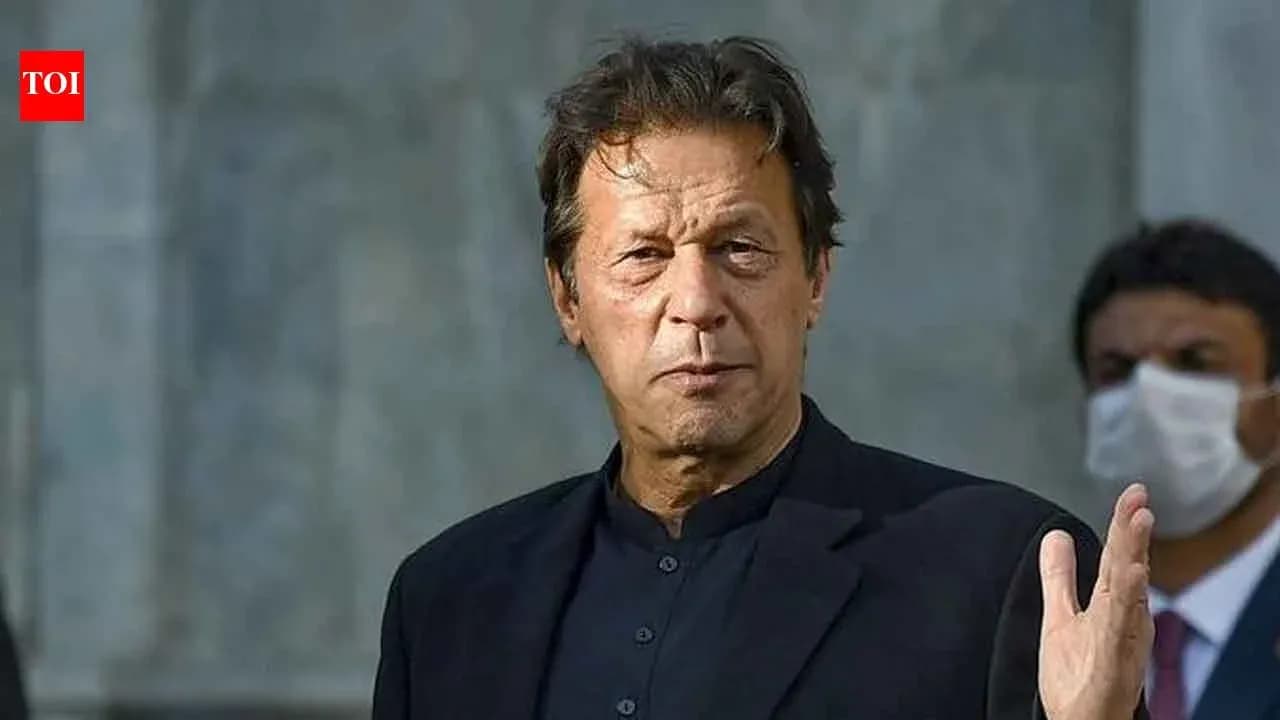
At Lord’s, where Pakistan’s cricket story has so often intertwined with its politics, a Test match against England has been dragged into a bitter row over censorship, power and the fate of the country’s most famous cricketer.
Imran Khan’s sons, Sulaiman and Kasim, have launched a fierce attack on Pakistan Cricket Board (PCB) chairman Mohsin Naqvi after reports that the board threatened to pull the national team off the field unless a television interview with them was taken off air.
The flashpoint came during the second Test at the Home of Cricket, when Sky Sports broadcast a pre-recorded conversation between former England captain Michael Atherton and the two brothers. In it, they spoke starkly about their father’s health and conditions in prison.
What followed has ignited fury. Multiple reports claimed that PCB officials warned the broadcaster that Pakistan would not resume play after lunch on day one if the interview continued to be shown.
‘They’re clearly hoping to kill him in there’
The cricket dispute is only the surface. Underneath it lies a far darker allegation.
Kasim, speaking about Imran Khan’s solitary confinement, did not soften his words. He claimed there is a deliberate attempt to slowly erase his father.
“They're clearly hoping to kill him in there. They want to silence him as secretly as possible and just slowly make him fade into nothing,” he said, painting a picture of a former World Cup-winning captain and ex-Prime Minister being pushed to the margins, out of sight and out of mind.
He argued that such a strategy runs into one problem: Imran’s enduring popularity.
“That's a very difficult thing to do with the most popular person in Pakistan right now. Their strategy, whenever we speak, is to let everything fizzle out and then impose more brutal restrictions that make it even harder for him to survive.”
The comments cut straight through the usual diplomatic language that surrounds high-profile political prisoners. They also framed the Lord’s controversy as part of a broader campaign to mute one of Pakistan’s defining figures.
‘They made absolute fools of themselves’
If the intention of any pressure on Sky Sports was to keep politics away from the cricket, Kasim believes it has badly backfired on the PCB and its chairman.
“They made absolute fools of themselves,” he told The Telegraph, accusing the board of damaging its own credibility on a global stage.
Sulaiman, for his part, admitted he expected some sort of backlash once the interview aired. But the nature of the reported response from Lahore stunned him.
“I was expecting some sort of response. But I didn't think they would be so tactless as to threaten not to take to the field,” he said.
For Sulaiman, this was not a political broadcast. It was, he argued, a plea about a former Pakistan captain’s basic welfare.
“It shouldn't be in the remit of the Pakistan Cricket Board (PCB) to ask for an interview about an ex-Pakistan player, somebody who lived in England for 22 years, to be taken down. This wasn't about politics, but about the humanitarian situation and his health.”
In a sport where boards often insist they operate above the political fray, the idea that a national team might be used as leverage over a TV segment has jarred with many observers. Lord’s, usually a sanctuary of bat and ball, became the backdrop to a struggle over who controls the narrative around Imran Khan.
Authorities insist on proper care – family demands proof
On the other side, Pakistani authorities have consistently rejected claims of mistreatment. Their line has been that Imran is receiving appropriate medical attention in custody.
Sulaiman does not accept those assurances at face value. He says the family is being kept in the dark and fears that the flow of information is being carefully managed for a darker endgame.
“The worrying theory we're hearing is that they're drip-feeding these reports of his ailing health and pretending that they're trying to help him, just to lay the ground for something worse to happen. Then they can wash their hands and say: 'He's just an old man who died, and we had nothing to do with it.’”
For him, the problem is not just what is being said, but what is not being shown.
“They haven't given us proof of any of this. It's all just hearsay from government sources – there's no transparency, they don't want to give anyone access, so how are we supposed to believe any of it?”
The last solid update the family trusts, Sulaiman says, came from Imran himself half a year ago, when he spoke about issues with his eye and alleged neglect of his treatment. Six months of silence since then has only sharpened their alarm.
So a Lord’s Test, meant to be a celebration of Pakistan’s cricketing heritage, has instead exposed the raw tension between the country’s most iconic cricketer, the institutions that now govern the game he once led, and a family that believes the clock is ticking on his life.
The runs and wickets will fade from memory. The question of how Pakistan treats Imran Khan, and who gets to speak about it, will not.