.svg&w=384&q=75 "logo")
Hardik Pandya's Roadmap: Gambhir's Strategy for India's All-Rounder
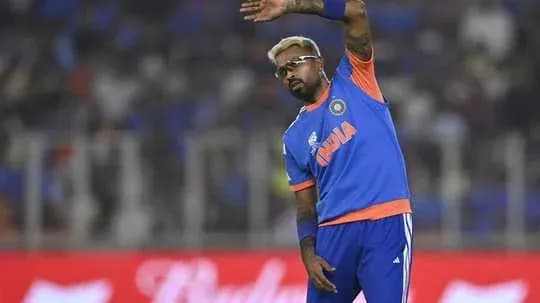
Hardik Pandya has not bowled a ball for India since that T20 World Cup final in March. With the 2027 ODI World Cup now looming into its final 12-month build-up, you might expect a scramble to fast-track him back.
Gautam Gambhir wants no part of that rush.
Speaking after India wrapped up the T20I series against Afghanistan with a third straight win, the India head coach laid out the clearest roadmap yet for his most important all-rounder — and it starts far away from the glare of full international cricket.
“Hardik at the moment, yes, he cannot bowl 10 overs and he hasn't played a lot of cricket since the IPL,” Gambhir said, matter-of-fact. “So we don't want to push him into international cricket because international cricket can be extremely tough on your body as well.”
That one line tells you everything about the current calculus. Hardik has been picked for India A’s series against Australia A, but only as a stepping stone. The target isn’t tomorrow’s headline. It’s a fully fit, fully firing all-rounder capable of delivering 10 overs in a World Cup game in Africa.
The message to Hardik has been blunt and simple.
“If he plays that India A series, obviously he'll get some game time as well. And that was the clear message to him that if he can play that 'A' series and then if everything goes well, he can come back and be part of the T20s and the One Day squad as well.”
No shortcuts. No sentiment. Just a phased return for a body that has taken a pounding.
Nitish Reddy steps into the spotlight
Hardik’s delayed return has already reshaped India’s planning. The most obvious beneficiary — and responsibility bearer — is Nitish Reddy.
Back from his own injury layoff, Nitish has used the Afghanistan T20I series to underline why the think-tank is investing in him. Six wickets across the series, a live, bustling presence with the ball, and the kind of profile that modern white-ball teams covet: a seam-bowling all-rounder who can handle the middle order.
India have pulled him out of the Asian Games T20 squad and redirected him towards ODI cricket. That decision says plenty about how they view the next 12 months.
“From Nitish's point of view, it's actually a great thing that he's been withdrawn from a T20 format and he'll get game time against West Indies as well,” Gambhir explained. “We know how important seam bowling all-rounders will be probably in a year's time when we go to South Africa and once Hardik comes back, obviously he's going to be good. Sometimes we could even go on to play both of them in the playing 11.”
That last line is the real tease. Hardik and Nitish together in the same XI changes the entire balance of the side. It offers India depth, flexibility, and the luxury of attacking with the ball without weakening the batting.
For now, though, Nitish is the one being pushed into the deep end.
Fast-tracking a rare profile
Gambhir did not hide his satisfaction with what Nitish has already shown.
“It's been a huge plus for us because we want to expose him to most of the international game because we know how important he is, whether it's in 50-over format or going forward in T20s as well,” he said. “Because, you know, there are not many going around guys who can bowl and who can bat at the middle order. So it's a massive positive that the way he's bowled in this series.”
That scarcity is driving India’s strategy. Seam-bowling all-rounders who can hold a middle-order slot are gold dust, especially in conditions where the ball grips, seams, and demands more than just hit-the-deck pace.
Nitish now heads into the ODI series against West Indies with a clear brief: build his body, build his overs, and grow into the rhythms of 50-over cricket. India want him match-hardened by the time the World Cup caravan rolls into South Africa.
A compromised build-up to West Indies
There is a catch. India will not be at full strength for that West Indies ODI series.
The Asian Games, long locked into the calendar, collide with a crucial stretch of 50-over preparation. Several first-choice ODI players will be in Japan, not in the Caribbean. For a coach trying to shape a World Cup squad, it’s far from ideal.
“Look, it's not ideal. Obviously, we know that it's not ideal when we are preparing for a World Cup, which is in years' time. But again, the Asian Games squad was selected long back,” Gambhir said.
He did not bother dressing it up. This is a compromise, pure and simple, and one that also hits his young captain.
“You want your best players to play as much as possible because the next World Cup is a 50-over World Cup. And more importantly, it's not fair on a young captain as well if he doesn't get the best team, playing consistently and regularly and not being on the path consistently.
“That's why I have to be dead honest. I think it is important for Shubman [Gill] to get the best team as many times as he can in red ball and in white ball formats as well.”
Gill is learning on the job, trying to imprint his style on a side that will carry his name into a World Cup. Doing that with a revolving door of personnel is a challenge Gambhir would rather have avoided.
Opportunity in the gaps
Yet the situation does open a different kind of window.
“Sometimes it's difficult for the selectors when they have to put the best squad in place,” Gambhir said. “So, we always knew that if the best team goes to the best, the front-line players go to the Asian Games.
“Obviously, we will have to probably compromise a bit in this one-day series against West Indies. But again, it gives other people the opportunity as well. And obviously, in a series like this, we've got young guys like Naman Dhir, Auqib [Nabi], getting those opportunities in this squad. So, they can also show what they bring in white ball format.”
This is the other thread running through India’s planning: stretch the talent pool, not just the first XI. With Hardik being rebuilt carefully and Nitish being accelerated, the likes of Naman Dhir and Auqib Nabi now get to audition under real pressure, not just in the shadows of domestic cricket.
The trade-off is clear. India sacrifice some short-term cohesion for a broader, battle-tested group heading into a World Cup year.
Hardik’s return, Nitish’s rise, Gill’s leadership, and a clutch of youngsters fighting for their place — all of it now feeds into a single question: when that squad boards the plane to South Africa, how many of these calculated risks will have turned into genuine World Cup weapons?