.svg&w=384&q=75 "logo")
Bournemouth's Historic European Debut: A Night to Remember

The first sound of Bournemouth in Europe was not a chant, a whistle or a referee’s whistle. It was a bang.
Out on the Bay of Biscay, a single red flare cut through the night above San Sebastián, the old Atotxa ritual reborn at Anoeta: one flare for the visitors, two for the home team, so the men at sea know the score. At 21.41 on a Thursday in September 2026, Justin Kluivert swept in a finish that had been 127 years in the making, and a man called Juan Iturralde sprinted into the street to tell the city what had just happened.
Bournemouth had finally arrived in Europe. And they did it with fireworks and a 2-1 win over Real Sociedad in the stadium where Andoni Iraola’s footballing story first took shape.
A night that belonged to Bournemouth
High in the north-east corner, 2,000 Bournemouth supporters sang as if they were trying to fill the Bay themselves. They had waited a lifetime for this. They were not in the mood to do it quietly.
They barely had time to settle into their seats before history came flying at them. Ten minutes and 43 seconds into their first European match, Bournemouth carved Real Sociedad open with a move of composure and clarity.
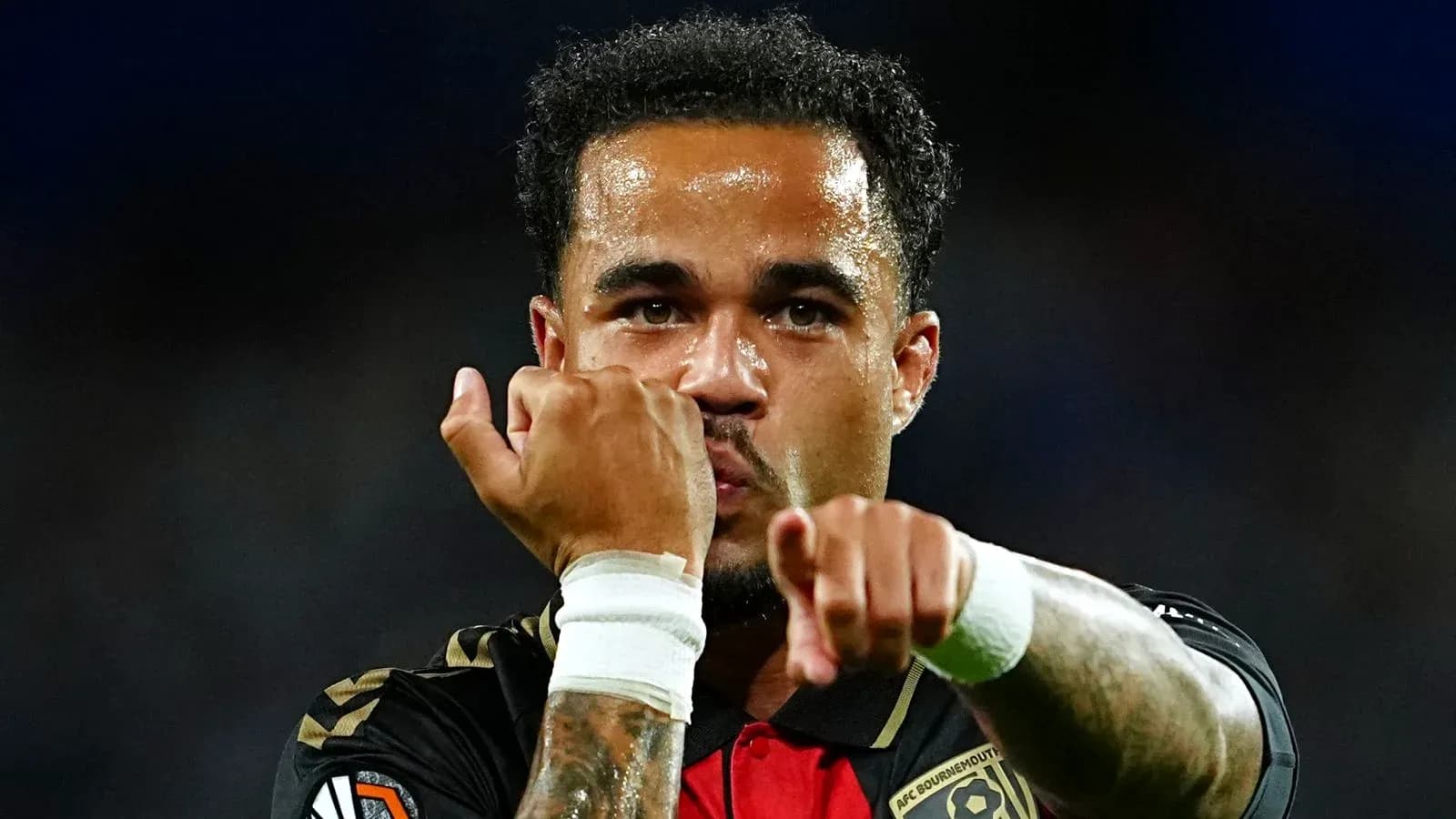
Evanilson started it with a subtle drop of the shoulder, receiving on the turn and releasing Adrien Truffert into space. The full-back’s cross bent wickedly behind the defensive line, begging to be finished. Kluivert obliged, sliding in to guide the ball home.
The away end erupted. Down in the south-west corner, though, the assistant’s flag went up. For a few seconds, the moment hung in the air. Then VAR intervened, the offside call overturned, and Bournemouth were allowed to celebrate their first European goal all over again. Up in the stands, they roared. Out on the street, Iturralde lit the flare.
Bournemouth were not done.
Alex Scott, gliding through the game with an ease that seemed to belong to a slower sport, took charge. His next contribution was a pass that deserved its own place in the club’s European scrapbook. Collecting the ball deep, Scott shaped his body, turned his ankle almost delicately and sent a long, looping, curling ball arcing into the perfect space.
Rayan attacked it like a centre-forward who knew exactly what this meant. He rose, met it cleanly and headed in Bournemouth’s second. Twenty minutes gone. Two-nil up. A second flare in the sky.
There was a serenity to Scott’s work that cut through the noise. While the match raced around him, he seemed to glide, always a touch ahead of the chaos. Around him, his teammates tore into Real Sociedad with pace and aggression. Marcus Tavernier, in particular, covered every blade, dragging Bournemouth up the pitch and forcing the home side back.
From set pieces, the visitors carried a constant threat. Evanilson headed one corner against the post. António Silva climbed to meet another and nodded just wide. From a third, Orri Óskarsson, defending his own box, could only just about clear. The Bournemouth fans sang, a red-and-black pocket of noise in one corner of Anoeta, while the rest of the stadium responded with whistles and frustration.
By half-time, the only relief for the home support was that the scoreline remained 2-0. Bournemouth could have been out of sight.
Real Sociedad hit back
The interval changed the temperature. Real Sociedad came back out with a different edge, Ander Barrenetxea’s early burst down the flank a clear signal of intent. The volume rose. The game tilted.
On 56 minutes, Djordje Petrovic made the first of several interventions that would define the night, springing to his right to push away a fierce effort from Beñat Turrientes. It felt like a warning. Seconds later, Bournemouth were punished.
Sergio Gómez stepped up on the left and bent in a curling cross that evaded everyone. It skipped past outstretched legs and nestled inside the far corner. No touch, no deflection, just a teasing ball that turned into a goal. The stadium erupted. Iturralde lit his third flare of the night.
Suddenly, the match changed shape. Real Sociedad’s version of “Bad Moon Rising” rolled around the stands, punctuated by sharp gasps as chances came and went. Bournemouth, so assured in the first half, were now being pushed back.
Petrovic had to go to work again, stretching to turn away a drive from Gonçalo Guedes. The anxiety in red and black was understandable. This season, Bournemouth had already seen leads slip away against Manchester City, Everton, Newcastle and Brentford, most of them late. The pattern felt horribly familiar.
Gómez, increasingly influential, clipped a superb ball through for Guedes on the left. Clean through, the Portuguese winger chose to cut inside instead of shooting first time, the moment lost in hesitation. Bournemouth scrambled, but Real Sociedad kept coming.
From the loose ball, Mikel Oyarzabal tried something more subtle, a deft, clipped effort that seemed to hang in the air before dropping onto the top of the net. A fraction lower and Anoeta would have exploded again.
Petrovic’s defiance
Bournemouth were now fighting for every yard. Gómez remained a problem, drifting into pockets, threading passes, refusing to let the visitors settle. On 81 minutes, Luka Sucic stepped up and drove wide from the edge of the box. Another warning. Another reminder that this was not done.
Then came the moment that should have broken Bournemouth.
Gómez, again the creator, slipped Óskarsson through on goal. The Icelandic striker had time and space, the angle in his favour. He struck cleanly. Petrovic stood firm, blocking what looked like the inevitable equaliser.
That might have been enough drama for one debut European night. It wasn’t.
In the final minute, the ball fell to Óskarsson again, this time only five yards out. It looked impossible to miss. Petrovic somehow made it possible, throwing himself in the way, contorting his body and smothering the shot. It was a save that felt like a statement, a refusal to let another lead vanish into the night.
When the whistle finally went, Bournemouth’s players sank to the turf, drained. They had dominated, then suffered, then survived. They had been forced to give everything.
Up in the stands, the away end bounced, defiant and delirious. Out by the water, the flares had burned out, the smoke drifting away over the Bay of Biscay.
But the signal had already gone. Bournemouth are here, in Europe at last, and the continent has heard them.