.svg&w=384&q=75 "logo")
Emilio Gay's Case for England Selection: A Summer of Resilience
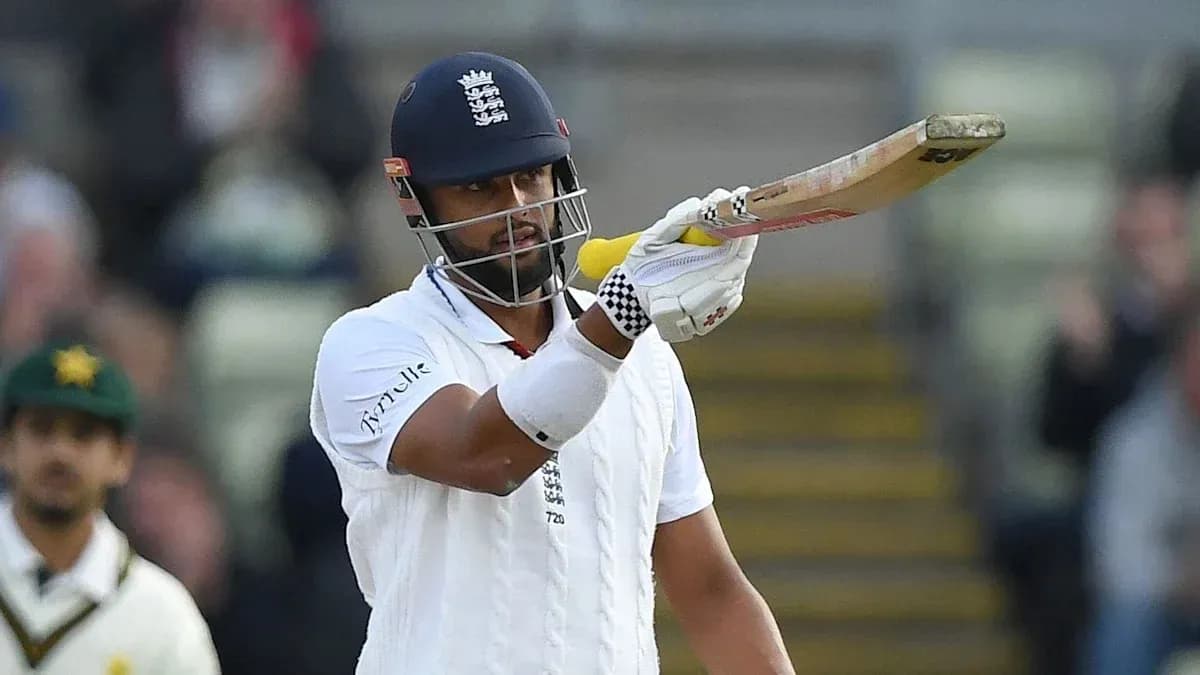
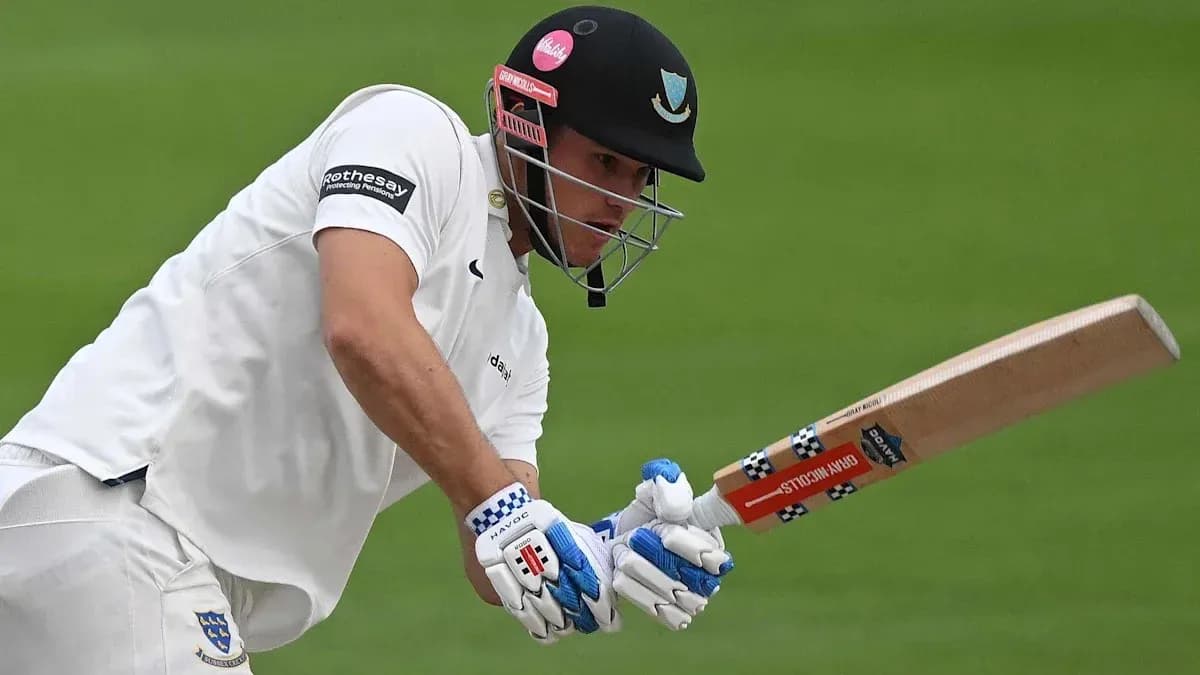
Emilio Gay walked off at Edgbaston with only 60 to his name, but with something far more valuable tucked away: the backing of Sir Alastair Cook and a strong claim on an England ticket to South Africa.
On a day when Pakistan’s batting folded for 133 and the ball once again bossed an English summer, Gay did what so few top-order players have managed in recent months. He stayed there. He soaked it up. He made Pakistan’s quicks work for every inch.
Cook’s seal of approval
Cook, who knows better than anyone what it takes to survive at the top of an England order, has seen enough.
“I think Emilio Gay's played really nicely. I would say he's confident and intense,” he told Test Match Special, before going further and effectively pencilling the 26-year-old in for the winter.
“He has done enough for me to take him to South Africa to continue the progress of a player where the pitches will be slightly easier to bat on and he should open the batting.”
When Cook talks about openers, people listen. Nearly 12,000 Test runs give his words weight. What has impressed him most is not flair or strokeplay, but character: a left-hander willing to grind, to leave, to defend, and only then to cash in.
A hard summer, a hard player
Gay’s numbers this season do not leap off the page: 261 runs at 26.1. In a normal year, that might be a footnote. In this one, it’s context.
On green pitches and under heavy skies, with seam and swing in constant play, only Ben Duckett has managed a Test century for England in six home matches. The bat has been under siege. In that environment, Gay’s willingness to do the ugly work has stood out.
According to CricViz, since his debut against New Zealand in June he has left or defended 61% of the pace deliveries he has faced. Among recent English openers in a home summer, only Dom Sibley in 2020 (68%) has bettered that figure.
On Wednesday, the pattern held. Gay left or defended 65 balls in his 60 from 114 deliveries. Cook liked what he saw technically as much as mentally, especially how late Gay brings the bat down in defence and how he builds his innings.
Patience, then punishment
The innings itself told its own story. Gay’s first 12 runs took 43 balls. He absorbed the new-ball spell, tightened his game, and refused to chase the drive. Once he had earned the right, the tempo changed: the next 38 runs came from 52 balls.
He finished with nine fours, and a striking statistic: 68% of his Test runs have come in boundaries, the joint-highest proportion of any England batter with at least 250 runs in the format. He may look like a blocker in the early overs, but there is plenty of scoring power when he chooses to move through the gears.
Cook highlighted the breadth of that game.
“If you take Gay's innings, and what I've seen of him, he's not hunting that drive too often. He waits for it to come into there,” he said. “He scores off the back foot through the off side as well. He scored through the leg side and timed them through mid-wicket so he does have an all-round game. He's not limited to the off side.”
This is not the old stereotype of the one-paced, one-sided English opener. Gay can go square, straight, leg side, back foot, front foot. The foundation, though, is still that stubborn will to survive.
A chance missed – and a lesson learned
For all the praise, the day ended with a twinge of regret. On a pitch where Pakistan had been blown away, this was a golden chance for a first Test hundred. Instead, Razaullah Khan hurried him with a touch of extra pace and Gay dragged on, out for 60.
Michael Vaughan felt the disappointment would cut deep.
“Emilio Gay found his balance early. He had it hard at the start and then he found his flow,” Vaughan said. “He'll be really disappointed to get out for 60. He'll be desperate to get his first Test match century and I thought it was on today.
“That extra little bit of pace from Razaullah and a little lack of concentration at the end of the day has cost him.”
It may yet prove his final Test innings of the summer. Pakistan’s flimsy first-innings effort has opened the door for a quick finish, and with the winter looming, England’s selectors will soon turn to the longer view.
The scrap for South Africa
The equation is simple but ruthless. With Jacob Bethell due back from injury for the South Africa tour, there are likely to be two top-order slots available and three names in the frame: Jordan Cox, Dan Lawrence and Gay.
What Gay offers is consistency in difficult conditions. Only Harry Brook, with six, has passed 30 more often than Gay (five times) for England this summer. He has not gone big yet, but he has repeatedly given the innings a platform in an era when early collapses have become almost routine.
There is a flaw on the dossier. Gay has struggled against back-of-a-length bowling, with seven dismissals in the 7-9 metre range exposing a potential weakness. International attacks will target that area relentlessly. The question is whether his temperament and work ethic can close that gap quickly enough.
Inside the dressing room, the faith appears strong. Seamer Josh Tongue pointed to Gay’s training habits as the bedrock of his concentration at the crease.
“The one thing I've seen in Emilio is he trains really hard in the nets. He'll bat for ages, putting a lot of hard work in, and it's shown on the pitch,” Tongue said.
“Even last week at Lord's, he had two quite horrible dismissals, but I felt today he batted unbelievable on a tricky pitch.
“He was obviously really disappointed with how he got out. It's not a nice feeling, chopping on, but he's put the team in a really good position for tomorrow.”
A stubborn case to answer
So where does that leave him? A left-hander with an all-round game, a stubborn streak, a clear technical plan, and the respect of two former England captains. An opener who has learned to value his wicket in a summer when wickets have flown.
He does not yet have a Test century. He does have something that often matters more to selectors: evidence that when conditions are hardest, he does not disappear.
If England want an opener built for attrition in South Africa, Emilio Gay has made his case the old-fashioned way. Ball after ball, leave after leave, defence after defence — and just enough boundaries to make everyone wonder how high the ceiling might be when the first hundred finally comes.