.svg&w=384&q=75 "logo")
Ed Cowan's Warning on BBL Privatisation
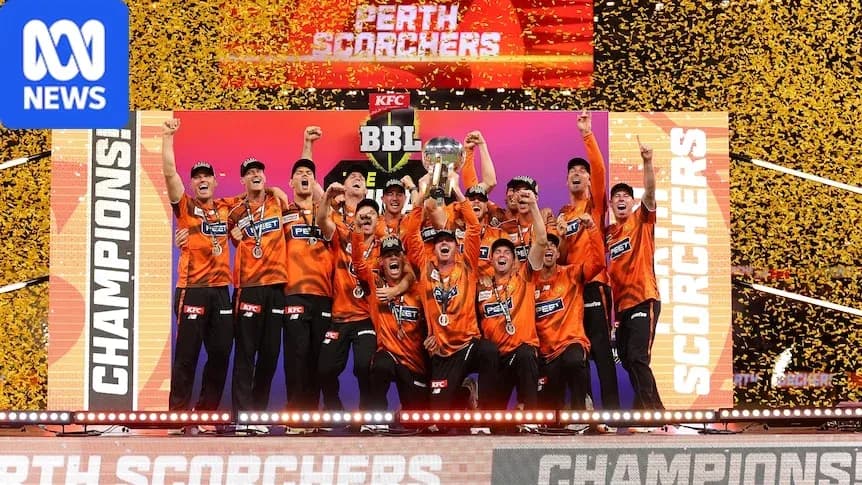
Ed Cowan has watched the Big Bash League grow from inside the dressing room and now from the boardroom. From that vantage point, he sees a competition that needs fine-tuning, not a fire sale.
While Cricket Australia pushes ahead with plans to open the BBL to private ownership, the former Test opener and current Cricket NSW board member believes the rush to sell could do more harm than good.
Cowan’s warning: don’t “burn the furniture”
Speaking on the ABC Cricket Podcast, Cowan pushed back against the rising anxiety that Australia’s best players will soon vanish to rival T20 leagues.
“Ben Stokes is going to Adelaide, Finn Allen has just signed a mega deal,” he pointed out. “So the argument that is put forward is we're gonna lose players to the South African League. We haven't lost one yet.”
His message was clear: the BBL is still attracting heavyweight talent. The fear of a player exodus, in his view, is premature.
Cowan argued there is still room to sharpen how the league is run before handing it over to private money.
“There's a view that the business could be run more effectively, which would enable some time to work out whether you actually do need to sell your star assets or not,” he said, before delivering his sharpest line.
“Because when you start burning the furniture to warm the house, it can spiral quickly out of control from there.”
That’s the heart of his concern. Once you sell, you don’t get those assets back.
A league that has already reinvented itself
The BBL has not stood still. After years of bloated schedules and dwindling interest, administrators cut the fixture list, tightened the season and, crucially, won back viewers.
The payoff has been obvious on the park.
In the 2025/26 season, crowds watched Colin Munro, Chris Jordan, Muhammed Rizwan and Sam Billings light up the competition. When the Test summer eased, Steve Smith, Alex Carey and Mitchell Starc stepped in and lifted the standard again.
This is the version of the BBL Cowan is defending: shorter, sharper, and once again attractive to both fans and overseas stars.
Stack that against The Hundred in England, where the headline acts in recent seasons have included Mitchell Marsh, Adam Zampa, Jos Buttler and Trent Boult. All four have either played in the BBL or are locked in for BBL16. For now, Australia’s domestic league is not losing that arms race.
Cricket Australia pushes the accelerator
Cricket Australia doesn’t want to wait to find out if that balance holds.
Earlier this month, CA confirmed an opt-in privatisation model, allowing states to take their BBL clubs to market. They can sell stakes or hand over entire franchises to private investors.
For CA chief executive Todd Greenberg, the threat is already here.
“There are opportunities now for our best Australian players to play in other leagues at the same time potentially with bigger salary caps. So when we talk about should we wait for two years or four years? No, we can't wait,” Greenberg said.
“Those challenges are on our doorstep today. So we've got to make some decisions about how we compete.
“We’re a relatively small country in a big global sport. So it's incumbent on us to make decisions that we can compete with elsewhere and that's exactly what we're doing.”
Greenberg sees privatisation as a way to unlock new money, push up salaries and keep the BBL in the same conversation as The Hundred and South Africa’s SA20.
Cowan sees the risk of losing control of a competition that has already shown it can adapt.
States split over selling up
The debate is now cutting straight through Australian cricket’s power base.
Cricket NSW has emerged as the most vocal opponent of the current model, with Cowan’s stance reflecting a broader unease in the state about surrendering ownership too quickly.
Queensland Cricket has taken a more cautious line. It is not ready to sell, but it isn’t slamming the door on private money either.
“We will closely monitor the sales process and at this stage, intend to retain 100 percent ownership of the Brisbane Heat, but of course remain open to private investment at the appropriate time,” Qld Cricket Chair Kirsten Pike and CEO Terry Svenson said in a statement.
In Victoria, the mood is very different.
Cricket Victoria has thrown its weight behind privatisation and will lead the way. The Melbourne Renegades are set to become the first BBL license taken to market, with the intention of selling the club in full.
“Private investment will unlock value for reinvestment across Victorian cricket, from the grassroots through to the elite game,” Cricket Victoria Director Shaun Richardson said.
Two states, two strategies. One league caught in the middle.
The last dance for the original eight?
Behind the public statements, negotiations between CA and the state associations roll on, with the clock ticking toward BBL16 and WBBL12.
Those seasons are “likely to be the last” involving the original eight BBL franchises in their current form. That line, tucked into the planning, carries real weight. The landscape of Australian domestic cricket could look very different, very soon.
On one side stands a governing body determined not to be left behind in a booming global T20 market. On the other, a group of administrators and ex-players like Cowan, wary of selling off the league’s core just as it has rediscovered its spark.
The BBL has already proved it can reinvent itself once. The next question is tougher: can it do that again without selling its soul to stay in the game?