.svg&w=384&q=75 "logo")
Dane Sweeny’s US Open Journey Ends in Third Round
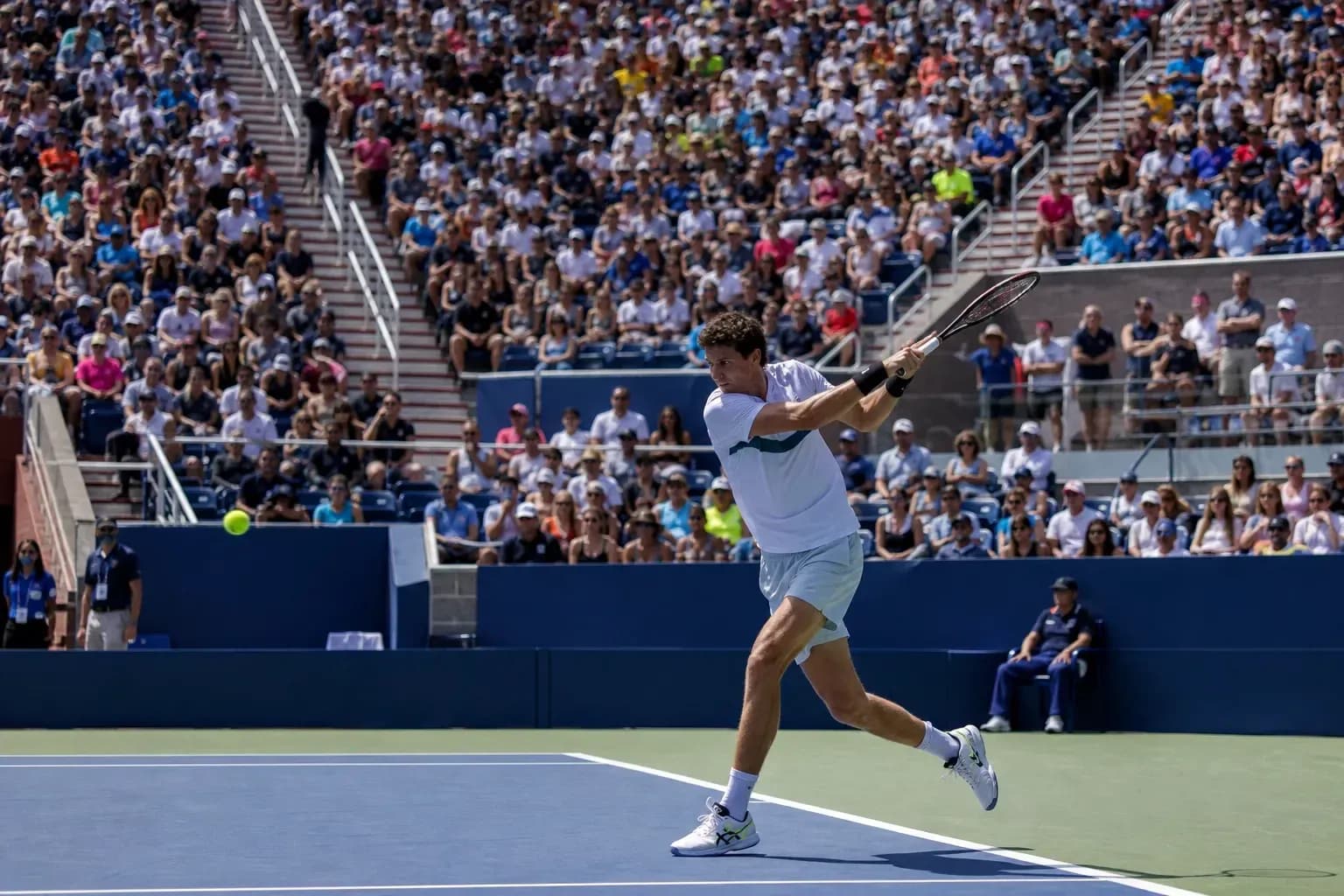
Dane Sweeny walked off Louis Armstrong Court knowing two things at once: this was the week that changed his career, and it ended with a match he never truly got hold of.
Australia’s last singles hope at the US Open bowed out in the third round, beaten 6-4, 6-3, 6-3 by 21st seed Luciano Darderi. The Italian was clinical. Sweeny was hurting.
The 25-year-old, ranked 123 in the world, had only just made it into the main draw. Two late withdrawals opened a door that had been earmarked for Alexei Popyrin, and Tennis Australia slid Sweeny through it with a reciprocal wild card. He arrived in New York as a late addition; he leaves as a player whose ranking and reputation have both taken a sharp step forward.
Against Darderi, though, his body and timing deserted him. Sweeny complained of a hip problem during the match, and it showed in the way he moved and struck the ball. The usual zip on his shots never quite surfaced. The rhythm he relies on never settled. The unforced errors piled up, and Darderi didn’t need a second invitation.
Sweeny later called the week “career-changing” but did not hide his frustration with the performance that ended it. The stage was bigger than anything he had known in singles. The tennis, by his own admission, was not.
Yet the numbers tell their own story. This was the first time Sweeny has reached the round of 32 at a Grand Slam. He now stands to collect $402,500 in prize money and is projected to climb to around No. 109 in the world, the highest mark of his career. One more push, one more ranking jump into the top 100 before the season closes, and he will walk straight through the front door of the Australian Open main draw for the first time instead of waiting on a wildcard or a late twist of fate.
From a late call-up to the last Australian standing, Sweeny leaves New York with a sore hip, a sharper profile, and a clear target for the months ahead.
American Hopes Cut Down in Third Round
Sweeny wasn’t the only notable casualty on a bruising day at Flushing Meadows. Several American finalists from recent years saw their campaigns cut short in the third round, and the home crowd’s expectations took a hit.
Ninth seed Taylor Fritz, last year’s US Open finalist, suffered a collapse that will sting. Two sets up on Francisco Cerundolo and seemingly cruising, Fritz unravelled as the Argentine surged. Cerundolo turned the match on its head, winning 3-6, 4-6, 6-3, 6-4, 6-4 to reach the fourth round in New York for the first time. For Fritz, this marked his earliest exit at the tournament in four years, a sharp contrast to his run to the final in 2024.
On the women’s side, Madison Keys endured a defeat that will linger far longer than the scoreline suggests. After racing through the first set 6-1 against Zheng Qinwen, Keys found herself locked into a dogfight. Zheng edged a second-set tiebreak 7-3, but the real drama came in the decider.
Keys led 5-0 in the third set. She could not close. Zheng mounted a stunning comeback, reeling off seven of the next eight games to steal it 7-5 and complete a 1-6, 7-6 (7-3), 7-5 victory that silenced the stadium and underlined her growing reputation as a big-stage fighter.
The reward is brutal but fitting: a fourth-round showdown with world No. 1 Iga Swiatek. The Pole survived her own test, edging Marie Bouzkova in two tight tiebreaks to move on without dropping a set, but far from unchallenged.
Tenth seed Amanda Anisimova also fell, beaten 6-2, 7-5 by Anastasia Potapova. The American never quite dictated, and Potapova’s clean hitting kept her one step ahead in the key moments.
Coco Gauff, though, offered the home fans something to cling to. The American star handled Cristina Bucsa with authority, winning 6-3, 6-4. It wasn’t flawless, but it was controlled, composed, and exactly the kind of routine victory Gauff now expects of herself at this level.
So the day ended with a split narrative. A breakthrough week for Dane Sweeny, cut short by pain and a ruthless seed. A wave of American exits, led by a former finalist surrendering a two-set lead and another letting a 5-0 third-set cushion slip away. And amid the wreckage, a few names—Cerundolo, Zheng, Gauff, Swiatek—quietly tightening their grip on a tournament that’s already punishing any lapse in nerve.