.svg&w=384&q=75 "logo")
Botic van de Zandschulp reaches US Open quarterfinals after epic comeback
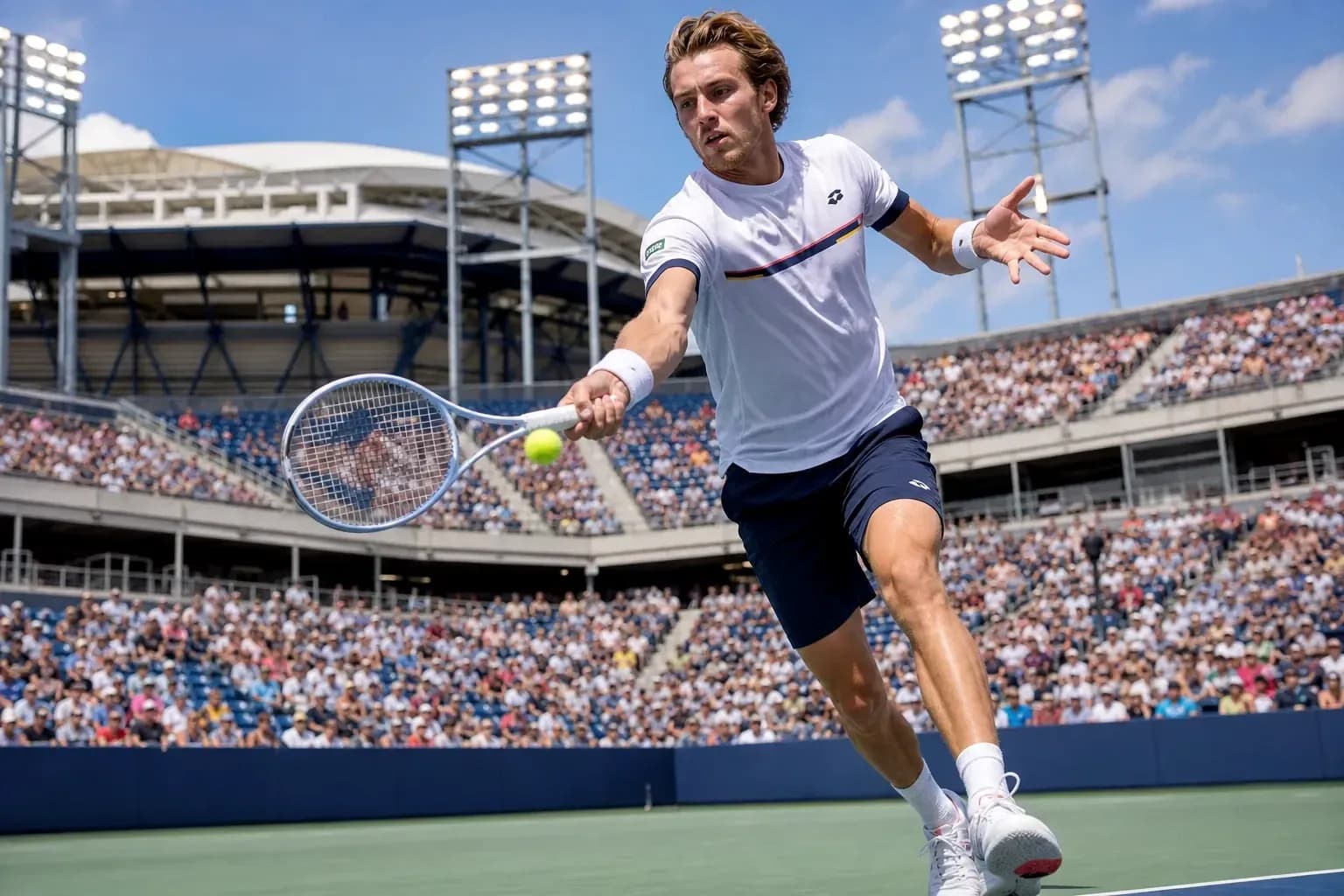
Botic van de Zandschulp walked off court in New York looking less like a winner and more like a survivor. Five hours and 13 minutes on court, two sets down, a match point faced, and somehow the Dutchman is back in the US Open quarterfinals.
In a match that stretched into tournament history as the fourth-longest ever, the 30-year-old clawed past Frenchman Arthur Gea 3:6, 6:7 (0), 7:6 (7), 7:6 (3), 6:4, turning what looked like a routine exit into one of the most dramatic escapes of this year’s event.
From straight-sets defeat to a five-set classic
For two sets, van de Zandschulp looked finished. Gea dictated the tempo, took the opener 6:3, then shut the door in a ruthless second-set tiebreak, 7:6 (0). The Dutchman’s game misfired, the Frenchman swung freely, and the scoreboard told a brutal story.
Then came the third-set breaker, and with it, the turning point.
Gea earned a match point. One clean strike away from the quarterfinals, one point from a place in Grand Slam history. Van de Zandschulp refused to fold. He saved it, clung on, and edged the tiebreak 9–7 to stay alive in the match and in the tournament.
The pressure shifted. Gea, who had played with freedom for two sets, suddenly carried the weight of a missed chance. Van de Zandschulp sensed it and tightened his own game, leaning on his baseline consistency and experience in long-haul battles.
The fourth set followed a similar script: tight service games, narrow margins, and another tiebreak. This time the Dutchman controlled it, 7:6 (3), dragging the contest into a decider after more than four hours on court.
Once the fifth set began, the momentum finally matched the effort. Van de Zandschulp earned the crucial break and guarded it, closing out the set 6:4 to complete a comeback that will sit alongside the most grueling wins of his career.
A familiar stage for van de Zandschulp
This run takes van de Zandschulp back to a place he knows. The Dutchman is into the US Open quarterfinals for the second time, having first reached this stage in 2021. Back then, he announced himself as a dangerous force on hard courts. Now, at 30, he’s proving he still has the engine and nerve to survive a five-set war.
His path this year has already included another notable scalp: in the second round he ousted Australian Alex de Minaur, one of the tour’s quickest and most resilient defenders. That win hinted at form. This one underlined his toughness.
Gea’s missed slice of history
For Arthur Gea, the defeat will sting long after the scoreboard is wiped clean.
The Frenchman only entered the main draw as a lucky loser, stepping in when 2022 US Open finalist Casper Ruud withdrew with a back injury. From there, he built a run that carried the air of a fairytale. One more point in that third-set tiebreak and he would have become the first lucky loser ever to reach the quarterfinals of a Grand Slam men’s singles event.
Instead, he leaves with a five-set loss and the knowledge that he stood on the brink of a historic breakthrough. The margins at this level could hardly be thinner.
Blockx makes Belgian history, Khachanov digs deep
On a day of long matches and broken barriers, Alexander Blockx carved out his own piece of history.
The 28th seed from Belgium defeated 24th seed Francisco Cerundolo 6:3, 4:6, 7:5, 7:5, becoming the first Belgian player ever to reach the US Open quarterfinals. It was a composed, mature performance, built on timely breaks and calm serving in tight moments.
Across the draw, Karen Khachanov needed five sets of his own to book a place in the last eight. The Russian outlasted 14th seed Learner Tien 7:5, 4:6, 6:7 (6), 6:1, 6:4, wrestling back control after dropping the third-set tiebreak and then surging through the fourth to force a decider.
Khachanov and Blockx will now face each other in the quarterfinals, a clash between a seasoned Slam campaigner and a man riding the wave of a breakthrough run.
Van de Zandschulp, meanwhile, heads into his second US Open quarterfinal with the kind of win that can redefine a campaign. After surviving one of the longest battles this tournament has seen, how much more does he have left to give?