.svg&w=384&q=75 "logo")
Ben Shelton Tops Alcaraz in US Open Quarter-Final Epic
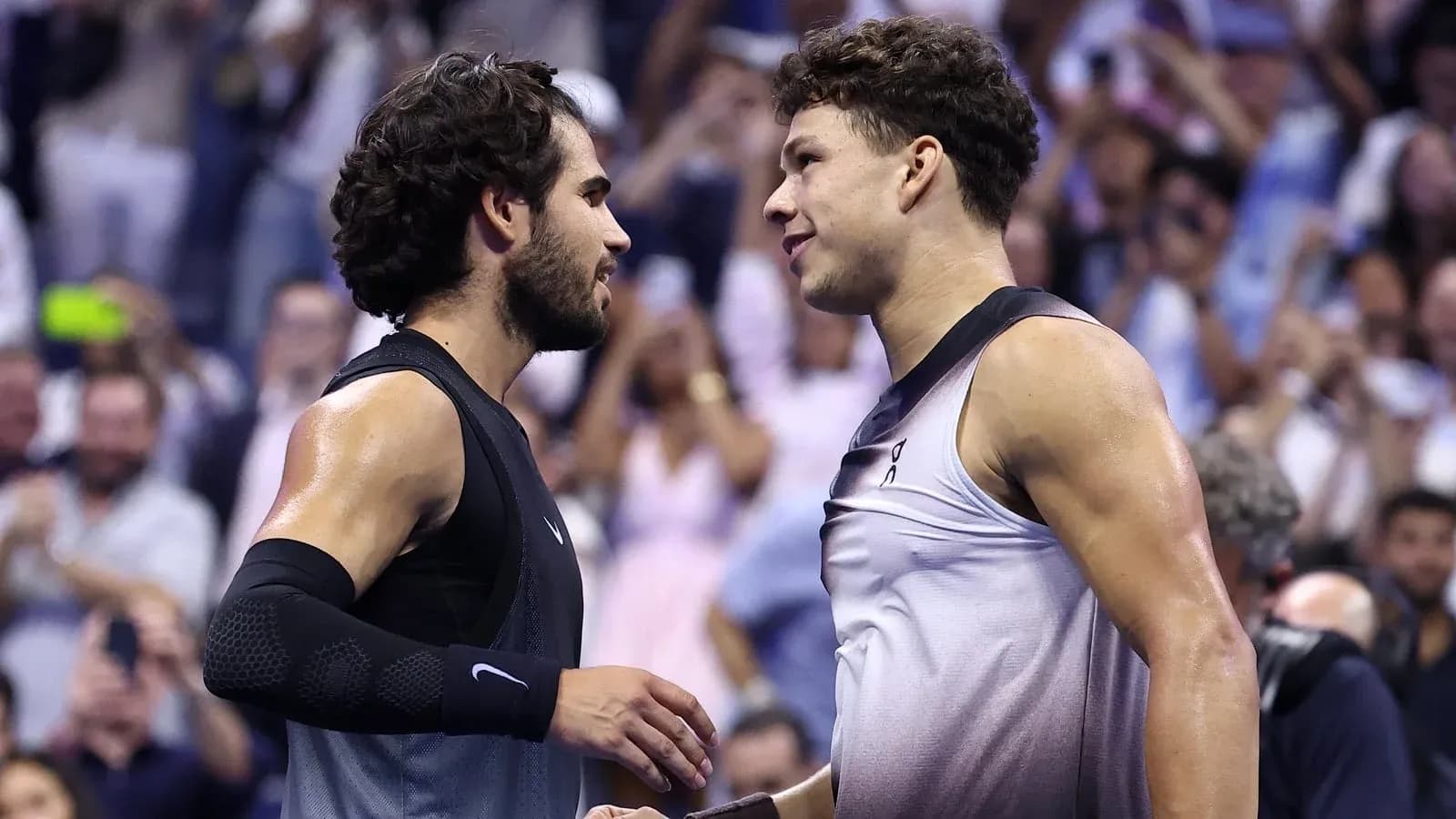
Ben Shelton walked into Arthur Ashe Stadium at around 11pm. He walked out, nearly five hours later, as the man who toppled the defending champion in one of the wildest, latest nights the US Open has ever staged.
The 21-year-old American outlasted Carlos Alcaraz 6-7(5) 6-1 6-3 1-6 7-6(10-7) in a quarter-final that finished shortly after 3.30am in New York, the latest completion in tournament history. The scoreline only hints at the chaos. This was a match that swung like a pendulum and refused to sleep.
Alcaraz, back at a tour-level event for the first time since April because of a wrist injury, looked at times like the old force, at others like a man running on fumes and fighting his own body. He battled through visible sickness, dragged himself to a deciding set and came within a handful of points of survival. Shelton simply refused to blink.
After edging a tight first set in a tiebreak, Alcaraz seemed to have weathered the early storm. Shelton responded with a savage gear change. He tore through the second set 6-1, then backed it up with a composed 6-3 third, riding the noise of a crowd that had no intention of going home.
The fourth set flipped the script again. Alcaraz, drained but defiant, surged to 6-1, forcing a decider and igniting the sense that the champion’s instincts might drag him through one more time. Physically, he admitted, he was “really tired”, yet he kept finding reserves, kept pushing, kept chasing balls that had no right to come back.
The fifth became a test of nerve as much as legs. Both men held firm until the super tiebreak. Under the harshest kind of spotlight, Shelton seized it 10-7, punching his way into just his second US Open semi-final and detonating a roar that rattled the stadium’s steel.
Alcaraz left with regret but also relief at simply being back in the fight. “It was close, it really was close, so I’m just a little bit disappointed about not getting the win at the end,” he said. “But I’m just happy, I’m proud of myself about how I fought. Physically I was really tired, but I found a way to push myself up and physically give extra.”
Shelton, beaming and breathless, paid tribute to the city that had just watched him grow up a little more under the lights. “I always say that this is the greatest sports city in the world. This is the greatest stadium in the world,” he said, before glancing at his box and joking about his best friend and sister facing a 6am start at work. “Sharing the court with Carlos is an absolute honour and I cherish every moment that I have out here.”
By then, New York had already witnessed one American escape act.
Earlier on Arthur Ashe, Frances Tiafoe looked gone. Two sets and a break down to compatriot Alex Michelsen, the 11th seed had lost the spark that lit his early rounds and seemed to be sliding quietly out of the tournament.
He tore up that script in real time.
Tiafoe clawed his way back into the third set, feeding off the crowd and finally wrenching the momentum away with a forehand winner that detonated a deafening roar inside the stadium. From there he played with a renewed clarity, taking the fourth 6-3 and dragging the match into a deciding set.
Michelsen refused to fold, forcing a final-set tiebreak, but Tiafoe held his nerve to complete a 5-7 3-6 7-5 6-3 7-6(6) comeback and book a third US Open semi-final. A night that began with doubts about American staying power ended with two home players still standing, both forged in the small hours on the sport’s biggest stage.
New York loves survivors. On this evidence, it has found a couple more.