.svg&w=384&q=75 "logo")
BBL's Shift Towards Partial Privatisation: A New Era for Australian Cricket
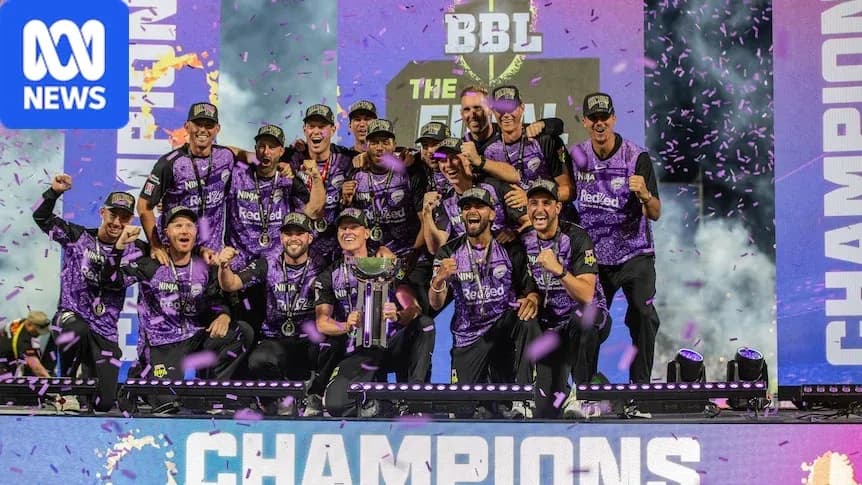
The Big Bash League is about to change shape — and with it, Australian cricket.
In one of the boldest moves since the competition’s launch, Cricket Australia (CA) is set to open the door to partial privatisation of BBL clubs, allowing states to sell off up to 49 per cent of their franchises. It’s a decision that slices straight through a split in the game’s power base and signals a decisive shift towards the global franchise model.
CA pushes ahead despite state divide
The plan, effectively ticked off at a CA board meeting last week, will be officially endorsed on Monday night, with a formal announcement expected on Tuesday. CA is set to roll out the news alongside several of Australian cricket’s biggest names — a calculated show of strength after early resistance from the Australian Cricketers’ Association (ACA).
Not everyone in the domestic game is celebrating.
Tasmania, Victoria and Western Australia are firmly behind the move, ready to test the market for minority stakes in their BBL sides. South Australia is cautious but open. On the other side of the ledger, New South Wales and Queensland — two of the game’s traditional heavyweights — remain opposed and are bracing for a model they did not want.
Their frustration will only grow now that CA has chosen to press on without full consensus.
Money, power and a new model
At the heart of the debate sits a familiar question: who gets what?
The ACA supports privatisation in principle, but only if it believes the long-term health of the sport is protected. The players’ union is still locked in negotiations with CA over how much of the new revenue stream will flow to players, and what that looks like inside a new memorandum of understanding between the two parties.
CA’s argument is simple: without private money, the BBL risks falling behind rival leagues around the world. With it, the league can stay competitive, and the proceeds, CA insists, can be pumped back into the wider Australian cricket system — from grassroots to elite programs.
New South Wales, though, has long warned that private equity is little more than a sugar hit. Its view is that the game needs deeper structural reform to secure CA’s financial future, not just a one-off windfall from selling slices of its most visible product. Cricket New South Wales has been contacted for comment.
Global buyers circle as states prepare to sell
The clock is already ticking.
Transactions could be completed before the start of next season, with states given the green light to run a market-sounding process for 49 per cent stakes in their teams. Prospective international owners are expected to be courted across the coming summer, with potential buyers likely to be in Australia to watch this season’s BBL up close.
Some states are already ahead of the pack. In June, Cricket Victoria accelerated the push by moving to sell the Melbourne Renegades while retaining the Melbourne Stars licence, a clear sign that the old model was under strain and that Victoria was ready to cash in.
State CEOs have not been idle, either. Several recently travelled to India and the UK, sounding out interest and building relationships with potential investors long before CA’s formal approval to begin the sell-off process.
Now that approval is here.
The BBL, once a purely domestic creation built on state control and central funding, is on the verge of becoming something different: part local institution, part global asset. How that balance is struck — and who ultimately benefits — will shape the next era of Australian cricket.