.svg&w=384&q=75 "logo")
The Battle for IPL Media Rights: JioStar's Dominance
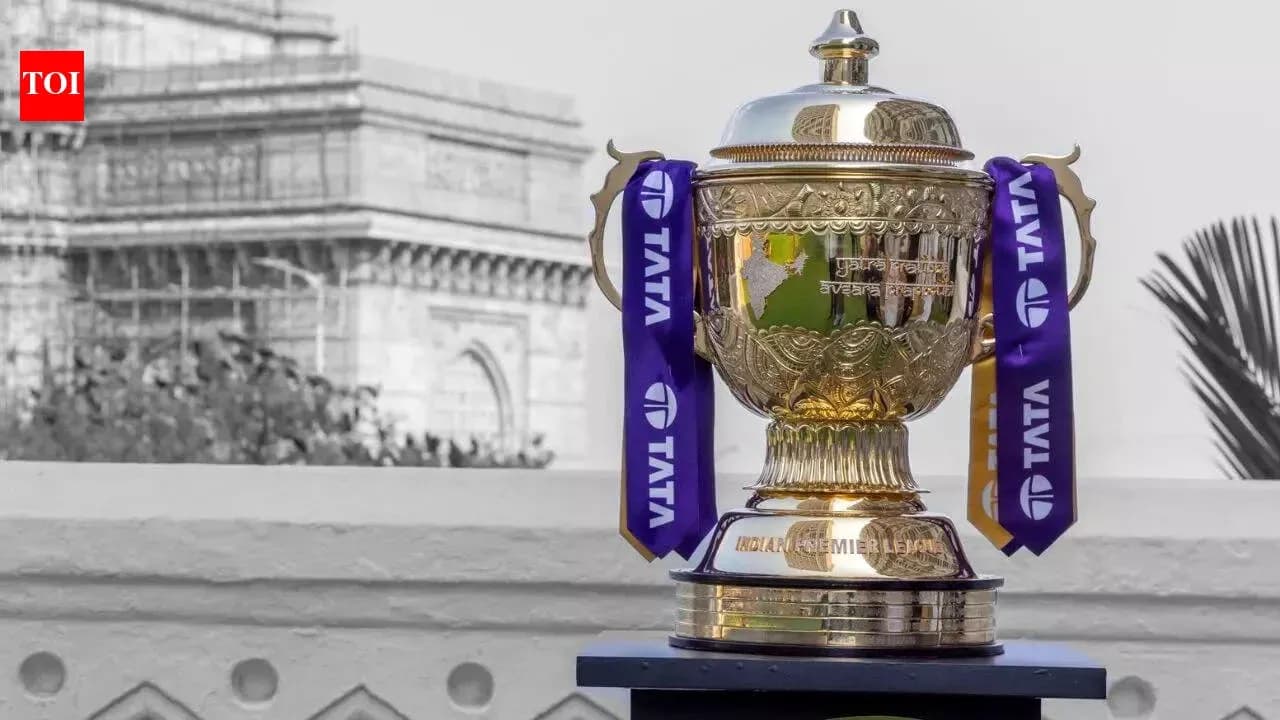
The IPL trophy sits polished and ready, but the real battle around Indian cricket’s crown jewel is not on the field. It’s in the boardrooms, where the next round of media rights is taking shape — and where, alarmingly, there may be only one serious player left.
With roughly six months before the final IPL season of the 2023-27 cycle begins, the industry is restless. The concern is blunt: if JioStar stands as the lone heavyweight bidder for both IPL and India’s home bilateral media rights, how does the market truly know what this property is worth? Without rivals, there is no tension. Without tension, there is no discovery of real value. For a tournament that has thrived on competition, the rights race suddenly looks like a walkover.
Uday Shankar, vice-chairman of JioStar and one of the architects of modern sports broadcasting in India, did not sugar-coat it at the ET World Leaders Forum. A decade ago, he recalled, four or more serious media companies would scrap hard for every major sports package. Now, he said, it increasingly feels as if JioStar is “the only one standing”. That is not a boast. It is a warning.
Shankar’s diagnosis cuts to the heart of the issue. Rights fees have soared. The ability to monetise those rights has not kept pace. The ecosystem — rights holder, broadcaster, platform — is straining under the weight of its own expectations. The value of sport remains huge, but the business model around it looks fragile when one big player carries most of the load.
And that is where the anxiety around Indian cricket deepens. Everyone expects JioStar to come hard for the IPL again. Its subscription base leans heavily on cricket consumption; walking away is not an option. The problem is not Plan A. The problem is everything after that.
Where is Plan B?
For a board as powerful and cash-rich as the BCCI, the inability so far to pull more bidders into the ring is baffling. Global platforms that have been reshaping the sports media landscape in the West have, at the very least, the scale and ambition to test the waters in India. Yet they remain, at this stage, more theoretical than tangible.
YouTube is the clearest example of what’s possible. It has moved beyond cherry-picking rights to building a full ecosystem around sport. Its seven-year, reportedly $2 billion-a-season deal for exclusive US distribution of NFL Sunday Ticket is not just a trophy contract. It’s a pillar of YouTube TV’s pay-TV offering and a standalone subscription product on YouTube channels. Sport, in that model, is the anchor, not the add-on.
That template should intrigue Indian cricket. Yes, average revenue per user in the West dwarfs what the subcontinent can command. Volume is not an automatic trump card. Yet if there is one market in this region where a giant like YouTube could justify an experiment in premium live sport, it is Indian cricket — and the IPL in particular.
Netflix, too, is circling the edges of live sport. Co-CEO Ted Sarandos has spoken of an interest in live events, including cricket, while stressing that Netflix does not want to morph into a conventional full-season sports broadcaster. That stance, paradoxically, aligns neatly with what the IPL offers.
The IPL is short, intense, story-rich. It is India-first but global in appeal. It speaks to more than a billion domestic viewers, a vast diaspora, and markets where cricket quietly carries India’s soft power. It is the kind of property that can be packaged as a cultural event as much as a sports tournament — exactly the kind of storytelling canvas Netflix has built its brand on.
Yet none of these possibilities will materialise by osmosis. Shankar is blunt on that front as well: at some point, the economics must make sense. For that to happen, the federation — in this case, the BCCI — has to do more than simply put out a tender and wait for the usual suspects to show up.
The IPL is arguably India’s most prized prime-time asset. But assuming that executives sitting several time zones away fully grasp its commercial and cultural power, without hearing the pitch directly from those who run it, is optimistic at best. The board cannot rely on reputation alone. It needs a strategy.
That strategy has to look outward, not inward. The BCCI must take the IPL to the world’s biggest media, technology and streaming platforms, and make a hard, detailed case: why this league, in this market, at this moment, deserves a place in their long-term plans. That means courting platforms that have never bid in India, understanding their business models, and shaping packages that still protect the value of the property while lowering the barrier to entry.
The stakes are obvious. If JioStar remains the only truly credible bidder, the IPL will still fetch big money, but the market will not know if it fetched the right money. Rights inflation without competition is a dangerous illusion. For a sport that prides itself on fine margins, Indian cricket cannot afford to misread its own.
JioStar is clearly Plan A. The real test of the BCCI’s vision is whether, when the tender finally lands, there is a serious Plan B — and maybe even a bold Plan C — waiting in the wings.