.svg&w=384&q=75 "logo")
Babar Azam's Struggles and Pakistan's Batting Collapse
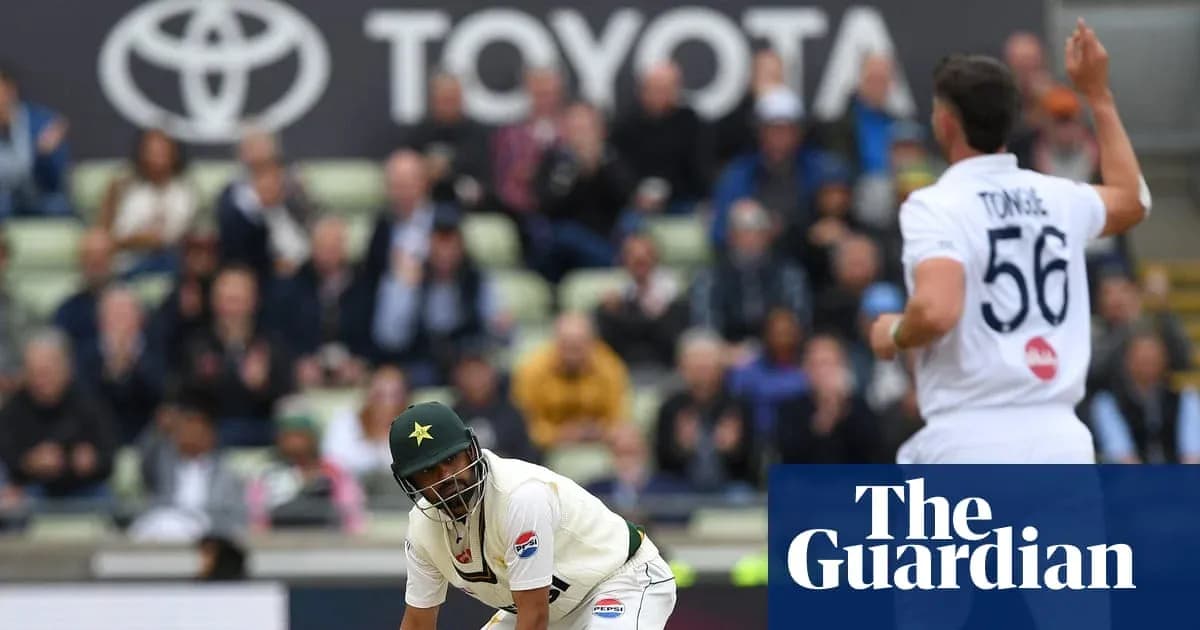
The lights were on at Edgbaston before lunch, and so was the writing on the wall.
Barely 45 minutes into the Test, Pakistan were three down, the sky a slab of charcoal, rain teasing from the edges of a thick cloud bank. Ollie Robinson bustled in with the keeper standing up and five slips crouched like a picket fence. From the other end Jofra Archer, four overs into his work, was beginning to hum. It was a brutal time to bat.
Lately, it always is.
A giant out of rhythm
Once, and not long ago, Babar Azam walked into mornings like this and bent them to his will. In 2022 he lived in the upper reaches of Test batting. A year of big, defiant hundreds: 196 against Australia in Karachi, 119 in Galle, 136 against England in Rawalpindi, 161 against New Zealand back in Karachi. He finished that calendar year averaging 49 in Tests, ranked third in the world, crowned ICC Men’s Cricketer of the Year.
That version of Babar feels distant now. He has not reached three figures in Tests since. Across his last 20 matches, his top score is 88, his average 29. The numbers tell you decline; the manner of his dismissals tells you something more troubling – a player caught between memory and reality.
Here, you could almost trick yourself for a moment. Close your eyes, imagine the old script: Babar arriving in a crisis, soft hands, late cuts, time slowing around him as he steers Pakistan out of the storm. Then you open them again.
He set himself for Robinson’s first ball and looked unsure, half-committed, withdrawing the bat at the last instant. The next delivery skimmed past his outside edge. The third he clipped neatly through square leg for a couple, a brief echo of his old certainty. Archer tested him with a short one and Babar flailed, missing with an ugly slash. Gus Atkinson then beat him twice before a thick edge squirted away for four.
In the fourth over of his stay, Josh Tongue went straight through him. Seven runs. Eighteen balls. Stumps spreadeagled, the most fragile of innings ending with a clarity his recent form has been pointing towards for some time.
There was nothing surprising about it. That, in itself, is the problem.
A broken batting order
Pakistan’s numbers in this series read like a slow-motion collapse: 171, 135, 110, 194 and now 133. One more sub-200 dismissal in the second innings here and they will become the first team since the 19th century to be bowled out for under 200 in every innings of a three-Test series in England.
This is not a blip. It is a pattern.
They look like a broken side, and leading them feels like a job designed to fail. Babar, nominally part of the selection panel, admitted he had no idea seven new players were being sent out for this Test until after the decision was made.
“It was news to me,” he said. “I found out after.”
That single line captured the chaos. The captain as bystander. The team reshaped on the fly. A revolving door masquerading as a plan.
A new name, an old thrill
Out of that churn, late in the day, came a name most in the ground had barely heard.
Razaullah.
First change from the City End, running in with the easy stride that fast bowlers from Pakistan seem to inherit by birthright. To know much more about him you needed to be deep into the domestic game. He is 21. His first-class debut came only last November for Peshawar in the Quaid-e-Azam Trophy. Seven first-class matches, nine List A games, seven T20s. That’s the entire bulk of his senior career before this sudden Test call-up and long flight to Birmingham.
Within minutes, everyone at Edgbaston knew a little more.
The first thing he revealed was that he can really hit a ball. The second, that he is seriously quick. The third, that he has that rare, unmistakable gift – the ability to make top players hurry.
His first three balls to Joe Root rushed England’s master technician. The fourth was the kind that announces a fast bowler to the world. It screamed in, Root tried to adjust late, the bat came down after the ball had already straightened. It thudded into the front pad, dead in front of middle. Root, bemused, sent it upstairs, but the replay only confirmed what everyone in the ground had already seen. Plumb. LBW. Again.
Razaullah had his first international wicket. In that moment, he gave the day something Pakistan cricket always seems to offer, no matter how dysfunctional the structure behind it: raw pace, daring, energy, and a touch of swagger. Even the hair looked immaculate.
Later he came back and produced another. Emilio Gay tried to drive at 90mph, the ball jagged in, took the inside edge and cannoned into middle stump. Another stump-splattering strike, another reminder that Pakistan’s fast-bowling well never seems to run dry.
The endless production line – and the question it poses
Pakistan will never lack for natural talent. That much feels eternal. Even as everything else frays – administration, planning, selection, stability – another fast bowler arrives, fresh and thrilling, as if summoned from nowhere.
But anyone who has watched this team long enough knows the uncomfortable follow-up.
You remember Naseem Shah and Shaheen Shah Afridi here in 2020, both electric, both seemingly at the start of long, defining careers in these conditions. You look at this tour and notice neither is back. You think of the conveyor belt of quicks over the last decade and ask what the system has actually done for them, how it has managed their bodies, their workloads, their development.
You glance back at Babar’s career arc in the same period, from imperious to uncertain, and the question sharpens.
What happens next to Razaullah?
The answer, if history is any guide, is the most worrying part of all.