.svg&w=384&q=75 "logo")
Asian Games 2026: A New Era in Aichi-Nagoya
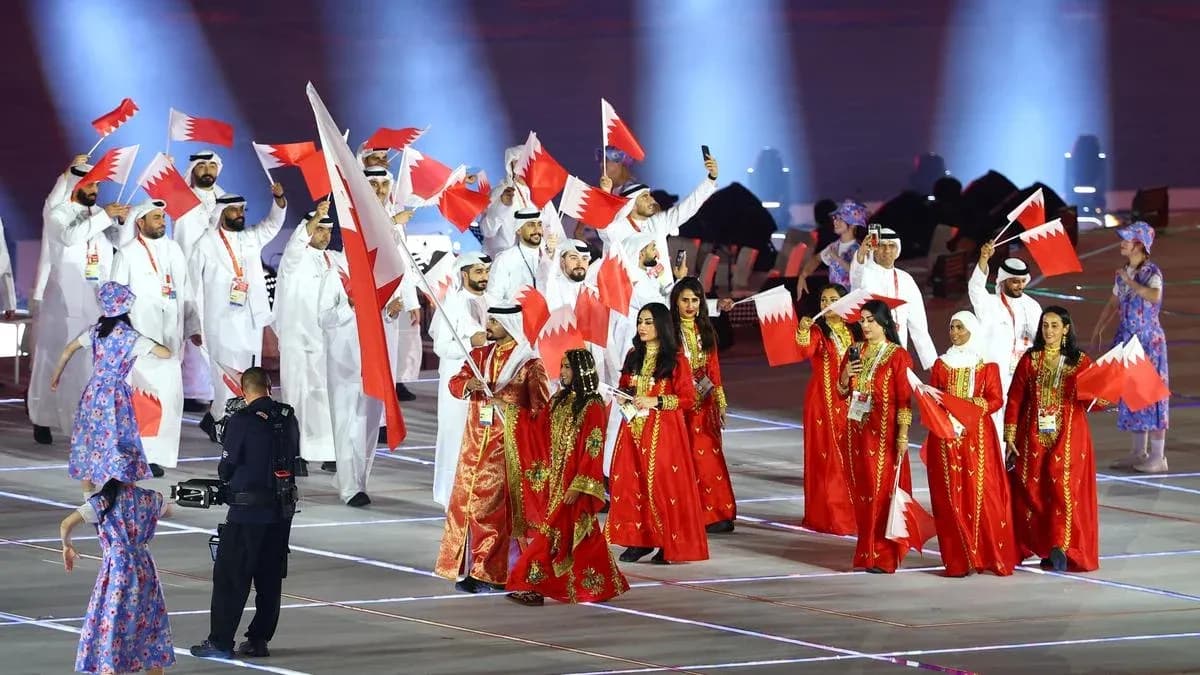
The Asian Games return to Japan with a very different kind of spectacle. No sprawling athletes’ village, no blank-cheque spending, and no shortage of storylines as Aichi-Nagoya 2026 finally flickered into full colour on Saturday night.
At the Paloma Mizuho Stadium in Nagoya, India’s contingent walked in behind flag-bearers Manu Bhaker and kabaddi star Pawan Sehrawat, cutting through the cool Japanese evening as dancers, musicians and pyrotechnics tried to drown out the noise of a messy build-up.
A glittering night after a stuttering build-up
The ceremony leaned heavily on Japan’s flair for showmanship. Violinist Taro Hakase took centre stage, Japanese boy band INI whipped up the crowd, and a choreographed army of dancers painted the track with light and movement. The Japanese national anthem rang out, the host’s flag climbed the mast, and the 20th Asian Games were officially underway.
All this came after weeks of awkward headlines.
Nagoya, hosting more than 17,000 participants in over 40 sports and 469 medal events, chose not to build a traditional athletes’ village. To cut costs, organisers turned to a patchwork solution: the cruise liner Costa Serena moored in Nagoya’s port for about 4,000 athletes, around 2,000 more placed in wooden, shipping container-style huts, and the rest scattered across hotels in the city and Aichi prefecture.
Some teams complained. Cramped rooms, basic facilities, long commutes to training venues – the grumbling grew as delegations arrived. Yet Olympic Council of Asia director general Husain Al-Musallam publicly backed Japan’s approach, calling it an example for countries wanting to stage major events without “breaking the bank”.
India improvises off the field
India, sending almost 500 athletes this time after trimming numbers from the 650-plus who went to Hangzhou, have had to improvise as well.
With lodging stretched, officials shifted some athletes from huts into hotels and prepared an unusual backup plan: Indian families living in Japan ready to open their homes if rooms run out.
“We have booked hotels for our athletes here,” said Sahdev Yadav, India’s chef de mission and treasurer of the Indian Olympic Association. “But if the hotel rooms fall short then yes, we have Indian households here on standby to accommodate the athletes. They are all more than happy to welcome the stars at their homes.”
The logistical wrinkles have not stopped there. Members of the Indian men’s cricket team are still waiting on correctly sized kits ahead of their departure in the early hours of Sunday. A ceremonial snag also forced a late change in the opening ceremony: seasoned shot-putter Tajinderpal Singh Toor could not attend after his ceremonial kit failed to arrive in his luggage, so Pawan Sehrawat stepped in as flag-bearer.
Amid the chaos, one of India’s biggest names chose calm over complaint. Shooting ace Manu Bhaker, who led the contingent into the stadium, urged teammates in a video message to stop fixating on the organisational glitches.
“This is probably once in a lifetime opportunity and experience,” she said, asking fellow athletes to enjoy the moment rather than spend energy “complaining” about issues circulating on social media.
A leaner India, but expectations remain heavy
The numbers have changed since Hangzhou 2023. Then, India fielded more than 650 athletes across 40 disciplines and came home with a record 106 medals, finishing fourth behind China, Japan and South Korea. Rationalisation since then has cut the size of the contingent and discouraged the “mad rush” that sometimes accompanies the perks and funding tied to an Asian Games berth.
The ambition has not shrunk with the squad.
Indian sports authorities still speak of a 100-medal target, which, if achieved with fewer athletes, would significantly improve the athlete-to-medal ratio. The pressure sits squarely on a core of established names and rising talents: PV Sindhu, Mirabai Chanu, Manu Bhaker, and a host of others flagged as key figures for Aichi-Nagoya.
India also arrive with crowns to defend. Both the men’s and women’s cricket teams hold Asian Games titles. So do the kabaddi outfits. The men’s hockey team will also take the field as defending champions. The script is simple: hang on to what they already own and then go hunting for more.
New sports, new stories
On the field of play, the Games will explode into action on Sunday morning, with the first gold medal expected from the men’s individual triathlon. From there, medals will tumble out across more than 40 sports until the curtain falls on October 4.
Aichi-Nagoya will also showcase a fresh layer of competition. Six debut sports enter the Asian Games programme, including teqball and virtual taekwondo, promising a more eclectic, made-for-screens spectacle.
India have already brushed up against history in one of those new arenas. Teqball player Quimcy Dsouza reached the women’s singles semifinals in Nagoya and stood within touching distance of the final before Indonesian player Sumaya mounted a comeback in a gruelling three-game battle. The loss sends Dsouza into the bronze-medal match – and keeps her on course to deliver India’s first-ever teqball medal at an Asian Games.
Veterans, windows, and one more Olympic dream
Not all Indian stories here are about beginnings. For veteran shuttler H.S. Prannoy, Aichi-Nagoya feels like the closing chapter of a long Asian Games journey.
The 34-year-old has made it clear this edition is most likely his last at the continental showpiece. Yet he is not ready to shut the door on the biggest stage of all. Prannoy plans to give himself another year to judge whether he can mount a realistic push for the 2028 Los Angeles Olympics.
That kind of calculation runs through the Indian camp. For some, Nagoya is the launchpad to a new Olympic cycle. For others, it is a final chance to leave a mark in Asian colours.
A Games that must be made to count
For all the talk of huts, cruise ships and hotel shortages, the equation for India remains brutally straightforward. A leaner squad, higher expectations, and a continental stage that has never been more competitive.
The opening ceremony in Nagoya provided the glitter. Over the next two weeks, India’s athletes must decide whether this will be remembered as the moment the country’s sporting muscle truly flexed – or as a missed opportunity in a Games that tried to do more with less.