Arsenal's Struggles Raise Questions Over Renee Slegers' Future as WSL Title Dreams Fade
Issues Behind Arsenal’s Difficult Start
The Gunners have often dominated possession but faltered against teams defending deep. This problem isn’t new, though last season they seemed to have improved. When Arsenal held the majority of the ball in 16 games last year across the WSL and Champions League, they dropped points only twice. Wins away at Leicester, Everton, OH Leuven, and Benfica highlighted their dominance.
This season tells a different story. Against Crystal Palace, Arsenal held 79% possession but ended with a 0-0 draw. A similar pattern followed versus Birmingham City, with 76% possession resulting in a 1-1 draw. In the Champions League match against Koge, 70% possession barely secured a 1-0 win thanks to a late penalty by Mariona Caldentey.
The team’s tempo during possession has been low, failing to unsettle opponents enough to create clear chances. Even when chances arise, Arsenal players aren’t converting them, making them the WSL team most underperforming compared to their expected goals.
Signs of Frustration in Leadership
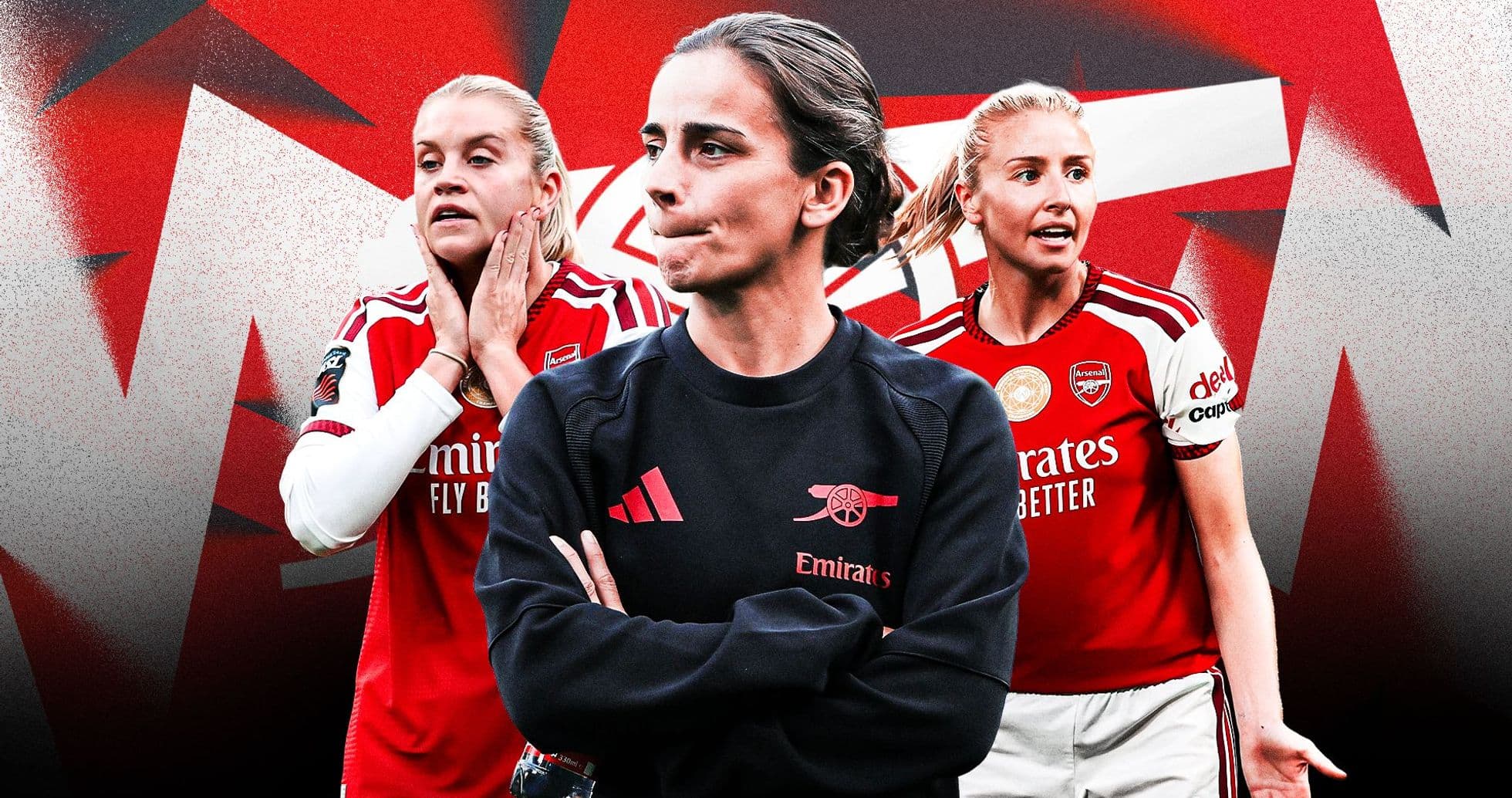
Renee Slegers is usually composed, but recent weeks have shown cracks. After a 2-2 draw with Paris FC in the Champions League—where an unusual handball incident helped the French side come back—Slegers did not attend the post-match press conference. Instead, assistant coach Aaron D’Antino spoke to the media. According to reports, Slegers was visibly upset in the dressing room, even moved to tears, raising questions about her future.
She later apologized for skipping the press conference. Following Arsenal’s comeback draw against Birmingham, her frustration was more evident than usual, although she remained measured.
Decisions Under Scrutiny
Slegers can encourage higher tempo and better finishing, but execution depends on the players. Still, her management choices have attracted criticism. The large squad hasn’t been rotated effectively, with summer signing Geraldine Reuteler getting surprisingly few minutes. Goalkeeper rotation has also raised eyebrows as errors appeared between the posts.
Sometimes it feels like players are placed in roles that don’t suit the situation. For instance, Alessia Russo played as a No. 10 while Stina Blackstenius took the center-forward spot in Saturday’s game. That setup previously worked but struggled against Birmingham’s expected low block defense.
Birmingham's coach Amy Merricks revealed a deliberate strategy to exploit Arsenal’s left flank, targeting right-footed left-back Ona Batlle, who joined from Barcelona. Though Batlle is used to playing on that side, being singled out as a vulnerability suggests she might not be the best fit there, especially since Arsenal has two strong right-back options, Emily Fox and Smilla Holmberg.
Will There Be a Change at Arsenal?
Asked if the current issues are fixable, Slegers was confident. She pointed to defensive weaknesses and poor finishing as problems to address. "It would be worse if we weren’t playing the Arsenal way," she said, emphasizing their control and dominance in games so far.
Despite her track record, including leading Arsenal to European glory less than 18 months ago, pressure is mounting. Some believe fresh leadership might be needed, though any change seems more likely to come from Slegers herself rather than the club. She expressed belief in her ability to help the team progress but acknowledged that if she cannot, then change should happen.
This weekend, north London rivals Tottenham will face Arsenal, hoping to capitalize on their struggles and perhaps push the Gunners into deeper reflection.