.svg&w=384&q=75 "logo")
Vaibhav Sooryavanshi's Sudden Rise as Stand-in Captain

Ishan Kishan’s right wrist took the blow, but it was Vaibhav Sooryavanshi who absorbed the pressure.
Kishan, keeping wicket, was struck on the wrist and immediately called for the physios. After on-field treatment he walked off for further assessment, leaving Jharkhand and East Zone suddenly without their established leader and gloveman. His hand was later strapped and he returned to the field, but not to his full role. Wicketkeeping passed to Jharkhand teammate Kumar Kushagra.
The captaincy passed somewhere far more intriguing.
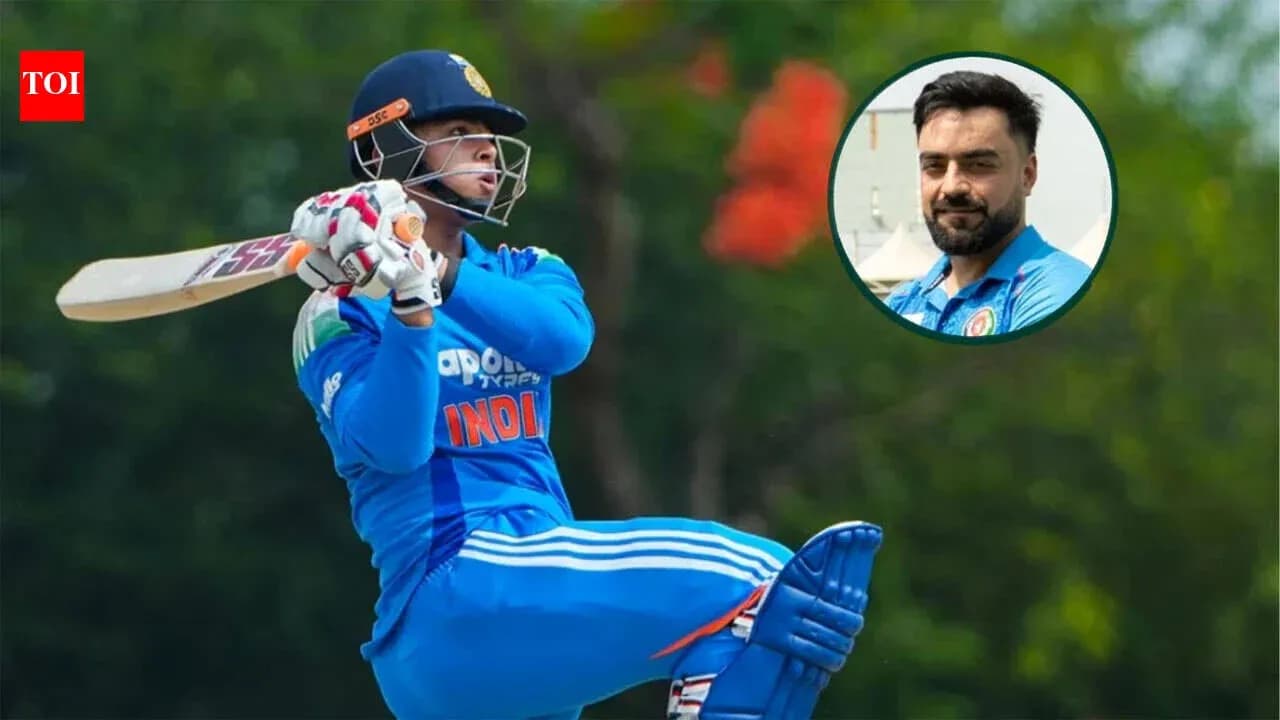
With Kishan unavailable, Sooryavanshi stepped in as stand-in captain, handed the reins of a senior men’s side for the first time in his career. No grooming series, no gentle introduction. Just an abrupt promotion in a Duleep Trophy semi-final against Central Zone.
The timing could hardly have been more pointed. Barely a week earlier, his appointment as East Zone’s vice-captain had stirred debate across Indian domestic circles. Was it too soon? Was it a reward for IPL heroics rather than red-ball substance? The questions came quickly. The selectors held their ground just as firmly.
“We are not thinking about the present alone,” Jharkhand selector Manish Vardhan, who sits on the East Zone selection committee, told Cricinfo, underlining that the move was about long-term development, not a quick fix for this campaign.
Sooryavanshi’s elevation has arrived at a sprint in first-class terms. The clash against Central Zone is only his second Duleep Trophy appearance. Before this tournament he had just nine first-class matches under his belt, having made his Ranji Trophy debut in early 2024. For most players, that’s still the apprenticeship phase. For him, it’s already leadership school.
His first outing in this Duleep Trophy was a reminder that the longer format does not bend easily, even for the brightest white-ball stars. In East Zone’s opening-round win over North East Zone, the left-hander managed only eight runs in his first Duleep innings. No statement knock, no instant dominance.
The ball gave him his foothold. He chipped in with two wickets as East Zone romped to an innings victory, showing there is more to his game than the booming drives and fearless pulls that lit up the IPL. Yet his overall first-class batting record underlines how early this experiment still is: 215 runs in nine matches at an average of 16.53, with just one half-century to his name.
Those are not the numbers of a finished product. They are the numbers of a project the selectors are determined to fast-track.
Earlier in the semi-final, when Kishan was still in charge, East Zone had made the perfect start with the ball. Having won the toss, Kishan sent Central Zone in, backing his attack to make early inroads. Tripura seamer Abhijit Sarkar did exactly that, removing Aman Mokhade for 8 and Kunal Chandela for 6. Central Zone, captained by Rajat Patidar, stumbled to 36 for two, their top order shaken before it could settle.
Then came the twist with Kishan’s injury and Sooryavanshi’s sudden promotion. The scoreboard pressure was one thing; the leadership test was another.
This is not a player arriving from obscurity. Sooryavanshi’s international debut earlier this year against England came on the back of a sensational IPL season in which he piled up 776 runs for Rajasthan Royals, turning heads with his range and temperament in high-pressure chases. He backed that up in Zimbabwe, where he was named Player of the Series after scoring more than 200 runs in the three-match contest.
White-ball cricket has already embraced him. Red-ball cricket is still sizing him up.
For East Zone and Jharkhand’s selectors, though, the path is clear. Give him responsibility now, when the numbers are raw and the technique still evolving. Let him make his mistakes with the captain’s armband on, not after.
On a day that began with Kishan’s wrist in pain, it was Sooryavanshi’s shoulders that ended up carrying the weight of a region’s long-term bet.