.svg&w=384&q=75 "logo")
Steve Smith Reflects on Sandpaper Scandal and Return to South Africa
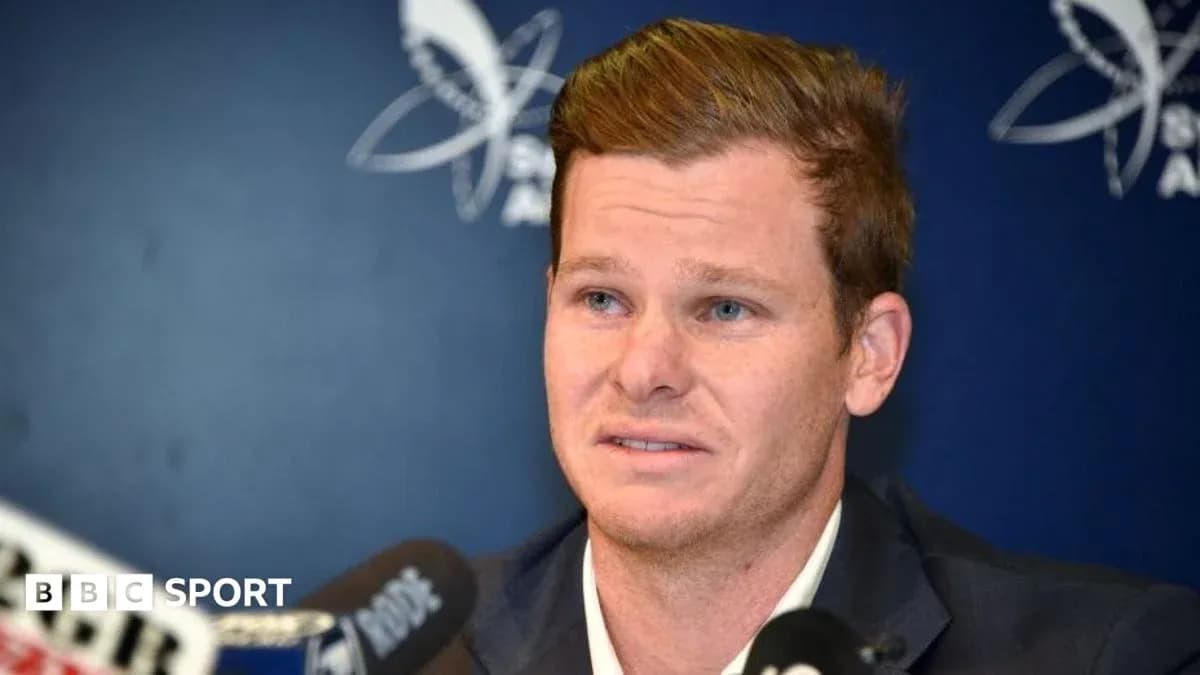
Steve Smith still hears it.
Not the boos from English crowds. Not the barbs from pundits. The click and crack of camera shutters.
Six years on from the ‘sandpapergate’ scandal that detonated his captaincy and dragged Australian cricket through global humiliation, Smith says the sound of a camera flash still drags him straight back to Johannesburg airport and the worst 48 hours of his life.
“It was a traumatic experience in my life and when I hear the flash of a camera it makes me revisit that, in a way,” he told News Corp in an interview published on Thursday. “I'm not a big fan of cameras, I get anxious around cameras.”
Now 37, Smith is preparing to return to South Africa for Australia’s first Test series there since that infamous 2018 tour, when he, David Warner and Cameron Bancroft were sent home in disgrace before the fourth Test.
Haunted by Johannesburg
The scandal began with a small piece of sandpaper and a global storm.
During South Africa’s second innings of the third Test in Cape Town, television cameras caught Bancroft rubbing the ball with sandpaper. By the close of play he had admitted trying to alter the ball’s condition. Smith, then captain, later confirmed he knew about the plan.
Cricket Australia moved quickly. Smith was stripped of the captaincy and banned for a year. Warner, the vice-captain, received the same punishment. Bancroft was banned for nine months.
Australia’s then prime minister Malcolm Turnbull said the episode had “bitterly disappointed the whole nation”. The fallout became a national reckoning, and Smith found himself at the centre of it.
“The 24-48 hours after being told by James Sutherland that I was getting banned for a year, going through the airport in Johannesburg getting absolutely mobbed, and then flying back and doing that press conference... I still have little flashbacks here and there of it,” Smith said.
“I felt like I was kind of thrown to the wolves through [Johannesburg] airport. I didn't have any support there at all.”
The image of Smith breaking down in tears at Sydney airport, apologising to the country, remains one of the most searing in modern Australian sport. He remembers less of it than you might think.
“I've tried to kind of erase a lot of 2018 and what happened,” he said. “I can't remember a lot about the series. I've tried to block most of it out of my memory bank.”
From rock bottom to leadership again
Smith does not sugar-coat the toll.
“It was certainly a difficult period, particularly the initial few days after,” he said. “The mental state I was in was not great. That's somewhere I'd like not to get to again, but I certainly learned from that and have been able to move forward with my life.”
He returned to the Australia side in 2019 and, almost immediately, reminded the world what he does better than almost anyone: bat for long periods and score mountains of runs. In the years since his comeback, he has re-established himself as one of the premier batters in world cricket.
The leadership ban lasted two years. When it expired, Australia’s selectors made a statement. Ahead of the 2021-22 Ashes, Smith was named Test vice-captain and has since stepped in as captain whenever Pat Cummins has been unavailable.
From pariah to leader again. The journey has not erased the past, but it has reshaped the present.
Facing the noise, using the heat
South Africa will not be new ground for Smith post-scandal. He toured there for a one-day series in 2020 and has walked into hostile arenas repeatedly, most notably during Ashes series in England where the taunts have been relentless.
“It's something I'm kind of used to,” he said. “I've copped a lot at times away from home, at different venues across my career, and it's something that I take in my own stride.
“I use it as motivation to try and go out and do well, and try and take a positive from it.”
The boos have become background noise. The cameras have not.
As Australia prepare for a three-Test series beginning in Durban on 9 October, the storylines will swirl again: redemption, memory, leadership, legacy. Smith cannot control any of that. He can control his bat, his reactions, his response to the same country where everything fell apart.
The sandpaper is long gone. The scars, clearly, are not.