.svg&w=384&q=75 "logo")
Sobhana Mostary and the Impact of the 2018 Asia Cup on Bangladesh Women's Cricket
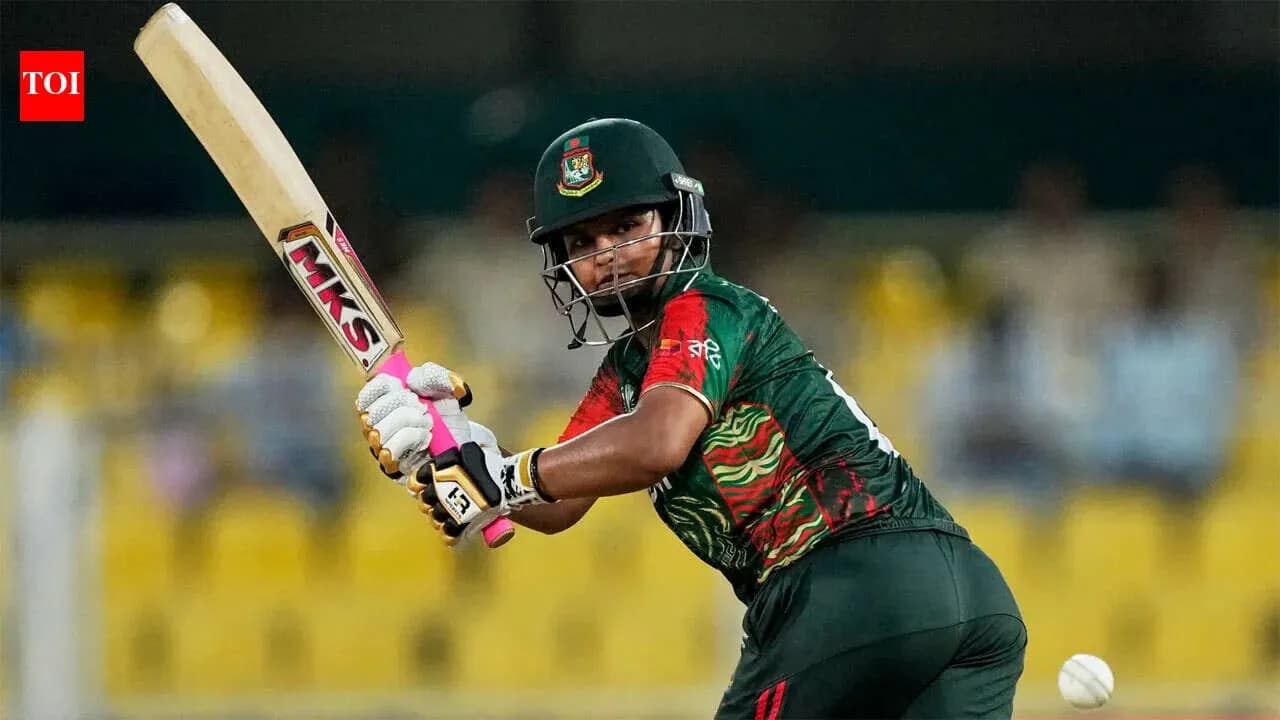
Six years on from Kuala Lumpur, Sobhana Mostary still carries 2018 with her like a second skin.
The 2026 Women’s Asia Cup has already rolled into motion, but for Bangladesh’s top-order batter this is never just another tournament. It is a return to the stage that changed everything — for her team, for her sport, for women’s cricket in her country.
The night that changed Bangladesh
Bangladesh’s women had lived in the shadows for years before that campaign in 2018. Then came the Asia Cup in Malaysia, and with it a seismic shift.
They beat India twice.
First in the group stage, a seven-wicket win that jolted the hierarchy and hinted at something bigger. Then, in a final that went all the way to the last ball, they pulled off the kind of finish that etches itself into a nation’s sporting memory.
India, the defending champions, had posted 112/9. Bangladesh, chasing under immense pressure, needed two runs off the final delivery. Jahanara Alam scampered through, the scores were overhauled, and Bangladesh had their maiden Women’s Asia Cup title.
The impact back home was instant. The Bangladesh Cricket Board announced a reward of Bangladeshi Taka 2 crore for the champions. Money, facilities, attention — the landscape shifted overnight.
“After 2018, we beat India and won the Asia Cup, so it was a huge change in Bangladesh women's cricket. Everything changed. They started giving us lots of facilities, money, everything. There was a lot of change,” Mostary told TimesofIndia.com ahead of this edition.
For her, that night is not just a highlight reel. It is the foundation.
“We think this Asia Cup, we fight for the title, because if we beat India, so maybe we own the Asia Cup,” she said. The message is simple: the bar was set in 2018, and it has not been lowered.
A village academy, a capital city, and a long wait
Mostary’s own story begins far from the floodlights.
She grew up playing whatever sport she could find — football, badminton, cricket — before her father took a decisive step. At 10, he walked her into a cricket academy in their village. Six months later, she attended trials for Bangladesh Krira Shiksha Pratisthan (BKSP), the country’s premier sports institute.
She got in. That one selection uprooted her life.
Mostary moved to Dhaka without her parents, a child chasing a dream in a city that didn’t yet know her name. The rise to the international stage came quickly: she debuted for Bangladesh at just 16.
The regular game time did not.
“It was very difficult. I always travelled with the team, but couldn't play. I just waited and thought that someday the opportunity would come and I could show my strength,” she said, recalling three to three-and-a-half years spent on the fringes of the XI.
Squad photos, warm-ups, flights, hotel rooms — and then the bench. Over and over. Many careers stall there. Hers didn’t.
‘Day by day, I improve’
Recognition arrived from outside before she was ready to claim it for herself. In 2023, the ICC labelled Sobhana Mostary a bright future prospect, a player to watch in Bangladesh’s evolving side.
She is not treating that as a destination.
“I don't think I have fulfilled my dream and that bright future yet, but day by day, I improve,” she said.
Those words could double as a description of Bangladesh women’s cricket itself. Incremental gains. Hard yards. No shortcuts.
“I struggled for three or four years, but now I have improved,” she added. There is no gloss, no self-mythologising. Just a cricketer who understands how long it took to get from the academy nets to a permanent place in the conversation.
Harmanpreet on TV, dreams in Bangladesh
The twist in her story lies across the border.
Mostary’s childhood idol is not a Bangladeshi great but India captain Harmanpreet Kaur. The connection began through a television screen and one of the defining innings in women’s cricket.
She watched Harmanpreet’s unbeaten 171 against Australia at the 2017 Women’s World Cup and saw more than just runs.
“That match inspired me a lot, I followed her batting, everything how she controls the match, and now the time how she captains. I just followed everything,” Mostary admitted.
That admiration has never turned into fear.
Playing India, she insists, is not a burden. It is a thrill.
“For Bangladeshi fans, playing India is a very good match. They are crazy fans and lots of supporters come to watch. It is a normal match, but normally playing India is very interesting and always very exciting for us,” she said.
She studies India’s bowlers as closely as she once studied Harmanpreet’s strokeplay. Asked which one she would most like to face, she did not hesitate: Deepti Sharma.
“Deepti Sharma is always the top bowler in the Indian side, she has played consistently for so many years and improved day by day. I love her bowling,” Mostary said, picking out the all-rounder’s reliability and variety.
Learning from the best
Harmanpreet might be the childhood hero, but there is another name on Mostary’s wish list.
“I want to practise with Laura Wolvaardt, I really like her batting, and she's also a good human being,” she said of the South Africa captain, whose classical technique and calm presence at the crease have made her one of the game’s premier openers.
For a batter still shaping her own identity, there are worse role models.
Cricket instead of medicine
There was a time when cricket wasn’t even Plan A.
Asked what she might have become had she not picked up a bat, Mostary pointed to a very different life.
“Maybe a doctor, because my mother wanted me to be a doctor,” she said.
That path closed the day the 16-year-old left home to chase cricket in Dhaka. Since then, the girl who once packed her bags for BKSP has grown into a full international, a player carrying both her family’s hopes and her country’s expectations.
A new Asia Cup, the same old target
Now comes another Asia Cup, another chance to measure Bangladesh against Asia’s best.
The draw has kept the old rivalry at arm’s length for now. Bangladesh sit in Group B with Sri Lanka, Indonesia and the UAE. India are in Group A with Pakistan, Thailand and Hong Kong. Any meeting will have to wait for the knockouts.
The possibility hangs in the air all the same.
Mostary knows what another win over India on this stage would mean — for her team, for the next generation watching from village academies, for the sport that once trailed far behind the men’s game.
She has already seen how one final over in Kuala Lumpur could reshape an entire system. The question now is simple: can Bangladesh do it again, and write the next chapter in a story that began with a last-ball scramble and refuses to fade?