.svg&w=384&q=75 "logo")
Shakhtar Donetsk Stands Tall in Eindhoven Against PSV
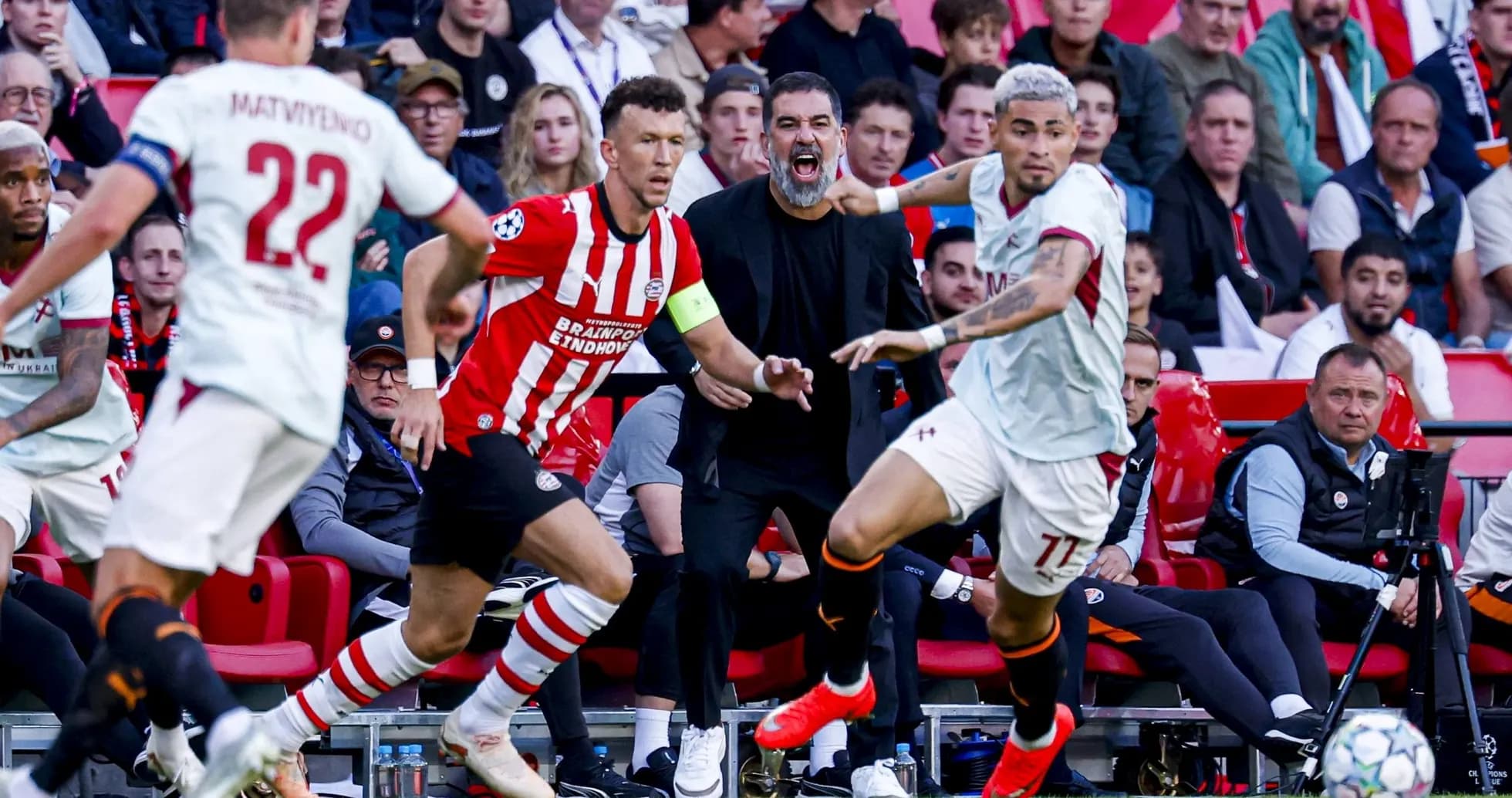
Shakhtar Donetsk walked into the Philips Stadion braced for a storm and walked out with something far more valuable than a point. They left with proof that their football, and their resolve, belongs on this stage.
A 1-1 draw against PSV Eindhoven is a result many coaches would quietly accept. Arda Turan didn’t come for quiet acceptance. He came with a plan that cut against the noise, against the temptation to simply mirror one of Europe’s most ferocious pressing machines.
Turan refuses to copy PSV’s chaos
PSV flew out as expected, pressing high, hunting in ones and twos, trying to suffocate Shakhtar’s build-up. Many teams fold into long balls and survival mode here. Turan went the other way.
He told his players, bluntly, that trying to be PSV would be a trap.
“I told them: if we play like PSV, we will not win,” he said afterwards.
That line underpinned everything. Shakhtar would not chase shadows; they would impose their own rhythm, even if it meant living dangerously.
Turan drilled them on details that rarely make headlines but decide nights like this: diagonal movements to pull markers away, body orientation to receive under pressure, the courage to turn rather than panic. PSV’s one-on-one pressing is designed to isolate and expose. Shakhtar used those duels as invitations to find the gaps behind.
The reward arrived at the perfect moment.
Mendoza bends in a debut to remember
Deep into first-half stoppage time, with PSV expecting to stride into the break on level terms, Gleiker Mendoza struck. The Venezuelan midfielder, on his Champions League debut, found the half-space his coach had spoken about all week, drifted into it, and made the game pause.
One touch to set, another to curl. A stunning finish, arcing beyond the reach of the goalkeeper and silencing a stadium that had roared from the first whistle.
“I can’t put my emotions into words,” Mendoza admitted later, still processing the scale of it all.
He didn’t need to. The goal said enough.
He was quick, though, to point back to the blueprint rather than his own brilliance. Turan, he explained, constantly urges his players to attack “the half-spaces between the lines.” That’s exactly where the opening appeared, exactly where Mendoza punished PSV.
For a moment, Shakhtar had control of the night.
Dest responds, PSV surge – but Shakhtar don’t break
The lead didn’t last long after the restart. Sergiño Dest, driving from full-back, dragged PSV back into the contest with the equaliser shortly after half-time. The Dutch champions responded with the fury of a wounded favourite, waves of red-and-white shirts pinning Shakhtar deeper and deeper.
This is where Champions League away nights usually turn. The noise rises, the pressure suffocates, and one mistake becomes decisive.
Shakhtar refused to crack.
They bent, no question. PSV poured forward, probing from wide areas, trying to drag the Ukrainian side out of shape. Yet Turan’s men clung to their structure, still looking for moments to pass out rather than simply hoof clear. Every duel mattered, every second ball, every block.
By the final whistle, that single point felt like a small act of defiance.
A blanket in a bombing raid
Turan’s post-match reflections did not stop at tactics. They rarely do when you carry the kind of recent history Shakhtar live with every day.
He spoke about Isaque, the 19-year-old midfielder who made his Champions League debut on this night. Not about a pass or a tackle, but about a photograph on his phone.
It shows a hotel lobby, a bombing raid, and a coach covering a teenager with a blanket.
“When I think about Isaque, I remember a photograph on my phone,” Turan said. “It was taken on the night when we were being bombed and I covered him with a blanket in the hotel lobby. I told him he has to be ready for the fight.”
That image explains as much about Shakhtar’s resilience as any tactical board. These are players who have learned to perform with real-life chaos in the background. A hostile press at the Philips Stadion is intense; it is not existential.
Turan made the link himself: enduring nights like that bombing raid has forged the toughness needed for evenings like this one in Eindhoven. The Champions League, for Shakhtar, is not just a competition. It is a stage on which they insist on existing, fully and unapologetically.
A point that feels like a statement
As the players walked off, Mendoza spoke of the “incredible intensity” of the competition and the need to “continue at this pace and keep picking up points.” It sounded simple, almost understated, against the backdrop of what this club has gone through.
Yet that is exactly where Shakhtar now stand. Not as plucky guests making up the numbers, but as a team with a clear idea, a hardened mentality and a coach unafraid to challenge one of Europe’s most aggressive sides on his own terms.
One point in Eindhoven is not a headline result in a group stage packed with giants. For Shakhtar, though, it feels like the opening chapter of something more serious: a campaign where tactical conviction, emotional scars and youthful fearlessness might just carry them further than many expect.