.svg&w=384&q=75 "logo")
Shakhtar Donetsk's Resilient Draw Against PSV Eindhoven
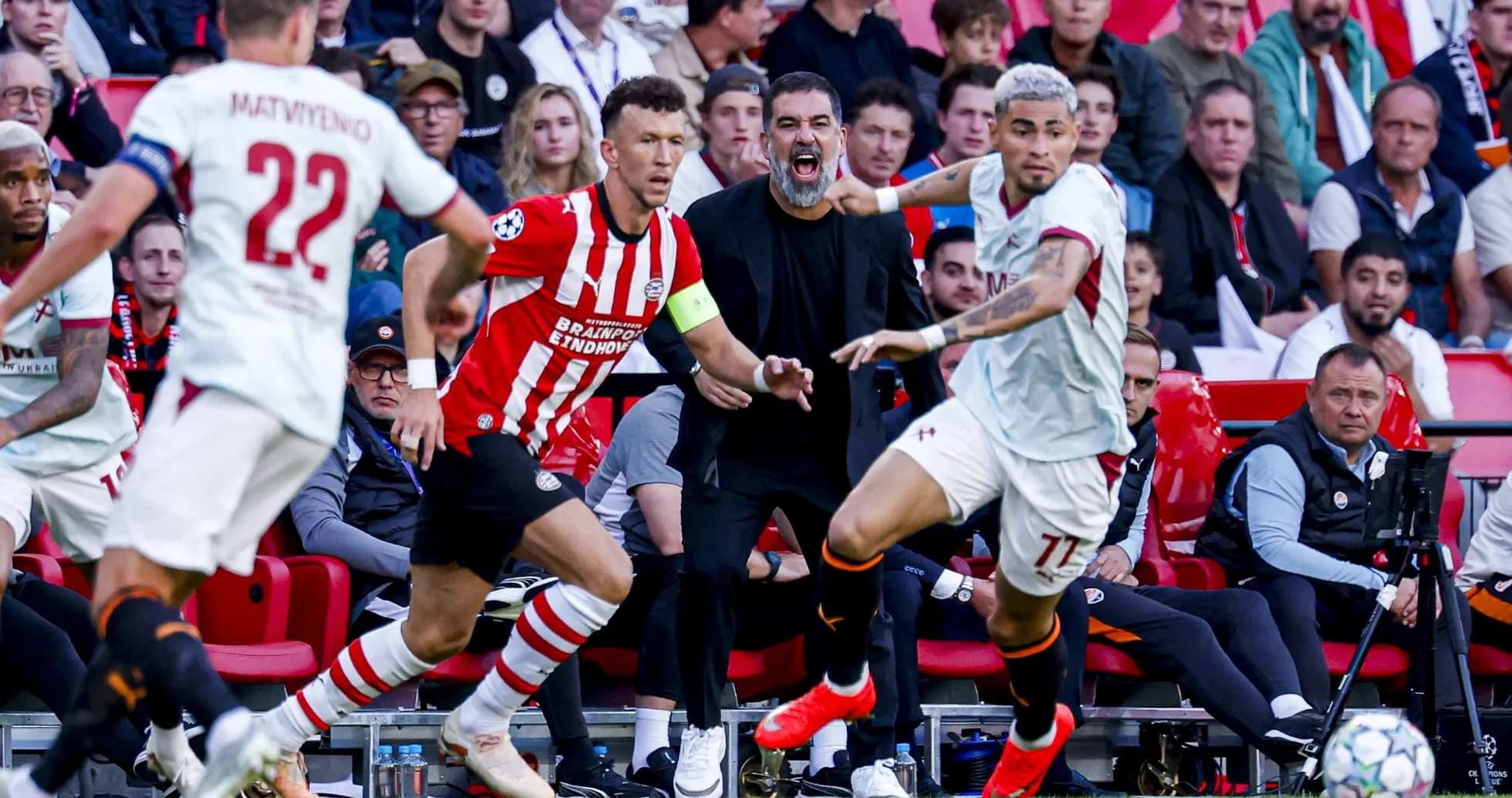
Shakhtar Donetsk opened their UEFA Champions League campaign with a result that felt bigger than the scoreline. A 1-1 draw at the Philips Stadion against Dutch champions PSV Eindhoven, earned under heavy fire, carried the weight of a statement.
Not just that Shakhtar can survive at this level. That they belong here.
Mendoza’s moment in Eindhoven
For long stretches of the first half, PSV did what PSV do at home: pressed high, hunted in packs, tried to suffocate Shakhtar’s build-up. The Ukrainian side refused to panic. They took the sting, passed under pressure, waited.
Then, in first-half stoppage time, they struck.
Gleiker Mendoza, on his Champions League debut, found the pocket his coach had drawn on the tactics board. Drifting into the half-space between PSV’s lines, he collected the ball, opened his body and sent a curling finish arcing beyond the goalkeeper. A stunning goal, but not an accident.
“Mister always emphasises that we should attack the half-spaces between the lines,” Mendoza said afterwards, still struggling to wrap words around the emotion of his first goal in the competition. The instruction, repeated all week, had just lit up the Champions League.
The lead did not last long after the interval. Sergino Dest, pushing forward from the back, levelled for PSV shortly after the restart, restoring the expected narrative in Eindhoven. The Dutch champions poured forward, the stadium rose, and Shakhtar suddenly found themselves deep in their own third.
They did not fold.
Turan’s plan under fire
On the touchline, Arda Turan cut a composed figure. The former Barcelona midfielder has seen enough European nights to know that chaos can be managed, and his game plan leaned into that experience.
He had warned his players that trying to mirror PSV’s relentless one-on-one pressing would be a trap. “If we play like PSV, we will not win,” he told them. The message was simple: resist imitation, trust your own identity.
So Shakhtar focused on detail. Diagonal movements to unhinge markers. Body positioning adjusted by half-turns and angles to slip away from that first line of pressure. When PSV jumped, Shakhtar tried to step aside rather than jump with them.
The approach demanded courage. Every pass under pressure, every touch with an opponent at your back, risked disaster. But as the minutes ticked by and PSV’s attacks grew more frantic than fluent, Turan’s insistence on tactical discipline began to look like defiance rewarded.
He later praised his squad’s bravery and structure against what he called one of Europe’s most aggressive pressing teams. The late stages proved him right. Cross after cross, wave after wave, Shakhtar held firm to secure a point that felt anything but modest.
A debut forged in adversity
The night also belonged, in a quieter way, to 19-year-old midfielder Isaque. This was his first taste of Champions League football, a debut that would be memorable enough on its own. For Turan, it carried an extra layer.
“When I think about Isaque, I remember a photograph on my phone,” the coach said. The picture goes back to the early days of their working relationship, to a night when the team sheltered from bombing in a hotel lobby. Turan recalled covering the teenager with a blanket as explosions sounded outside.
He told the youngster he had to be ready for the fight.
Those memories, that kind of shared trauma, do not leave a dressing room. Turan believes that surviving such nights has helped forge the resilience needed for evenings like this in Eindhoven, where the pressure comes not from the sky but from a team intent on running you into the ground.
For Isaque, the journey from that hotel lobby to a Champions League debut under floodlights is stark proof of what it takes to stay in the game, and in the country, at a time when football and real life are so brutally intertwined.
A point that feels like a platform
As the final whistle went, Shakhtar had more than a draw. They had a performance that backed up their coach’s words and their own belief. They had a goalscorer in Mendoza who showed he can turn tactical theory into decisive action. They had a teenager in Isaque who has already seen more than most veterans.
Mendoza, still riding the high of his goal, admitted the competition’s intensity had taken his breath away. He spoke of the need to keep this pace, to keep collecting points. No grand declarations, just a clear understanding that this was a beginning, not a peak.
Shakhtar leave Eindhoven with a vital away point and a blueprint that worked against the champions of the Netherlands. The question now is simple: how far can this blend of tactical clarity and hard-earned resilience carry them on Europe’s biggest stage?