.svg&w=384&q=75 "logo")
Serena and Venus Williams Shine in Emotional US Open Doubles Return
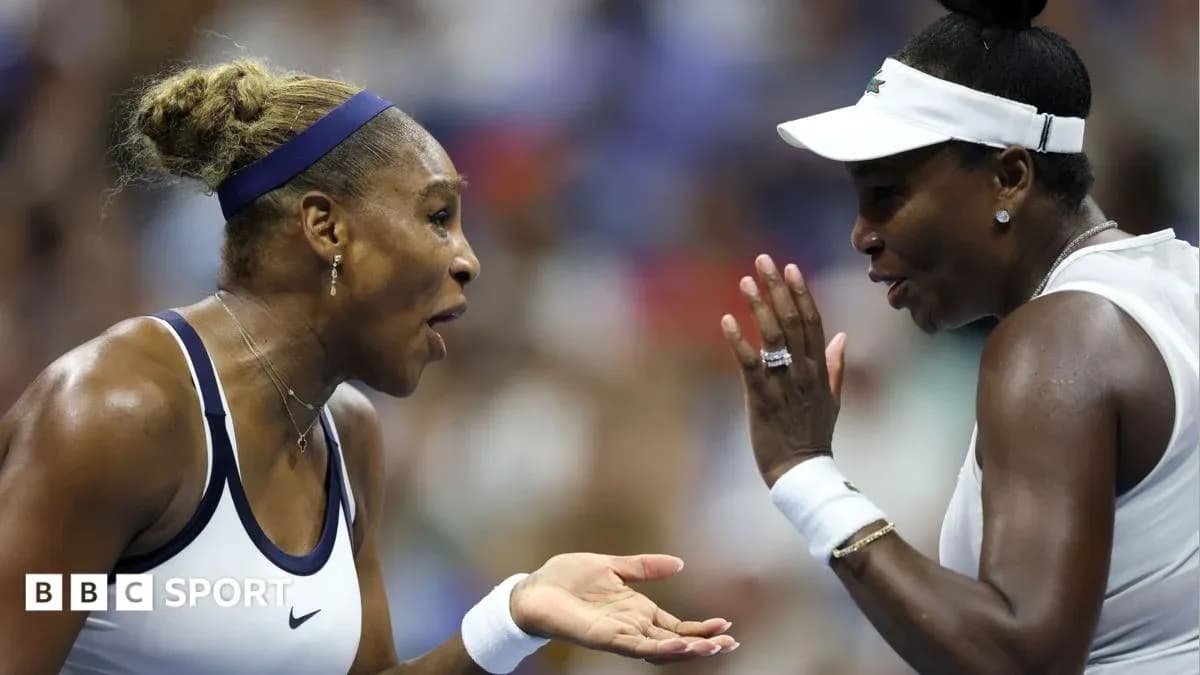
On a late-summer New York night, a first‑round women’s doubles match carried the billing usually reserved for finals and farewell tours. That is what happens when the names on the scoreboard read: Serena Williams and Venus Williams.
Their combined age is 90. Their combined aura still swallows Arthur Ashe Stadium whole.
The sisters walked back into the world’s biggest tennis arena four years after their last appearance there, greeted by a roar that felt less like applause and more like gratitude. Between them, they have eight US Open singles titles in this stadium and two doubles crowns as a team. The court knows them. The crowd certainly does.
They did not win. They did something else.
In a gripping, seesaw contest, the 14th seeds Hao-Ching Chan and Maya Joint edged the Americans 6-3 6-7 (6-8) 7-6 (10-7), surviving a late surge and a raucous, partisan arena that seemed intent on dragging the Williamses over the line one last time.
“It was unbelievable how competitive that was,” said former US player and commentator Chanda Rubin, who lost to the sisters in the 1999 US Open doubles final. “After the first set you wondered if Serena and Venus would be able to find their mojo – but, boy, they did.”
At first, it looked like the script would be brutally short.
The opening set was flat, the noise muted between points as the sisters struggled to find rhythm. Chan and Joint were tidy, alert, unflustered. The Williamses were rusty. The decibel levels rose only in flashes, the crowd willing, almost pleading, for a spark that didn’t quite come as the set slipped away 6-3.
Then the old competitive fire arrived.
In the second set, the Americans dug in. They faced break points in the fifth and seventh games, clung on, and slowly the energy inside Ashe shifted. Serena raised her level to match Venus’s early solidity. The rallies lengthened. The movement sharpened. The crowd sensed it and responded in kind.
Every hold felt like a small victory. Every winner, a reminder.
The tie-break turned into a throwback, the sisters leaning on their instincts and their understanding of each other’s patterns. They edged it 8-6, and suddenly a match that had looked routine for Chan and Joint became something else entirely: a night.
The decider began with another twist. At 4-1 down, the Williamses looked spent. The arena, so loud a few games earlier, quietened to a tense murmur. This, perhaps, was where time would finally catch up with them.
They refused to let it.
Point by point, they clawed back. The groundstrokes held up. The hands at the net stayed sure. The “never-say-die” streak that has defined their careers resurfaced once more, dragging the match into a first‑to‑10 match tie-break.
Then came the moment when it felt like the story had written itself.
Serena and Venus raced into a 5-0 lead in the breaker. The noise was deafening now, a wall of sound behind them. Every changeover, every bounce of the ball, carried the sense that they were about to bend the night to their will again, to stretch this latest chapter into at least one more round.
Chan and Joint did not fold.
They steadied, found their returns, and, crucially, watched each sister double fault at key moments. The 5-0 cushion evaporated. The younger pair, playing in the most surreal environment of their careers, kept swinging and closed it out 10-7.
“The atmosphere was surreal,” Joint said. “It was something we’ve never experienced before, and to play against such legends of the game was super special.”
For much of the evening, the 20,000‑plus inside Ashe did something they rarely do: they sat still and watched. No wandering to the concessions, no mid-game chatter drowning out the action. The sight of Serena and Venus together on this court again, possibly for the last time, demanded full attention.
These are the women who rewired the sport when they arrived as teenagers in the 1990s. Thirty Grand Slam singles titles between them. Fourteen majors together in doubles. Power, presence, and a competitive edge that altered what tennis looked and felt like.
Three decades on, they still hold the room.
Serena’s decision to come out of retirement this summer lit up the sport again, for those who saw her dominance in real time and for a younger generation that grew up on highlight reels. Venus, a seven-time major champion, has never stepped away, grinding on through injuries and form dips with the help of occasional wildcards.
Those wildcards have sparked debate at times. Not here. Not in New York. Their invitation to play at Flushing Meadows felt like a thank you as much as an opportunity.
Their planned doubles return at Wimbledon vanished when Serena injured her knee in singles there – against Joint, in a neat twist of fate – and they had to wait until Cincinnati to reunite. That comeback ended in a match tie-break loss to Marta Kostyuk and Peyton Stearns. New York delivered the same cruel format, and the same outcome.
The performance, though, was anything but ceremonial. The Williamses moved well, hit through the court, and repeatedly unsettled Chan and Joint with their weight of shot and court craft. For long stretches, it looked less like a nostalgia act and more like two veterans forcing a seeded team to solve real problems in a feverish arena.
Chan and Joint deserve full credit for doing exactly that, absorbing the noise and the narrative and still finding a way through.
When it was over, the initial reaction from the stands was deflation, a collective exhale at a chance missed. It didn’t last. The applause swelled again as the sisters received a warm, extended farewell, the crowd rising to its feet in appreciation rather than in grief.
What comes next is unclear, and for now, remains private.
Serena hinted earlier in the week, in an interview with Good Morning America, that she wants to play singles again. Venus, after her singles exit on Monday, said she should not “have to” think about her future beyond the doubles. On Friday night, they chose silence. US Open organisers said the pair were “not available” for media duties.
The questions will keep coming. The answers, as ever with the Williams sisters, will arrive on their terms.
On this night, it was enough that they walked back onto Arthur Ashe together, fought as if nothing had changed, and left to the kind of ovation reserved for those who altered a sport’s history.
If this was the last time they shared that stage, the match score will fade. The sound of that crowd will not.