.svg&w=384&q=75 "logo")
Sarfaraz Ahmed Focuses on Cricket Amid Political Tensions
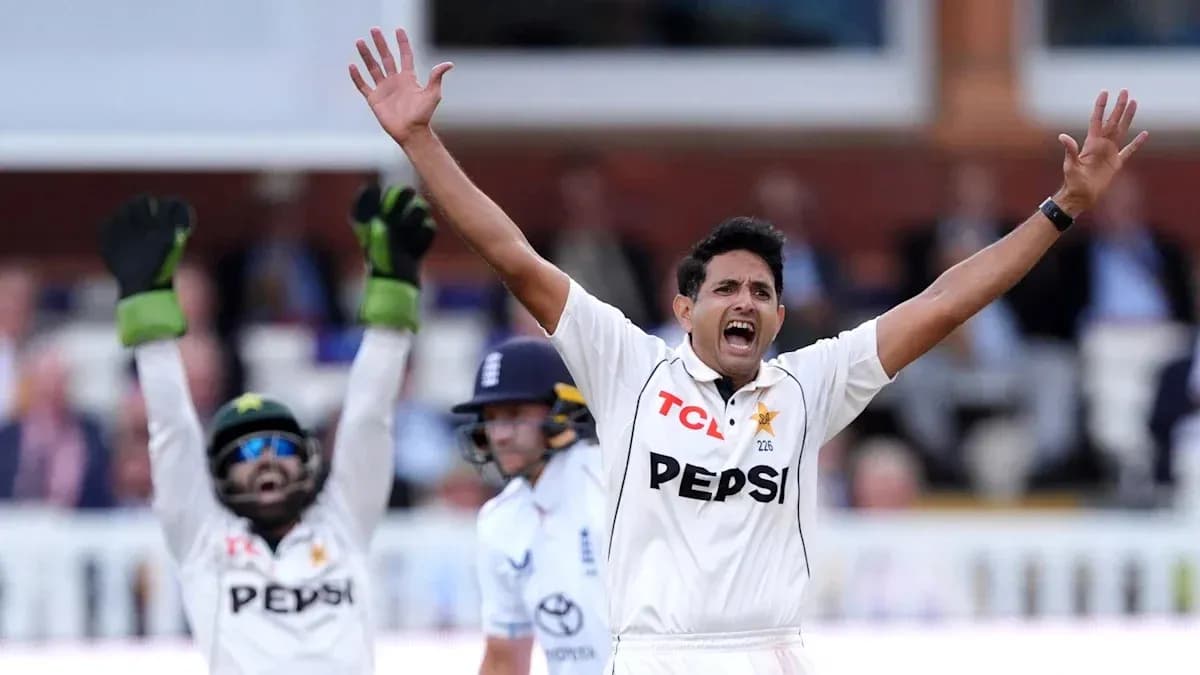
At Lord’s, where cricket and politics have often brushed shoulders, Sarfaraz Ahmed insisted his world had shrunk to 22 yards.
The Pakistan head coach said he and his players were unaware of a dramatic stand-off behind the scenes, with the Pakistan Cricket Board understood to have threatened the England and Wales Cricket Board over a Sky Sports interview with the sons of Imran Khan.
The row unfolded during lunch on day one of the second Test, when Sky aired an interview with Suleiman and Kasim Khan, the sons of the former Pakistan captain and prime minister, who has been in prison for the past three years.
Behind the calm pictures of players eating and warming up, the stakes were far higher. It is understood the PCB raised the prospect of cancelling the Lord’s Test – and the rest of the three-match tour – if the interview went to air.
It did. A version of the interview was broadcast. The players walked back out after the interval, and the cricket carried on.
Sarfaraz, speaking at the close of the second day’s play, distanced himself and his dressing room from the political storm swirling around them.
“I don't know anything. I'm just focusing on the match,” he said. “You're talking about the interview? We don't know about the interview.”
Asked whether there had been any genuine danger of Pakistan refusing to return for the afternoon session on day one, the former wicketkeeper brushed it aside.
“All are OK. We were having lunch at that time,” he replied.
Imran, 73, remains an immense figure in Pakistan’s cricketing and political story. He captained his country across a 21-year international career and lifted the 1992 World Cup, a moment that still defines a generation of Pakistan supporters. He later served as prime minister from 2018 to 2022 and has been in jail since 2023 on corruption charges he denies.
The interview, conducted by former England captain Michael Atherton, gave Suleiman and Kasim a rare platform. They voiced concerns over their father’s treatment and security and criticised the UK government’s response to his situation.
Before the segment aired, Sky received a complaint about the plan to broadcast the interview. The tension was serious enough that the ECB sought advice from the UK government, consulting the Foreign, Commonwealth and Development Office as the situation developed.
In Pakistan, the match is being shown on public broadcaster PTV, which takes Sky’s pictures. PTV chose not to air the interview.
Once lunch ended, the tourists resumed play and the Test has rolled on to the end of day two, with England 81-3 in their second innings and 261 runs ahead. It is understood Sky received no further complaints on Friday regarding the interview.
The political sensitivity is sharpened by the roles at the top of Pakistan’s game. PCB chairman Mohsin Naqvi also serves as the country’s interior minister, a dual position that places cricket and state power unusually close.
This is not the first time a Test between these sides has teetered on the edge of abandonment. In 2006 at The Oval, a match between England and Pakistan was awarded as a forfeiture – the only such instance in Test history – after Pakistan refused to take the field following ball-tampering accusations on the fourth afternoon.
The spectre of that day inevitably hangs over any hint of disruption between these two boards. This time, the players stayed in their whites and the contest survived.
England are due in Pakistan again in October for a one-day tri-series with the hosts and Sri Lanka, another visit in what has become a packed recent schedule between the nations after a 17-year gap caused by security concerns.
The cricket will keep coming. The question is whether the politics will stay off the pitch long enough to let it breathe.