.svg&w=384&q=75 "logo")
Sanju Samson vs Sooryavanshi: A New Rivalry in Indian Cricket
The story began with an injury and a teenager.
Rajasthan Royals lost their captain deep into IPL 2025. A 14-year-old named Sooryavanshi walked into the top order, asked for the new ball, and answered with a century in his third game. By the time Sanju Samson returned from the sidelines, the hierarchy had shifted. The captain moved to No. 3. The kid stayed where all openers want to be.
That IPL season quietly redrew the lines of a relationship. Mentor and protégé, yes. But also rivals in waiting.
A year later, in India colours, that subplot has moved to the international stage. One slot at the top. Two men who know exactly what it takes to own it.
Delhi, and a fresh twist
At the Arun Jaitley Stadium against Afghanistan, the call went Samson’s way.
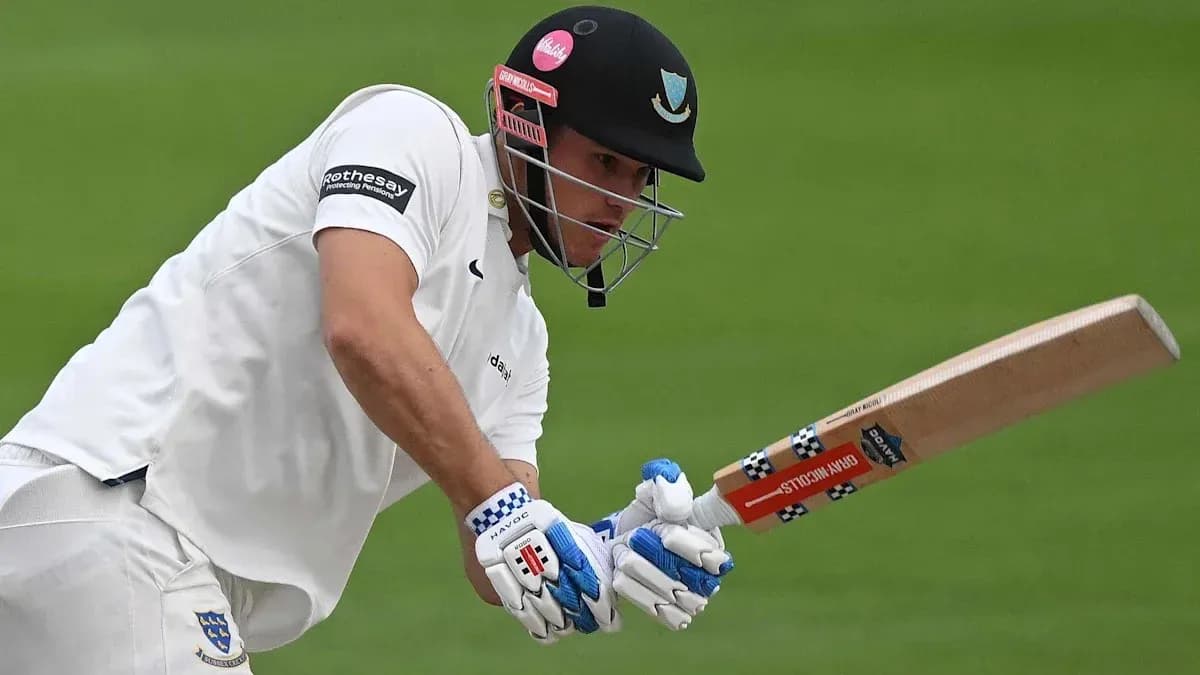
India benched the teenager who had just torn through Zimbabwe and handed the gloves and the opening role back to the World Cup’s Player of the Tournament. Samson had failed in the series opener. On Tuesday, he chose violence.
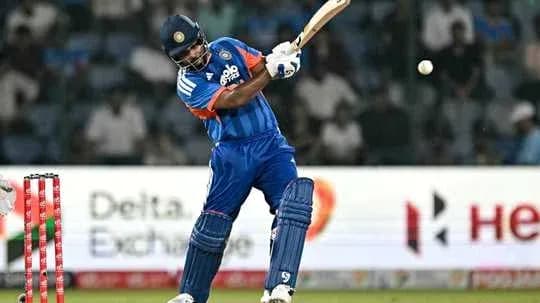
A 22-ball 57, all muscle and intent, settled the game and the series. India went 2-0 up with a match to spare. Sooryavanshi, Player of the Series only weeks earlier in Zimbabwe, watched again from the dugout. Another night where his name was loud in conversation but absent from the team sheet.
The easy narrative is friction. Samson refuses to play along.
“We may be competitors to the outside world, but we are a team and we are playing for a country and we want to win the game first,” he said after the win. No sulking, no coded messages. Just a blunt reading of how elite dressing rooms work.
“We just have to be ready for our own opportunity. We can't sulk that ‘oh, I didn't get [the chance] or why did they give it to him’. Those kind of mindsets don't work here.”
He knows both sides of the table. Samson has sat in selection meetings as an IPL captain. He has dropped players he rates. He has backed others through lean patches. That experience colours the way he views his own rotation now.
“It is a very challenging place to be in. For the whole team management and everyone, from the captain, from the coach, from the selectors, it is a very tough choice. I totally understand, myself [having] led an IPL franchise. I know how hard these decisions are when everyone has been performing really well.”
From home World Cup hero to hunted man
Samson’s recent India career reads like a highlight reel spliced with sudden jolts.
At the T20 World Cup at home earlier this year, he began on the bench. When his time finally came, he started scratchily, then exploded when it mattered most: 97* off 50 balls in the semifinal, 89 in the final. India became the first side to defend a T20 crown. Samson walked away with the Player of the Tournament award, the sort of title that usually locks in an opening berth for a long time.
But Indian cricket does not move slowly.
While Samson rode the highs and lows of a feast-or-famine season at Chennai Super Kings, Sooryavanshi was rewriting what a domestic T20 season could look like. Seven hundred and seventy-six runs. An average of 48.5. A strike-rate of 237.3 that bordered on the absurd. Those numbers don’t just demand a look; they demand a place.
The response was inevitable. A couple of failures from Samson, a teenager in blistering form, and the door swung open.
Samson stumbled in Ireland, twice, as India lost that series 0-2. He missed again in the first T20I in England. The “Sooryavanshi factor” could no longer be treated as a subplot. The youngster got three games against high-quality opposition, a rough initiation in terms of returns, and then made way again for Samson in the final match of a series India lost 0-4.
Then came Zimbabwe. Samson was rested. Sooryavanshi thrived. Player of the Series, runs flowing, the sense that the baton might be changing hands faster than anyone had predicted.
Delhi ripped that script up again.
Living with the noise
Samson has chosen a simple weapon against the endless commentary around his place in the XI.
“I try to turn off the Wi-Fi,” he joked, drawing laughter in the press room.
The humour covers a familiar truth. The scrutiny hurts.
“At first, it feels bad. I am not a machine. We are not robots that it wouldn’t affect us at all. It definitely matters, and you kind of get a bit affected,” he said.
That admission sits alongside a harder edge that has come with age. Samson understands now that his role demands a high-risk, high-reward approach. Modern T20 openers don’t get to play themselves in. They go from ball one or they go home.
Consistency of numbers, in that world, is a luxury. So he chases a different kind.
“I think consistency in my process. I think consistency in my preparation, consistency in how I am practicing, how I am putting my hard yards in. That's where I try to focus on. You can't control the consistency in the result in this format… Consistency has to be in the frame of mind, and then whatever happens, happens. I think that's what fearless mindset is.”
It is a philosophy built to survive selection roulette. You can’t control whether your name is on the team sheet. You can control how you walk out when it is.
Two openers, one slot, no bitterness
Strip away the noise and the situation is brutally simple. India have a World Cup-winning, in-form opener in his prime. They also have a 15-year-old who just scored 700–800 runs in an IPL season at a strike-rate that breaks calculators.
One of them sits.
“You see, a 15-year-old boy has scored 700-800 runs. My Man of the Tournament award [at the 2026 World Cup] was before that. After that he’s performed so well. He had to come in [to the Indian set-up] sooner than later,” Samson said.
He knows the game. He also knows the scoreboard. He failed in two or three games. The teenager was in red-hot form. The team needed wins in England. The decision wrote itself.
“I didn't perform in 2-3 games and he was in-form and we wanted to win games in that [England] series.
“There was a lot of communication in the middle of the England series. He spoke to me a lot before this series as well… It’s very easy to take very popular decisions. But, as a leadership group, we have been taking some really tough calls keeping the team at the front. That’s where we have to give the credit to the leadership group of our team.”
That line is important. Samson is one of the two players most affected by these choices, and yet he frames them as collective, even necessary. His own setback does not have to be Sooryavanshi’s only window. The teenager’s surge does not have to mark the end of his own run.
On Tuesday in Delhi, Samson made his argument with the bat again. He reminded everyone why he once forced his young protégé down the order in franchise cricket, and why he still commands trust when the stakes spike.
The next toss, the next team sheet, might still carry Sooryavanshi’s name at the top instead of his.
That, in this version of Indian T20 cricket, is the reality both will have to learn to dominate, not just endure.