.svg&w=384&q=75 "logo")
PSG's New Season with Gold Stars: A Bold Statement of Dominance
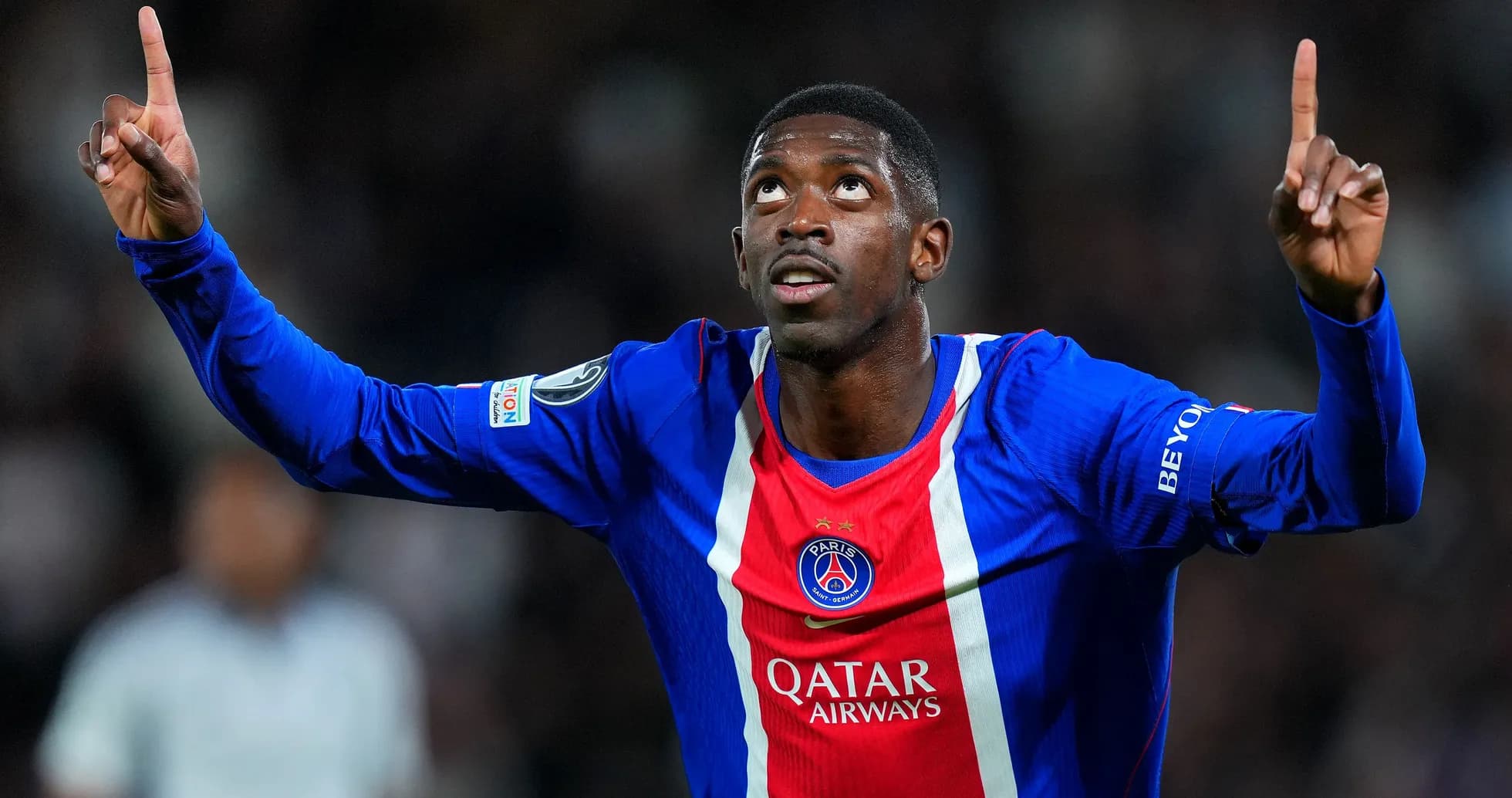
Paris Saint-Germain will step into the 2026-27 season with their dominance stitched into the fabric of their shirts.
Two gold stars now sit above the club crest, a bold, deliberate nod to back-to-back Champions League titles. No subtlety, no half-measures. Les Parisiens want Europe – and everyone else – to see exactly who rules the continent.
Supporters first caught sight of the tweak in pre-season. Against Majorca, then Manchester United, the detail glinted under the floodlights: the same navy shirt, the same iconic crest, but now framed by a pair of stars that instantly changed its weight. The look carried straight into competitive action, most notably in the Trophee des Champions win over Lens, where the updated badge felt less like a design choice and more like a statement.
Luis Enrique’s side have kept the stars on in their early Ligue 1 fixtures against Rennes, Lille, and Monaco. That’s where the shift truly hits home. This isn’t a one-off European flourish. It’s a season-long declaration.
The club laid out the plan to local outlet ICI Paris Ile-de-France, confirming that the twin stars will appear in every competition this season – Ligue 1, Coupe de France, Champions League, everything. No special-occasion costume. This is the standard kit of a team that sees itself as Europe’s benchmark.
Inside the club, the reasoning is clear. Officials have framed the move as a celebration of recent European dominance, not a rebrand. A PSG representative told local radio that the stars are there to “celebrate the Back 2 Back” – a simple phrase that neatly captures the swagger of the decision. The message: these titles are not just memories; they are current, active status.
At the same time, the hierarchy has been careful to draw a line. This is not a permanent alteration to the official logo. The stars are a seasonal ornament, a one-year tribute to consecutive crowns rather than a structural redesign. They are there because PSG are champions twice over. They will stay only as long as that story keeps growing.
That stance marks a clear evolution from the club’s initial approach after their first European triumph in this era. When PSG demolished Inter Milan 5-0 in the 2025 Champions League final in Munich, the response was far more restrained. The club introduced a single star, but only selectively.
Even that modest addition split opinion. A section of the fanbase embraced the symbolism. Another bristled, seeing it as a nod to a certain southern rival whose own star has long been a point of nostalgic pride. PSG, wary of appearing to imitate anyone, sought a middle ground.
The compromise was meticulous. The lone star appeared on shirts only on European nights, at the Club World Cup, and in the UEFA Super Cup. Domestically, throughout the 2025-26 campaign, the crest remained unadorned. The message then was measured: respect the achievement, but don’t overplay it.
Now, with two titles in the bank and a penalty shootout victory over Arsenal in Budapest still fresh in the memory, the tone has shifted. The club no longer sees the need to compartmentalise its European identity. The stars have broken out of their European box and flooded the entire season.
There is, however, a hard condition attached. Because the change is not locked into the club’s visual identity, the stars will disappear next season if PSG fail to defend their crown. The shirt would revert, the crest stripped back to its classic form, the celebration closed.
But the other scenario hangs in the air, and it’s the one that truly animates this decision. A historic three-peat would bring with it an obvious next step: a third star. The arithmetic is simple, the symbolism powerful. One star for Munich. One for Budapest. A third for whatever city hosts the night they complete the set.
PSG’s players know exactly what they are wearing when they pull on that shirt. It is not just a reminder of what they’ve done; it’s a challenge. Two stars are already there. The question now is whether this group can force the kit man to reach for a third.