.svg&w=384&q=75 "logo")
Pakistan Overhauls Team After England Defeats: Seven Dropped, New Coach
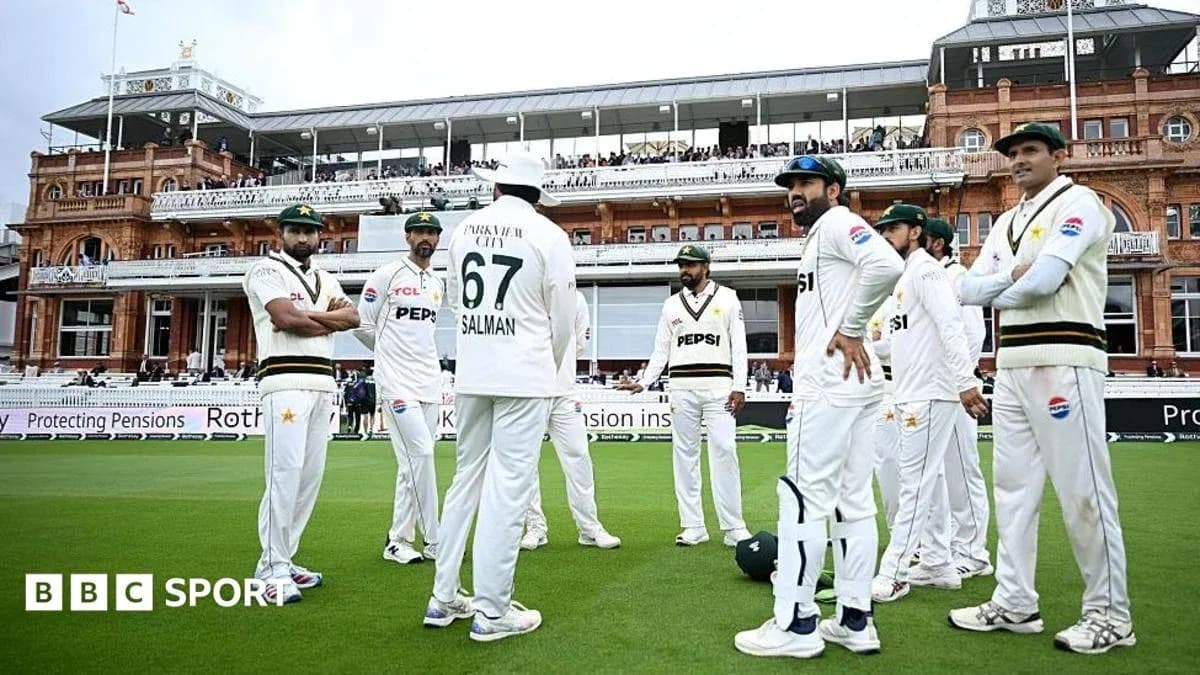
Pakistan have torn up their plans midway through a bruising tour of England, responding to back-to-back hammerings with one of the most radical overhauls seen in modern Test cricket.
Seven players out. Five uncapped players in. Head coach gone. Assistant gone. All before the third and final Test at Edgbaston on 9 September.
This is not a tweak. It is a detonation.
Tour in crisis
Two Tests, two thrashings. Pakistan have been nowhere near England so far.
They lost the opener at Headingley by an innings. At Lord’s, the margin was 194 runs. Across four innings, they have not once reached 200. Every time they have batted, they have folded.
For a proud cricket nation, the manner of the defeats has cut deep. The response from the touring party and the Pakistan Cricket Board has been swift and brutal.
Muhammad Rizwan, Imam-ul-Haq, Salman Ali Agha, Ali Usman and Khurram Shahzad – all involved in the series – have been dropped. Aamir Jamal and Muhammad Awais Jafar, who had yet to feature, have been sent home without facing a ball in anger.
Seven gone. Mid-series. On an overseas tour. It barely happens. In Pakistan’s world, it just has.
New faces, new gamble
The clear-out has opened the door to a flood of fresh blood.
Seven players have been called up. Among them, batters Saim Ayub and Abdullah Fazal, who return with previous Test experience and the chance to steady a listing top order.
Around them, a clutch of debutants will walk into a cauldron at Edgbaston.
Spin-bowling all-rounder Arafat Minhas offers variety and a different kind of threat. Left-arm seamer Mohammed Imran Jr brings another angle with the new ball. Wicketkeeper Said Baig steps into a role that has been central to Pakistan’s recent instability. All-rounders Mohammad Imran and Razaullah complete a group that signals both panic and opportunity.
Pakistan are not just shuffling the pack. They are throwing the deck in the air and seeing where the cards land.
Coaching shake-up
The upheaval does not stop with the playing XI.
Head coach Sarfaraz Ahmed and his assistant Umar Gul have been released from their duties for the remainder of the tour. Into the breach steps Pakistan’s white-ball coach Mike Hesson, joined by former Australia seamer Ashley Noffke.
Hesson, known for his tactical acumen in the shorter formats, now inherits a Test side short on runs, short on confidence and suddenly full of new faces. Noffke, with his fast-bowling background, must try to stiffen a bowling attack that has not been able to drag Pakistan back into either match so far.
The message is stark: no role is safe when results fall off a cliff.
Pakistan’s taste for the dramatic
For those who have followed Pakistan cricket for long enough, the drama feels familiar.
This is a team and a board with a history of wild, sometimes inspired, course corrections after defeat. On England’s last tour of Pakistan in 2024, the hosts conceded more than 800 runs in the first Test and still chose to play the second on the same Multan pitch.
They used garden heaters and fans to dry the surface, trying to manufacture conditions for their spinners. It looked eccentric. It worked. Pakistan won the next two Tests and took the series 2-1.
The current shake-up comes from the same instinct: when in trouble, do something bold. Maybe something nobody else would dare.
Edgbaston awaits
Now the stage shifts to Birmingham and a third Test that suddenly carries an extra edge.
England, already 2-0 up and dominant, will face a Pakistan side almost unrecognisable from the one that started the tour. New players, new coaches, same pressure – perhaps even greater now.
Pakistan’s changes are unprecedented for a touring side in the middle of a series. They might spark a fightback. They might deepen the chaos.
Either way, when Pakistan walk out at Edgbaston, the cricket world will be watching to see whether this latest gamble turns a crisis into a comeback, or becomes another chapter in their long, turbulent tale.