.svg&w=384&q=75 "logo")
Pakistan's Dramatic Overhaul: Seven Players and Coaches Removed
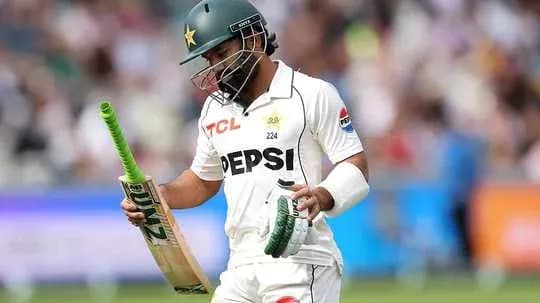
Pakistan’s tour of England has lurched from bad to brutal. Two Tests down in the series, the World Test Championship campaign already wrecked, the Pakistan Cricket Board has responded with a sweeping cull that underlines just how deep the crisis runs.
Seven players have been released from the touring squad, including former white-ball captain Salman Agha, in a move that rips out a chunk of the team’s senior core. Mohammad Rizwan, Imam-ul-Haq, Ali Usman, Aamir Jamal, Muhammad Awais Zafar and Khurram Shahzad have all been told to pack their bags and head home.
This is not a quiet reset. It is a clear statement that patience has snapped.
Senior men shown the door
The timing is as stark as the decision itself. Pakistan trail 0-2 in the three-Test series and have lost five of their last six Tests, the solitary win coming against West Indies earlier this month. Any lingering hope of scrambling into the WTC final had already vanished; the table now simply exposes the scale of the decline.
The numbers for the discarded senior batters are damning.
Rizwan, once the heartbeat of Pakistan’s middle order, has managed 283 runs in 11 innings at 25.72, with only two half-centuries to show. Agha, trusted as a stabilising presence, has scraped together 221 runs at 24.55. Imam, meant to set the tone at the top, has 178 runs at 22.25 from eight innings.
Those are not blips. They are a trend.
Since January 2025, Pakistan’s batting average in Tests sits at 23.92 — the worst among all WTC teams. The consequences are written across their recent record: bottom of the WTC table and winless in their last 18 Tests in SENA countries (South Africa, England, New Zealand, Australia) since 2018, losing 16 and drawing just two. Their last such win feels a lifetime ago: Lord’s, May 2018.
On Sunday, back at Lord’s, the spiral deepened. Defeat there marked their 10th loss in their last 11 away Tests and dragged their all-time Test win-loss ratio below 1 for the first time since 1987. Pakistan now stand at 153 wins and 154 defeats in 473 matches, a cold 0.993 ratio that captures a proud Test nation in reverse.
New faces for Birmingham
Against that backdrop, the third Test at Edgbaston, starting September 9 in Birmingham, suddenly becomes less about the series scoreline and more about who survives the purge.
Seven replacements have been summoned. Three of them — Saim Ayub, Abdullah Fazal and Arafat Minhas — have already worn the Pakistan cap in international cricket and now find a fresh opening in the Test set-up.
The other four are uncapped at this level: Mohammad Imran Jnr, Saad Baig, Mohammad Imran (Imran Randhawa) and Razaullah. They arrive as the embodiment of a new gamble. Youth, hunger, and the hope that unfamiliar names can break a very familiar pattern of collapse.
It is a bold roll of the dice in the middle of an English tour, a moment when most boards prefer stability over shock therapy. Pakistan have chosen shock.
Hesson steps into the storm
The shake-up does not stop with the dressing room. The coaching structure has been jolted just as violently.
Mike Hesson, previously in charge of Pakistan’s white-ball side, has been told to take over the Test squad alongside Ashley Noffke. The New Zealander is already in England and is expected to join the team imminently, stepping into a dressing room that has just been stripped and reshaped.
Hesson’s remit is clear and demanding: he will lead the red-ball side for the rest of this WTC cycle — two Tests in Sri Lanka in November and two more in New Zealand early next year. Those four matches could define whether this period is remembered as a temporary slump or the start of a long-term slide.
To make space, Pakistan have released current Test coach Sarfaraz Ahmed and bowling coach Umar Gul. Two former stalwarts of the national side, removed mid-tour, underline that reputations no longer shield anyone.
This kind of mid-series upheaval in England has a precedent. In 2014, the BCCI parachuted Ravi Shastri and his support staff — Bharat Arun, R Sridhar and Sanjay Bangar — into a faltering India setup, effectively sidelining Duncan Fletcher’s team. But that intervention came after the Test series, ahead of the white-ball leg.
Pakistan have gone a step further. They have torn up the script while the Test series is still alive.
A reset or a reckoning?
This is what a meltdown looks like in elite cricket: senior players cut loose, coaches removed, new faces flown in at short notice, and a proud record slipping into negative territory for the first time in nearly four decades.
The third Test at Birmingham now carries a very different weight. The series may be gone, the WTC campaign already wrecked, but for this new-look Pakistan side, the question is sharper and more unforgiving.
Is this the start of a revival — or just the latest twist in a decline that shows no sign of slowing?