.svg&w=384&q=75 "logo")
Pakistan's Batting Collapse at Lord's: Vaughan's Harsh Critique
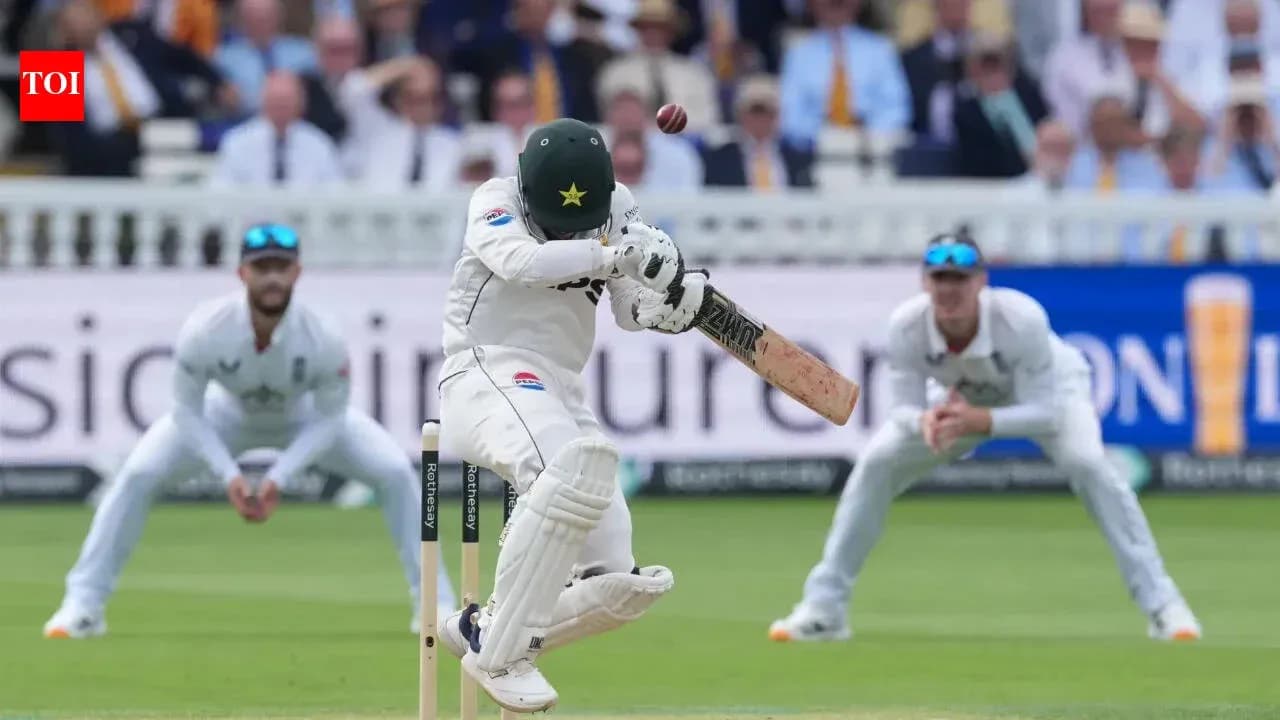
Pakistan trudged back through the Long Room with heads down, the murmur of Lord’s heavy with disbelief rather than applause. Another innings, another collapse. Just 110 on the board. A storied cricket nation reduced to a brief, brittle stay at the crease on the game’s grandest stage.
They had arrived in London needing a response. Beaten by an innings and 53 runs in the opening Test, Pakistan spoke of pride, of adjustment, of lessons learned. The return of Babar Azam, their premier batter and regular captain, was supposed to steady the ship.
It didn’t.
Babar scratched his way to eight. Abdullah Shafique made 5. Shan Masood, 1. Mohammad Rizwan, 7. The spine of the order, gone in a blur of loose strokes and probing seam. Only Azan Awais, the young opener, showed any real defiance, his 46 a lonely act of resistance against an England attack that never looked remotely stretched.
Pakistan were bowled out inside 38 overs. The scoreboard read 110. The damage went far beyond the numbers.
Vaughan’s brutal verdict
Watching from the commentary box, Michael Vaughan did not bother with diplomacy. The former England captain, speaking on BBC Test Match Special, tore into Pakistan’s batting with the kind of bluntness that leaves a mark.
"I'll be brutally honest. The England bowlers aren't being challenged at all," he said, summing up the imbalance in a single line.
He went further. In his view, this Pakistan batting line-up is "possibly the easiest batting lineup I've seen in a long time to bowl to." For an international side at Lord’s, that is a damning charge.
Vaughan painted a picture of an England attack operating without jeopardy, without fear of being counter-punched. "As a bowler, I think they're all queuing up to bowl because they know there are wickets out there," he said. "You're not going to get hurt. There's no batter that's going to hurt them. No one's going to damage their figures, and it's really, 'roll up, roll up, who wants to get the wickets?'"
That was the heart of his criticism: not just that Pakistan are getting out, but that they are doing so without asking a single hard question of the bowlers. No sustained pressure. No calculated aggression. No sense that any of England’s quicks might have to dig deep to survive a counterattack.
Test standard – or something else?
Vaughan did not stop at harsh. He went to brutal.
He openly questioned whether this Pakistan batting unit is of Test-match standard at all. With England’s seamers and spinners picking up wickets at regular intervals, he suggested the visitors had made life "so easy" for the hosts, both tactically and physically.
"I think they all know that Pakistan aren't going to get big scores," he said, describing the mindset in England’s dressing room. "So you're only going to be out there for 40 to 50 overs, so you give everything in every spell, you keep going to Joe Root saying, 'Err, I'll bowl another one.' There are so many wickets out there."
In other words, England’s bowlers can charge in with full intensity every spell, safe in the knowledge the innings won’t last long enough to drain them. For a top-level Test side, that is a withering indictment.
Then came the line that will sting in Pakistan’s dressing room and beyond.
"Is it second division county cricket?" Vaughan asked, comparing Pakistan’s batting to a lower-tier domestic outfit. "There's no way that they are batting in any standard to say that, that is a Test match batting lineup."
The implication was clear: this is not just a team out of form; this is a batting group performing at a level far below what the format demands.
England tighten the grip
While Pakistan’s batters searched for answers, England quietly tightened their grip on the series. After dismissing the visitors for 110, the hosts moved methodically through their second innings, ending the second day on 81/3.
The lead: 261 runs.
On a surface where Pakistan’s top order had disintegrated, that advantage looks vast. England’s position is commanding, built not on a single devastating spell but on relentless, disciplined bowling and a batting line-up that, unlike Pakistan’s, has repeatedly found ways to absorb pressure.
Pakistan’s problems were compounded by misfortune. Imam-ul-Haq, their regular opener, did not bat in the first innings after suffering a calf strain while fielding. His absence pushed more responsibility onto an already fragile top order. They could not carry it.
Azan Awais at least showed some resolve, ducking bouncers, leaving outside off, fighting for every run in his 46. But once he fell, the rest followed in a familiar, depressing procession.
A proud team at a crossroads
This is not just about one bad day. Pakistan have now suffered back-to-back batting failures in England, in conditions that expose technique, temperament and tactical clarity. The questions Vaughan raised cut to the core of their Test identity.
Are these batters capable of occupying the crease for 80, 90, 100 overs? Can they force a high-class attack to try something different? Can they protect their bowlers from the grind of defending tiny totals?
Right now, England’s seamers sense blood every time a new Pakistan batter walks out. They are, as Vaughan put it, queuing up.
Pakistan still have time left in this Test, and in this series, to answer back. But with England already 261 ahead and in complete control, the response can no longer be about words, selections or promises.
It has to come from the middle, under the grey skies, with the red ball jagging around and reputations on the line.