.svg&w=384&q=75 "logo")
Morocco’s World Cup Bid Faces Political Challenges
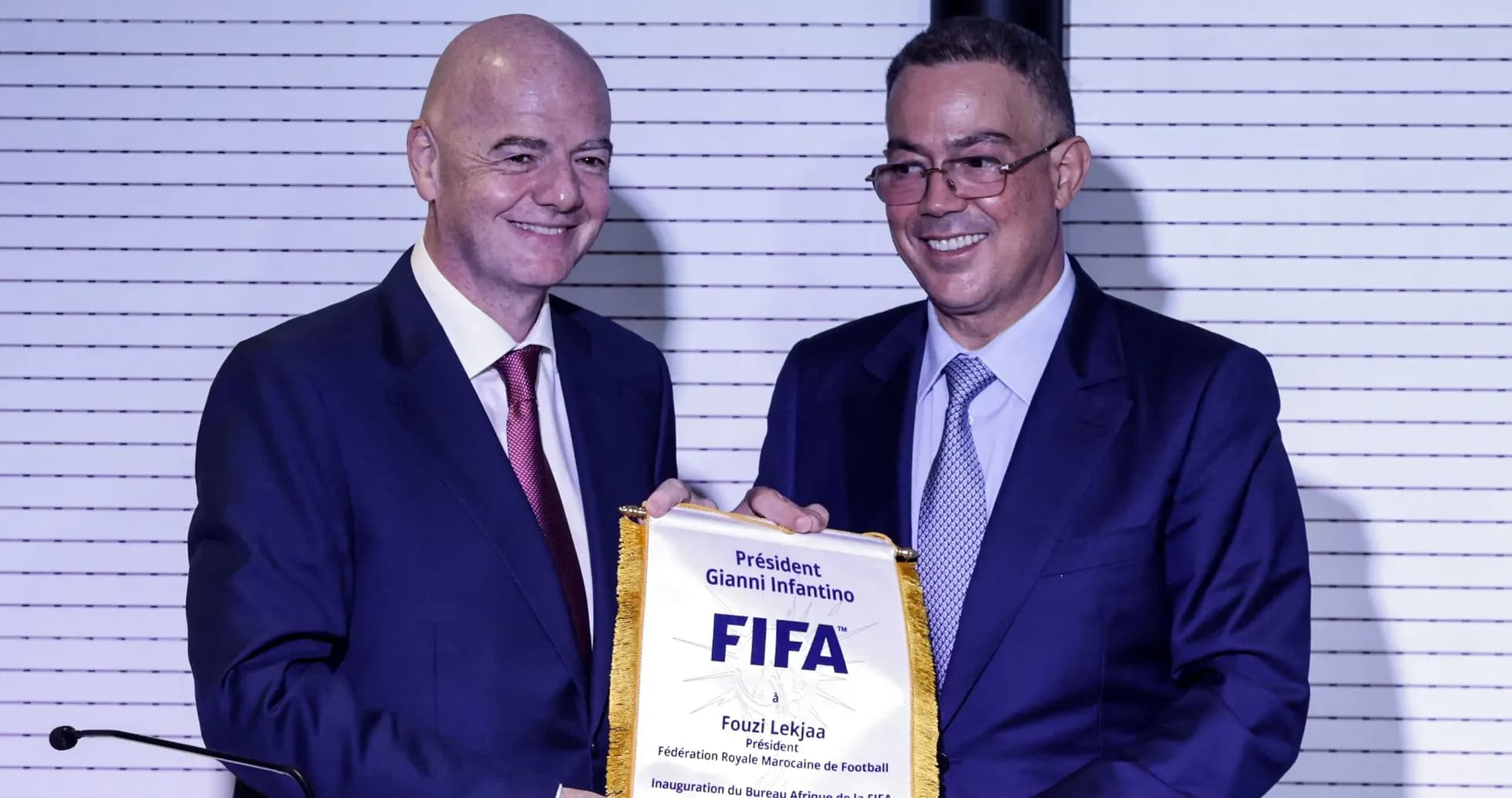
The race to host the 2030 World Cup final has barely begun, but Morocco has already been forced into a tactical retreat — and the warning has come from the very top of its own government.
Prime Minister Aziz Akhannouch has publicly rebuked Fouzi Lekjaa, the influential president of the Royal Moroccan Football Federation (RMFF), ordering him to stop making bold promises about Casablanca staging the showpiece final before anything has been agreed with co-hosts Spain and Portugal.
The message was blunt. The timing, pointed.
Political Fire Breaks Out Over Casablanca Claim
The flashpoint came when Lekjaa, speaking at a political party event, declared that Morocco’s planned new stadium in Casablanca would have the “honour” of hosting the 2030 World Cup final. For a football-obsessed country riding a wave of international prestige after the men’s national team’s historic run at Qatar 2022, it was the kind of statement that electrifies a crowd.
It also lit a fuse in government.
Addressing supporters at a rally, Akhannouch cut through the euphoria with a cold dose of realpolitik. He urged Lekjaa to stop making grand promises on such a sensitive issue without first sitting down with Spain and Portugal, Morocco’s European partners in the three-way bid.
“Do not offer to host the big final game in Morocco while we still have not discussed the matter with our allies, Spain and Portugal. There should be some respect, brothers,” he said, warning against using World Cup pledges as “electoral promises” and stressing that deciding the final venue is a “major issue.”
The intervention underlined a key tension at the heart of this unprecedented co-hosting project: national ambition versus diplomatic balance.
FIFA Keeps Its Cards Close
For now, the only voice that truly matters remains silent. FIFA has not confirmed where the 2030 final will be played, repeating only that “a decision will be made in due course.”
The format itself is already historic. Morocco, Spain and Portugal will share hosting duties for the centenary edition of the tournament, with opening fixtures staged in South America to honour the World Cup’s origins. The final, though, is the jewel everyone wants.
Morocco is pushing hard to bring that jewel to Africa for the first time since Johannesburg staged the 2010 final. The symbolism would be immense: a continent that has long fought for greater weight in world football, now closing the 100th-anniversary tournament in a new mega-stadium on African soil.
Spain, however, has no intention of stepping aside.
Spain Makes Its Case – And Leans on Its Trophies
Rafael Louzan, president of the Spanish football federation (RFEF), has been unflinching in his belief that Spain should host the final. Speaking to Cadena SER radio, he framed the decision almost as a formality dictated by football logic.
“Even though no decision has been taken, I believe Spain is the place because it cannot be any other way,” Louzan said. He pointed to Spain’s status as current world champions and insisted the country’s track record in staging major events is “beyond question,” concluding that “reality dictates that the grand final cannot and must not be held anywhere other than in Spain.”
Spain’s argument leans on more than rhetoric. The men’s national team has just added another World Cup title to its résumé, after beating Argentina this past summer to claim a second crown. The country can also showcase heavyweight infrastructure: the revamped Santiago Bernabeu in Madrid and the expanding Spotify Camp Nou in Barcelona stand as ready-made arenas for the biggest night in world football.
That combination of recent sporting glory and polished stadiums gives the RFEF a powerful hand at the negotiating table.
Morocco’s Giant Statement in Concrete and Steel
Morocco’s answer is not subtle. It is building.
The North African nation has embarked on a colossal project: a 115,000-seat stadium designed to be the largest football-specific venue on the planet. The planned arena, near Casablanca, is meant to stand shoulder to shoulder with Europe’s most iconic grounds — and, in capacity terms at least, tower above them.
This is not just about seats and steel. It is a statement of intent. Morocco wants the final, and it wants FIFA to see a venue that looks and feels like the centre of the football world.
Yet Akhannouch’s intervention shows that, domestically, the government is determined to keep expectations under control and avoid inflaming tensions with Madrid and Lisbon. The World Cup is supposed to bind three nations together; a public tug-of-war over the final risks pulling them apart before the first ball is kicked.
A Long Game, With No Quick Whistle
The timeline works against any rush to judgment. The 2026 World Cup offered a clear precedent: New Jersey’s MetLife Stadium was only confirmed as the final venue in early 2024, long after the United States, Mexico and Canada had been named as hosts.
By that measure, 2030’s showpiece still sits comfortably in the distance. FIFA can wait. The politics cannot.
Morocco must juggle domestic pride, regional diplomacy and the realities of a shared bid. Spain will continue to lean on its trophies, its stadiums and its organisational record. Portugal, quieter in public, will still expect a fair slice of the spotlight.
Somewhere between Casablanca and Madrid, between ambition and alliance, FIFA will eventually draw a line on the map and name a city.
When it does, one of these partners will walk away with the final — and the other will be left to decide whether the rest of the tournament is enough of a prize.